

Club Chair with Castors
A club chair with castors offers deep, generous lounging wrapped in period character and built for comfort.
Club Chair with Castors
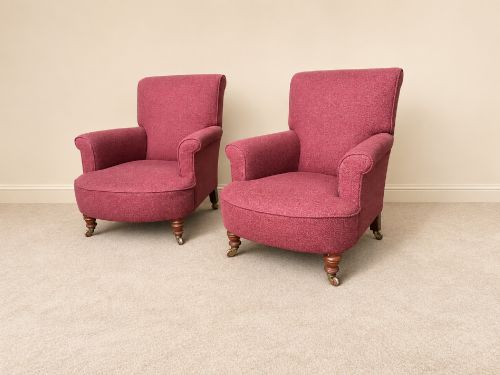
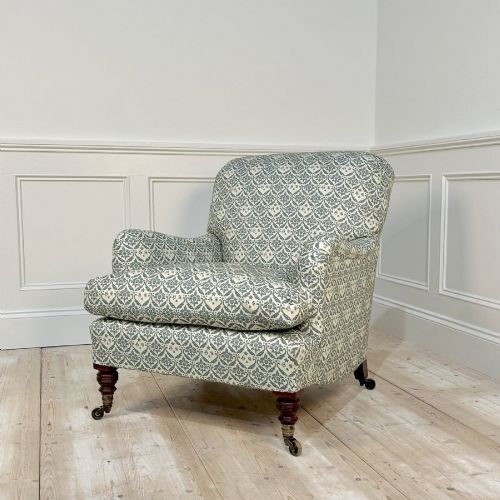
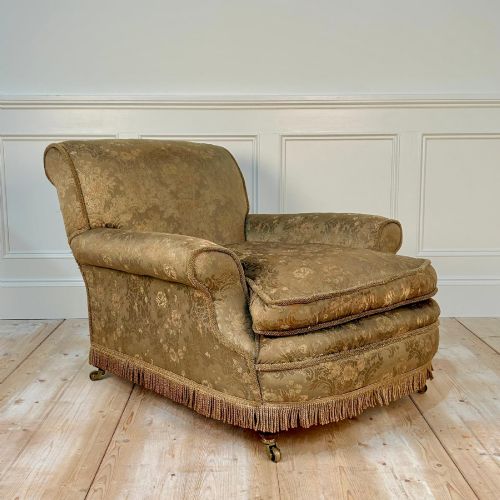
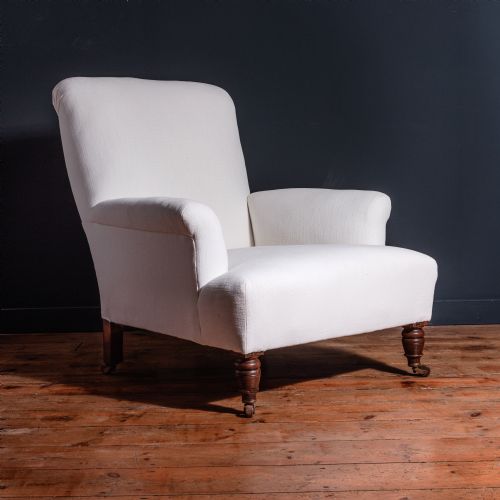
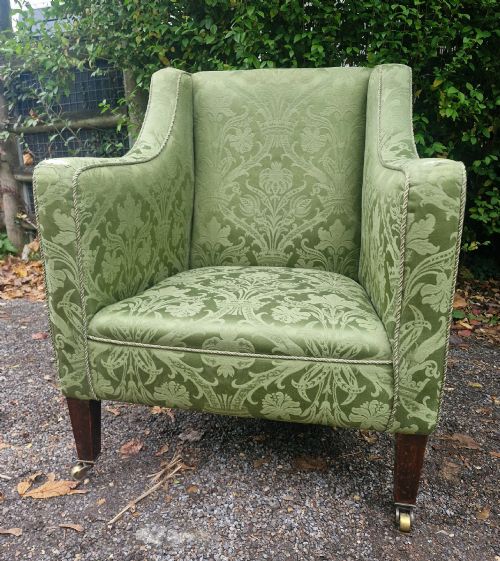
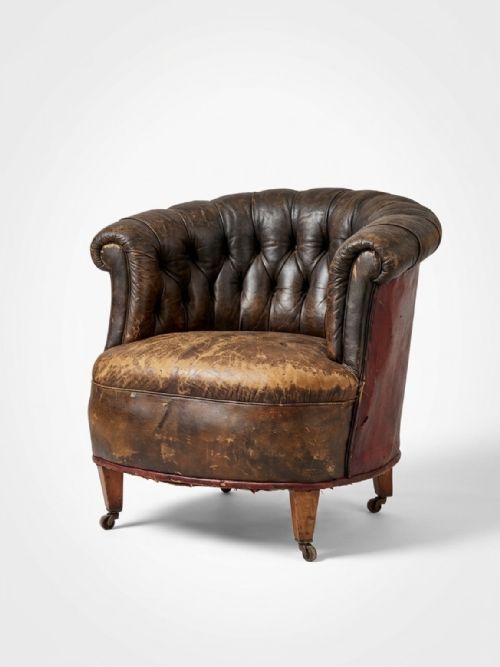
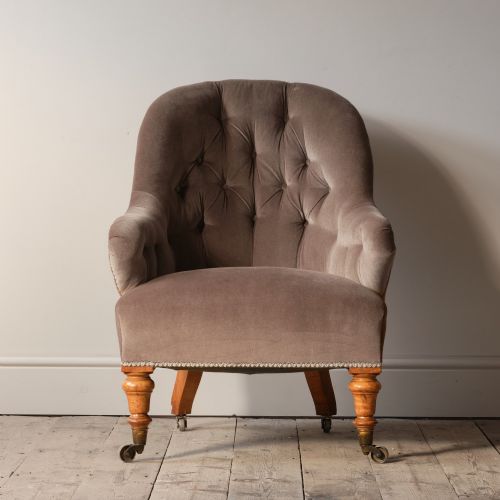
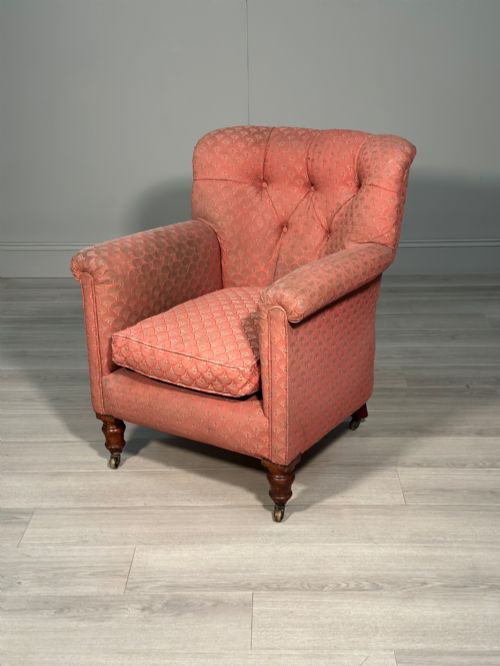
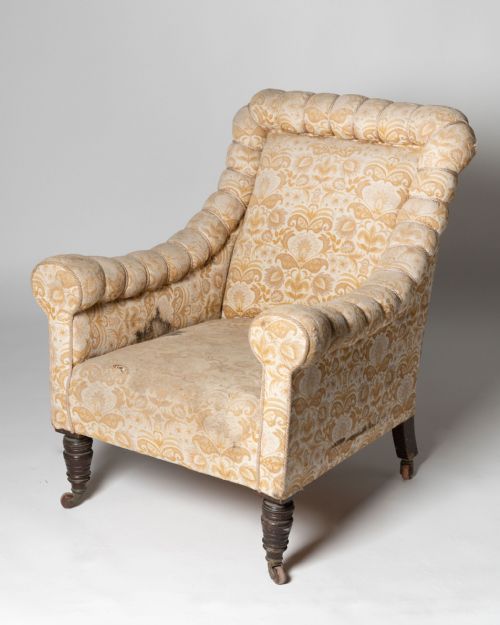
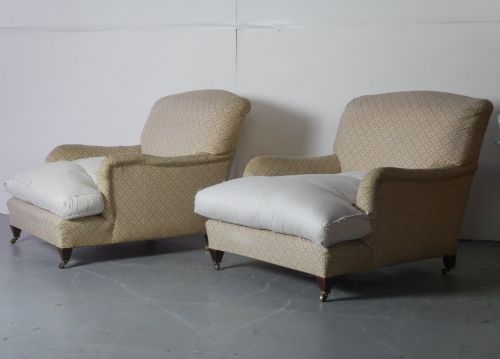
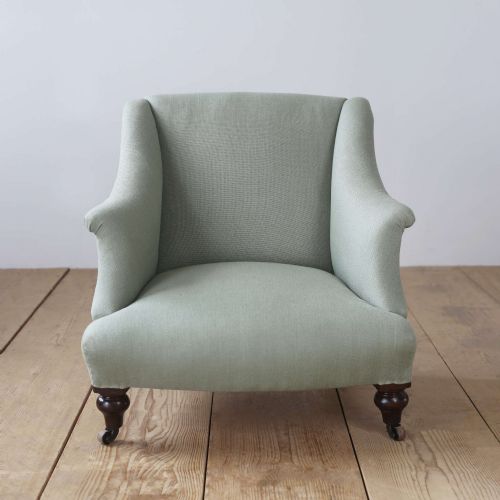
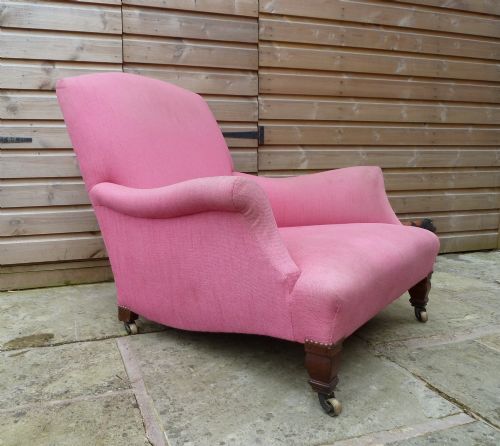
A club chair with castors brings together substantial upholstered seating and the practical mobility of small wheels, appearing frequently across nineteenth-century and Edwardian designs. These armchairs take many forms, from low fireside seats to wide library chairs and deep Bridgewater shapes.
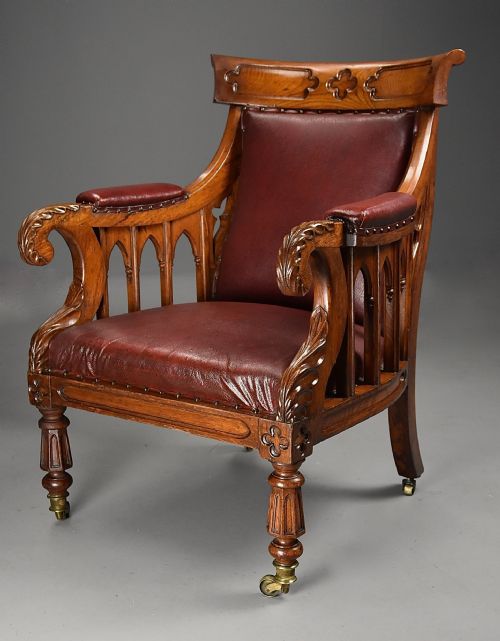
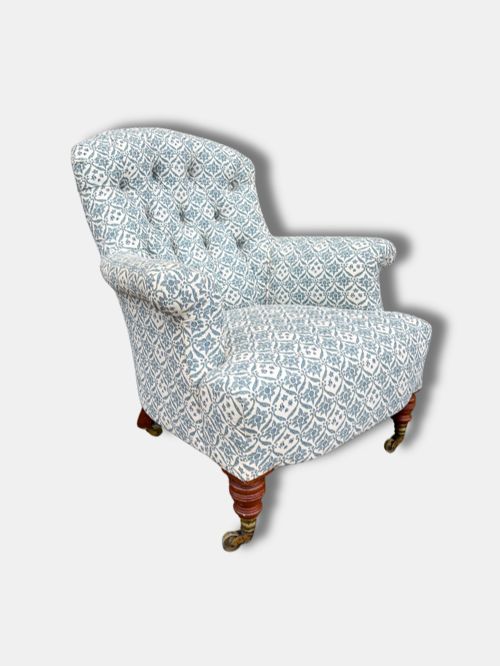
The materials span traditional timber frames of mahogany and oak, paired with heavy upholstery in leather, velvet, fabric, and kilim. Many examples sit low on tapered mahogany legs or turned supports fitted with original brass castors.
Makers such as Howard & Sons, J.Mills, and Maple & Co produced notable variations, alongside distinctive aesthetic movement and Gothic revival interpretations. Buyers encounter standard upholstered models, tub backs, and matching foot-stool combinations across the inventory.
Materials and construction
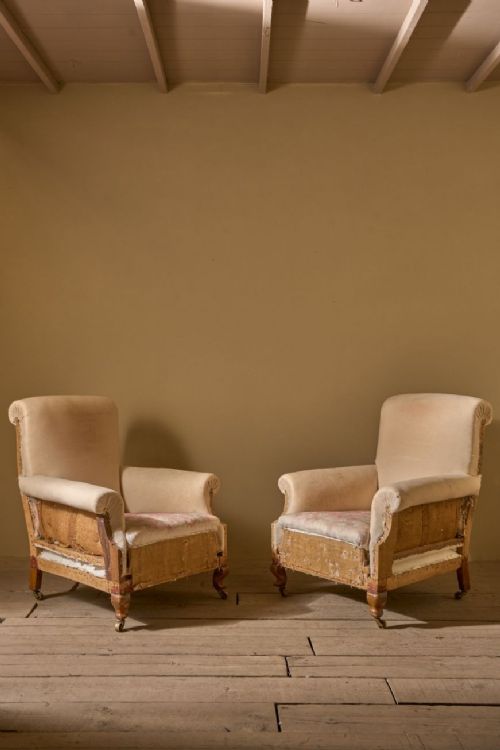
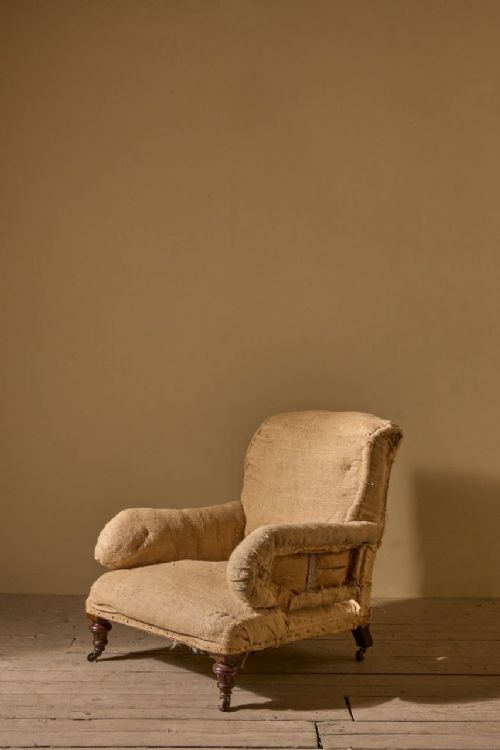
Frames rely on robust timbers like mahogany and oak to provide structural integrity for deep-seated upholstery. Artisans shaped these woods into tapered legs, open arms, or enclosed tub backs.
Upholstery techniques involve heavy padding finished with leather, velvet, traditional fabric, or loose covers. Brass castors are secured to the base of the legs to allow smooth movement across heavy floor coverings.
Club Chair with Castors Retail Price Guide 2026
Typical asking prices for club chair with castors among the pieces listed under this phrase on Sellingantiques today, from the lower quarter to the upper quarter. They describe what is for sale here now, not the wider market.
Listings span the nineteenth century, Edwardian period, and nineteen-twenty, featuring mahogany, oak, brass, leather, and velvet.
Evaluating craftsmanship and distinction
Quality rests in the integrity of the timber frame and the retention of original maker stamps or labels. Pieces bearing clear workshop marks demonstrate higher documentary value.
The refinement of the upholstery work and the presence of original brass castors separate standard seating from exceptional examples. Proportion and deep-seated comfort remain central to the distinction of finer chairs.
Howard & Sons·J.Mills·Maple & Co
The Club Chair with Castors Glossary
- Castor
- A small wheel mounted on a swivel assembly attached to the base of furniture legs for easy movement. These are frequently cast in brass on period armchairs.
- Tub back armchair
- An armchair featuring a rounded, enclosed back that curves continuously into the arms. This form provides a cocooning shape for the sitter.
- Gothic Revival
- A nineteenth-century design style drawing on medieval architectural motifs. Furniture from this movement often incorporates heavy oak and pointed structural elements.
Club Chair with Castors: Frequently Asked Questions
What defines a club chair with castors?
A club chair with castors is a deeply upholstered armchair fitted with small wheels on the feet for mobility. These seats range from compact fireside models to generous library chairs.
Pinned across the nineteenth century and Edwardian eras, they utilise timber frames of mahogany and oak combined with leather, velvet, or fabric upholstery.
How do I identify a Howard style armchair?
Howard style armchairs are recognised by their deep proportions, low rolled arms, and substantial comfort. They often sit on low legs with brass castors.
Original pieces from the firm frequently feature stamped wooden frames and specific numbering, marking them apart from generic later copies.
What wood types are used in these frames?
Frames are constructed primarily from durable hardwoods such as mahogany and oak. These timbers support the heavy internal stuffing and upholstery.
Visible legs often display turned wood or tapered mahogany shaping that conceals or integrates the brass wheel fittings.
How do Edwardian models differ from Victorian ones?
Edwardian examples tend to lean towards lighter aesthetic forms, sometimes utilising loose covers and tapered mahogany legs. Victorian pieces frequently showcase heavier button backs and robust Gothic revival or Aesthetic movement influences.
Both periods prioritise deep comfort, though Victorian versions often feature denser timber frames and more ornate upholstery choices.