

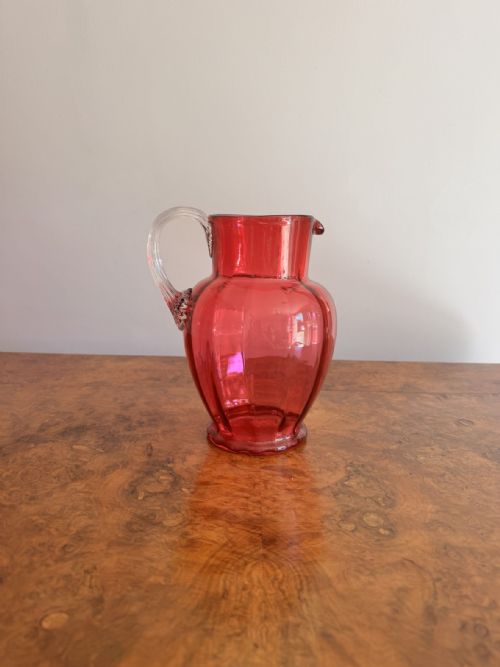
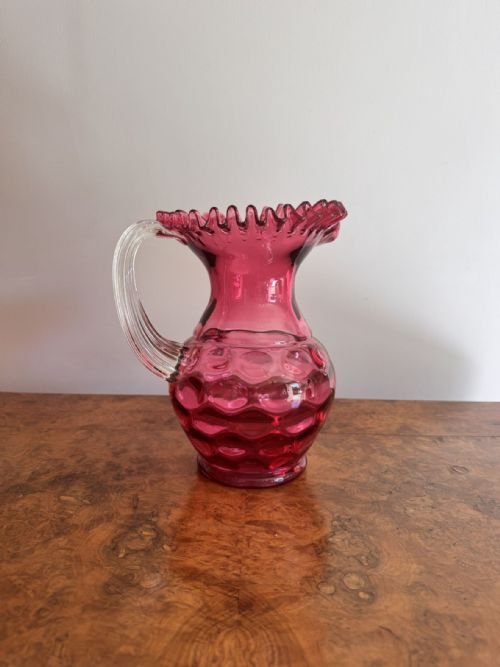
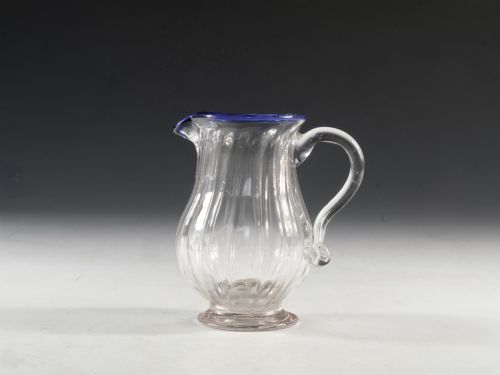
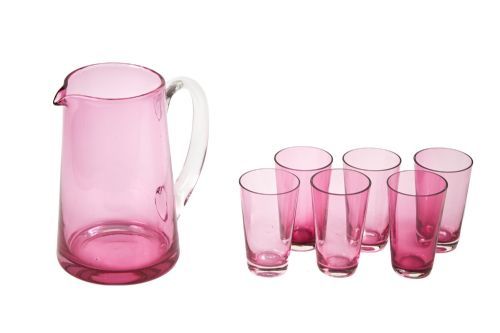


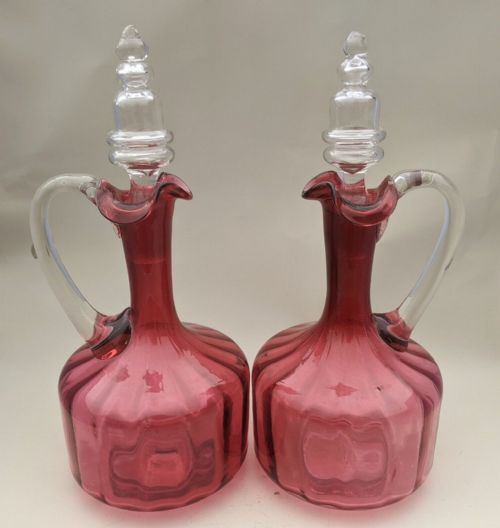


Clear Hand Blown Pitcher
A clear hand blown pitcher brings fluid brilliance to the table, catching the light through centuries of glassmaking history.
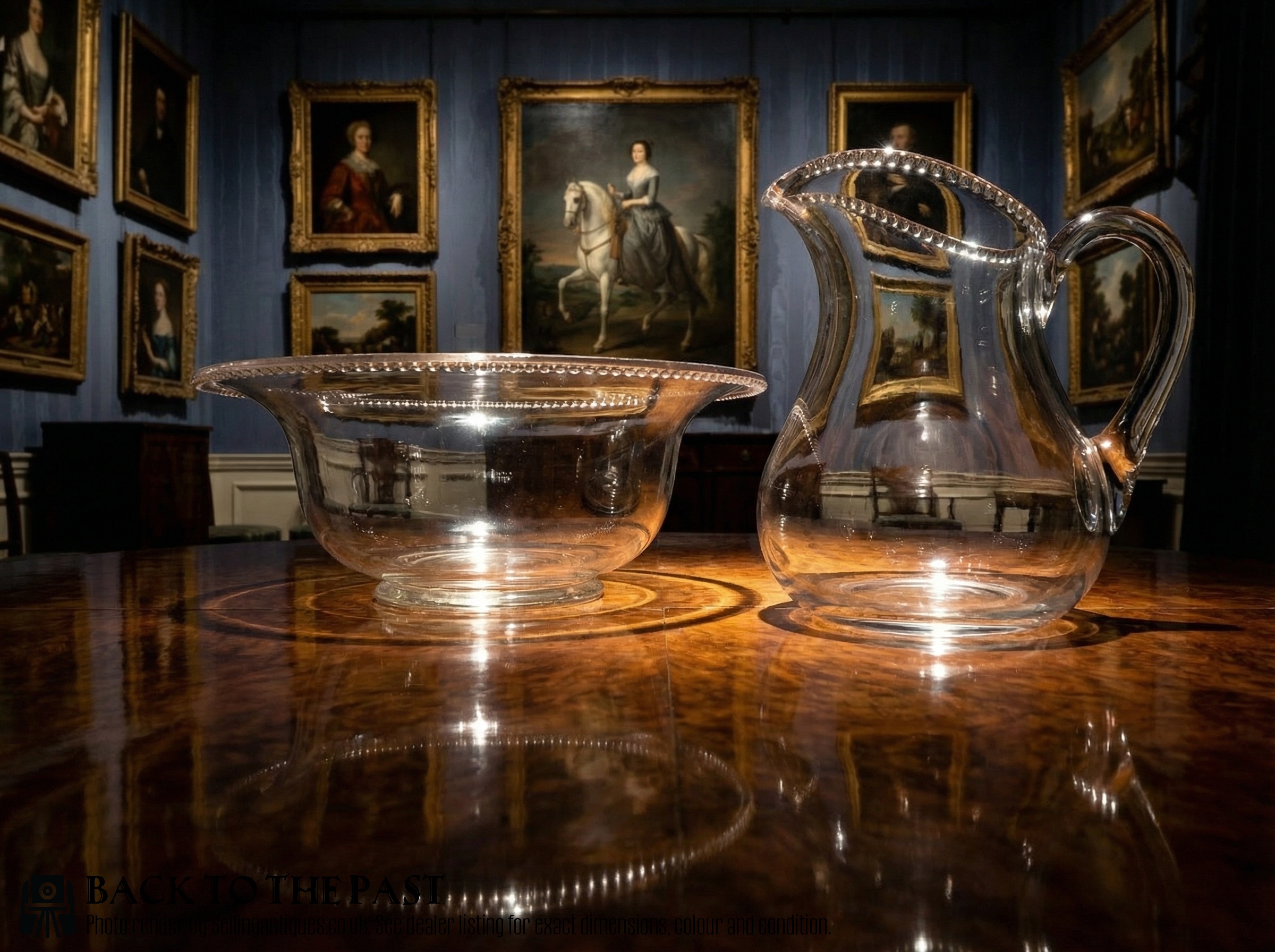
Clear Hand Blown Pitcher
Most examples you meet on this page favour transparent clear glass or rich cranberry glass, often taking the form of jugs, pitchers, ewers, and decanters. These domestic and decorative items served fluid contents at the table or stood on display in period interiors.
How they were made
Glassmakers shaped these pieces using traditional hand-blowing techniques, gathering molten metal on a blowpipe and manipulating the material by hand or in moulds. Lead glass formulations provided extra weight and clarity, while applied details like gold leaf enhanced decorative surfaces.
Makers utilised free-blowing and mould-blowing methods to achieve the fluid walls and characteristic pontil marks seen on these items. Variations in the glass body often reveal the organic nature of historical handcrafting processes.
Clear Hand Blown Pitcher Retail Price Guide 2026
Typical asking prices for clear hand blown pitcher among the pieces listed under this phrase on Sellingantiques today, from the lower quarter to the upper quarter. They describe what is for sale here now, not the wider market.
One exceptional piece takes the literal form of a dog, proving historical glassmakers possessed a distinct sense of canine charm.
What varies in quality
Quality rests in the balance of the vessel, the purity of the metal, and the skill evident in the handle application and rim finishing. Superior pieces display thin, even walls without excessive heaviness, alongside precise decorative elements such as gadrooning.
The sophistication of the silhouette and the depth of colour in tinted examples distinguish finer items from simpler domestic wares. Makers who mastered glass chemistry and thermal manipulation produced objects with superior refraction and lasting structural integrity.
The Clear Hand Blown Pitcher Glossary
- Ewer
- A large jug with a wide spout and handled shape, traditionally used for pouring water or wine at table. Many Victorian examples functioned as decorative ornaments.
- Pontil mark
- The rough scar left on the base of a vessel where the punty rod was snapped off after blowing. Its presence confirms historical hand-blown manufacture.
- Cranberry glass
- A rich red-pink transparent glass created by adding gold chloride to the molten batch. It gained immense popularity during the Victorian era for tableware and decorative items.
- Gadrooning
- An ornamental carved or moulded band of parallel convex curves adorning the edge of a vessel. This decorative technique appears on Georgian pieces.
- Lead glass
- A heavier glass composition containing lead oxide that increases brilliance and makes the material softer for cutting. It forms the basis of many fine historical decanters.
Clear Hand Blown Pitcher: Frequently Asked Questions
How do I clean an old glass pitcher?
Wash these pieces gently by hand using warm water and mild detergent. Avoid abrasive sponges or extreme temperature changes that can stress historical glass.
Dry them immediately with a soft lint-free cloth to prevent water spots and preserve the clarity of the material.
Can I use these pitchers for serving drinks?
Many of these vessels remain entirely functional for serving water, wine, or other beverages at the table. Check each piece for stability and interior cleanliness before use.
Some highly decorative or nineteenth-century examples are better suited for display due to delicate applied handles or historical residue.
How do I date a hand blown glass pitcher?
Examine the base for pontil marks, wear patterns, and the characteristics of the glass metal itself. Georgian and Victorian pieces often exhibit distinct colour tones, weight, and forming techniques.
Stylistic cues such as gadrooning, applied rims, and overall silhouette help place the object within its specific nineteenth or early twentieth-century context.