
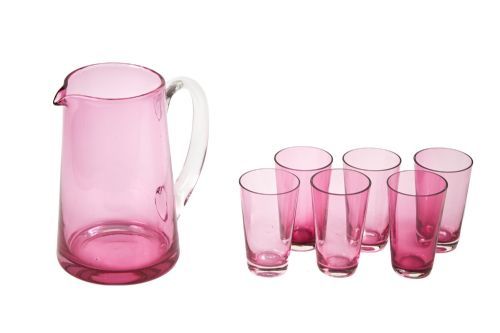


Clear Glass Water Jug
A clear glass water jug brings heft and sparkle to a table, combining utilitarian service with Victorian and Edwardian craftsmanship.
Clear Glass Water Jug
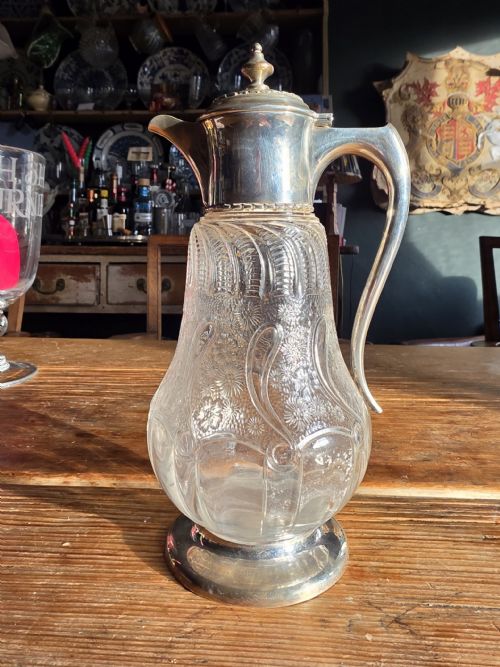
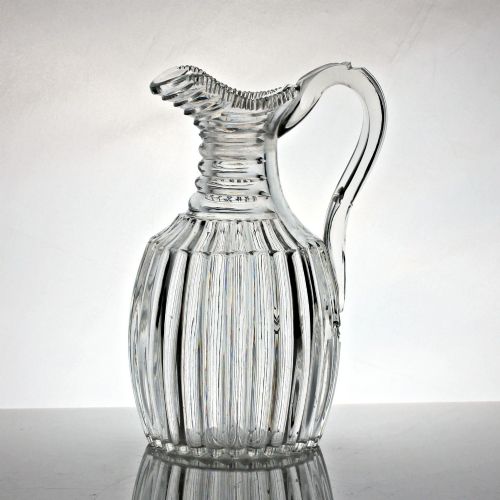
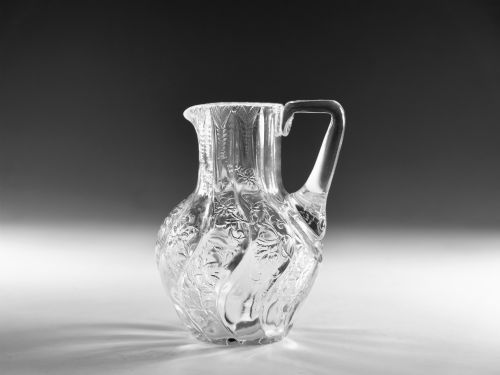
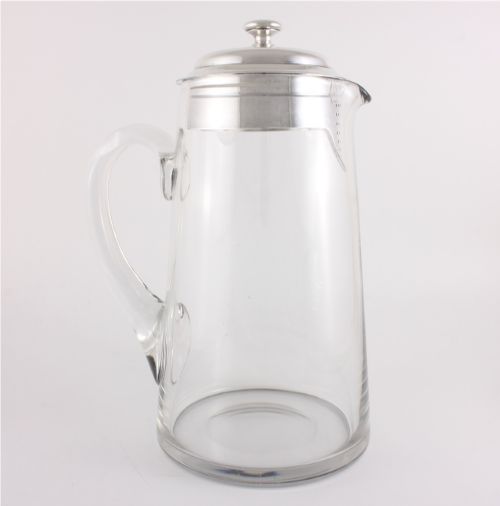
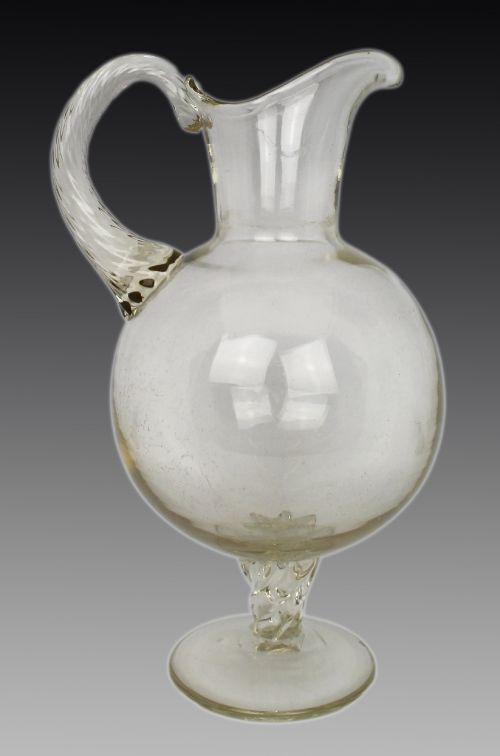
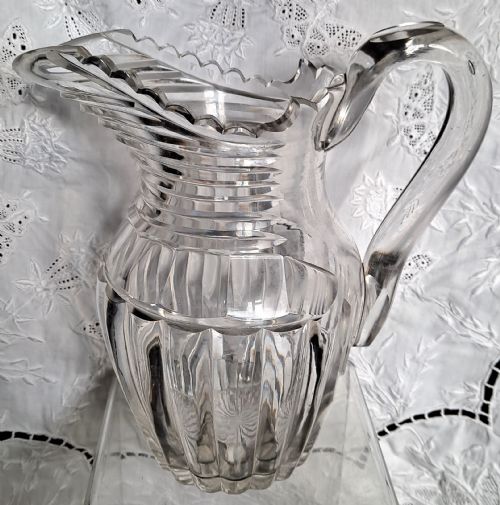
A clear glass water jug serves as a functional vessel for the dining table, appearing in forms such as pitchers, ewers, and claret jugs.
When searching for a clear glass water jug, buyers encounter pieces spanning the nineteenth century, the Edwardian era, and the Art Deco period.
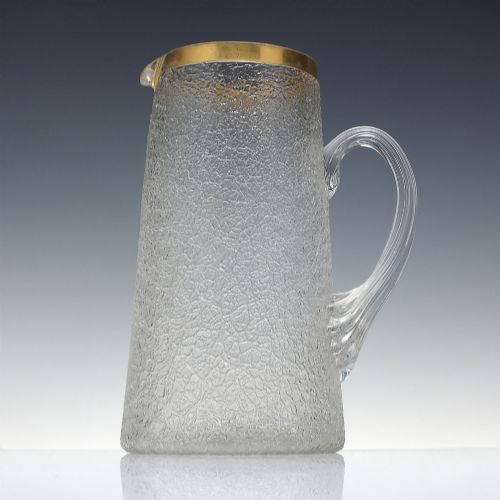
The selections on this page range from plain lead crystal bodies to vessels mounted with silver plate, sterling silver, or gilded rims.
Materials and construction methods
Maker workshops utilised clear glass, lead crystal, and cranberry glass, frequently shaping vessels through hand-blowing and mould-blowing techniques.
Decoration relied on skilled hand-cutting, wheel engraving, etching, and intaglio work to produce motifs like stars, birds, grapes, and dolphins.
Metal components added structural contrast, incorporating silver plate and sterling silver mounts, ice tubes, and hinged lids.
Clear Glass Water Jug Retail Price Guide 2026
Typical asking prices for clear glass water jug among the pieces listed under this phrase on Sellingantiques today, from the lower quarter to the upper quarter. They describe what is for sale here now, not the wider market.
Some nineteenth-century makers thoughtfully included internal ice tubes so guests could enjoy chilled lemonade without diluting the drink.
Factors of distinction
Depth and crispness of the wheel cutting or intaglio engraving separate standard vessels from works of superior execution.
The weight and clarity of the lead crystal contribute significantly to the tactile presence of the piece.
The integration of precious metal mounts, whether silver plate or sterling silver, elevates the overall design and finish.
Stevens and Williams·Christofle·Mappin and Webb·Webb Corbett·Richardsons·Elkington and Co·Koloman Moser·Loetz·Valenti
The Clear Glass Water Jug Glossary
- Ewer
- A large jug with a wide spout and curved handle, historically used for pouring water.
- Intaglio
- A technique where designs are sunk below the surface of the glass by grinding and polishing.
- Latticinio
- A type of glasswork incorporating opaque white or coloured glass threads twisted within the clear body.
- Overshot glass
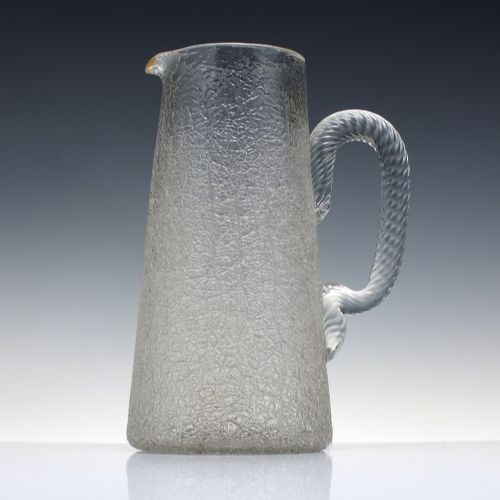
- A style of glass featuring a rough, textured surface created by rolling hot glass over fine shards.
- Claret jug
- A specialised pouring vessel designed specifically for serving red wine at the table.
Clear Glass Water Jug: Frequently Asked Questions
How do I clean an antique glass jug?
Wash the vessel by hand using warm water and a mild detergent, avoiding sudden temperature changes that might crack the antique material.
Dry the piece immediately with a soft cloth to prevent water spots and preserve the clarity of the clear glass.
Were these jugs used only for water?
While designated as water jugs or pitchers, many historical vessels served multiple dining purposes including lemonade, claret, and wine.
Mounts such as internal ice tubes indicate specific adaptations for chilled summer drinks and fortified wines.
How do I distinguish Edwardian glass from Victorian pieces?
Victorian jugs often display heavy, deep-cut geometric patterns and rich cranberry tones, reflecting a taste for ornate decoration.
Edwardian examples frequently lean towards lighter, more restrained cutting styles paired with refined silver mounts.
Can I use these jugs for daily dining?
Robust lead crystal and thick-walled blown glass withstand careful, everyday use on the modern table.
Precious metal mounts and delicate engravings require attentive handling to prevent accidental knocks during service.