


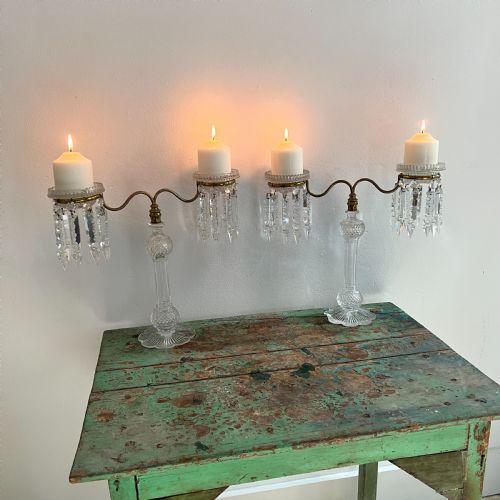


Clear Glass Lustre Light
A clear glass lustre light brings shimmering refraction and brilliant prismatic colour into a room.
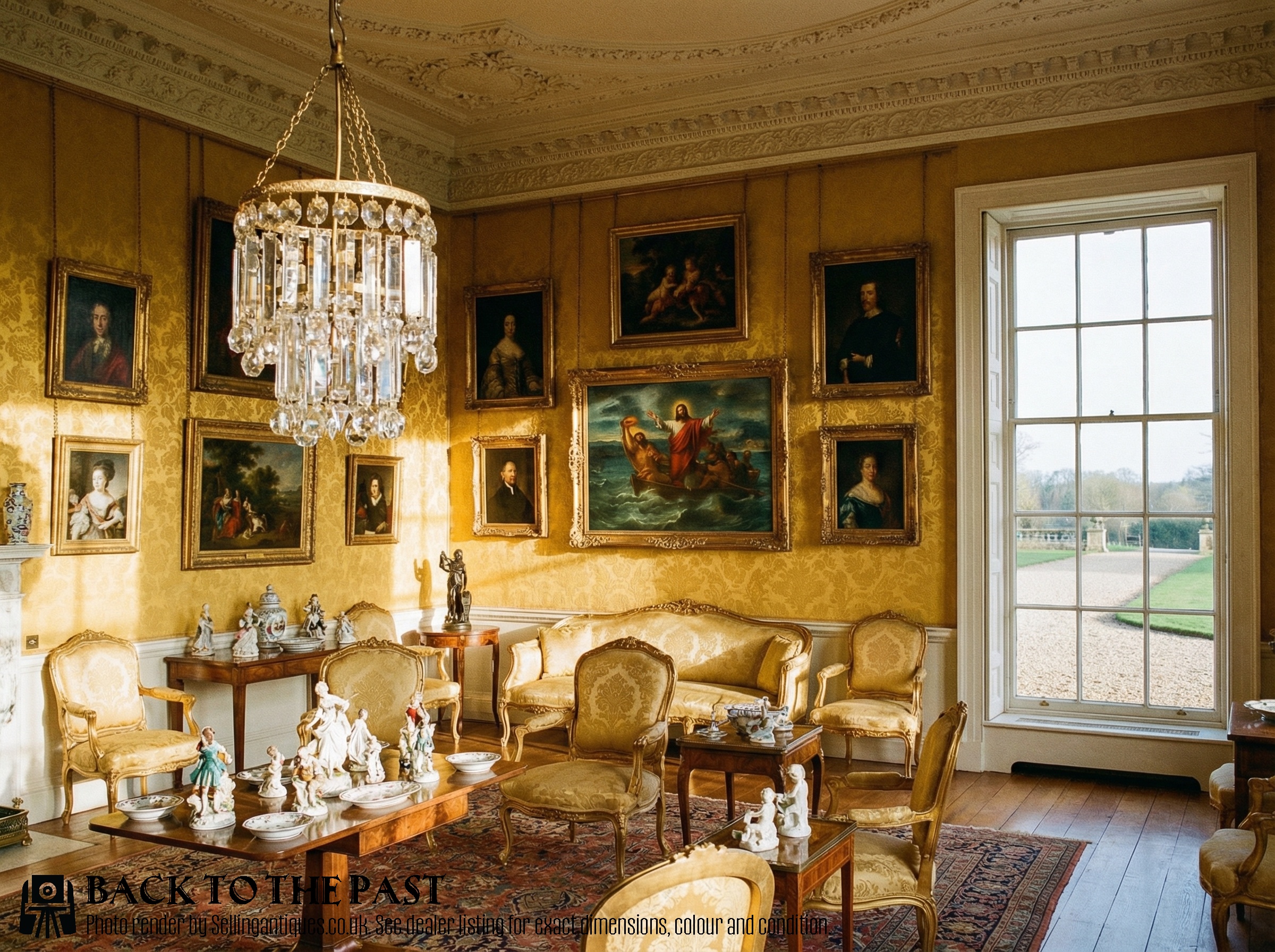
Clear Glass Lustre Light
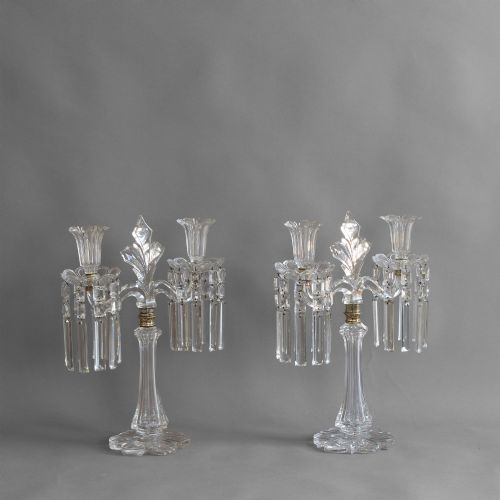
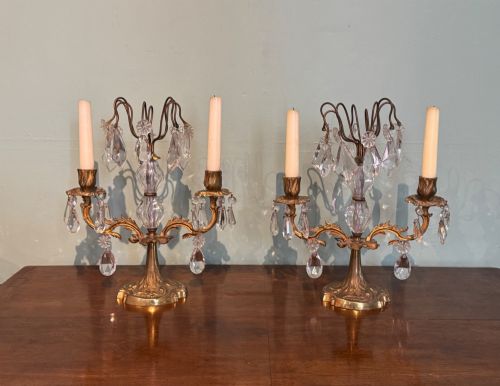
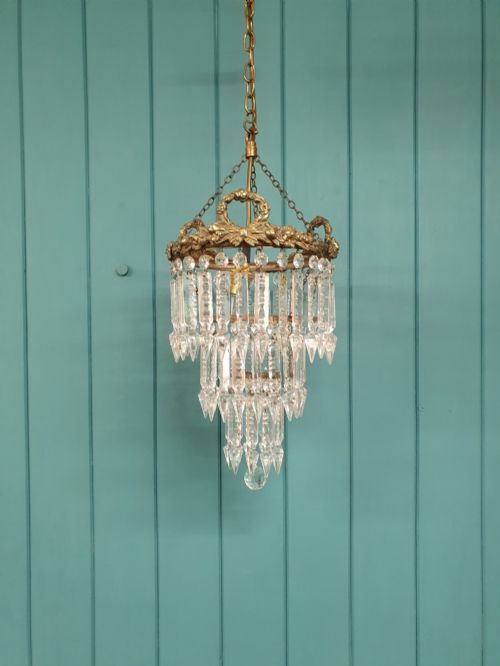
When you search for a clear glass lustre light, you encounter a selection of hanging chandeliers, table garnitures, and candelabras designed to catch and scatter light. These items span periods from the Regency era through the Victorian period, Edwardian years, and into 1930.
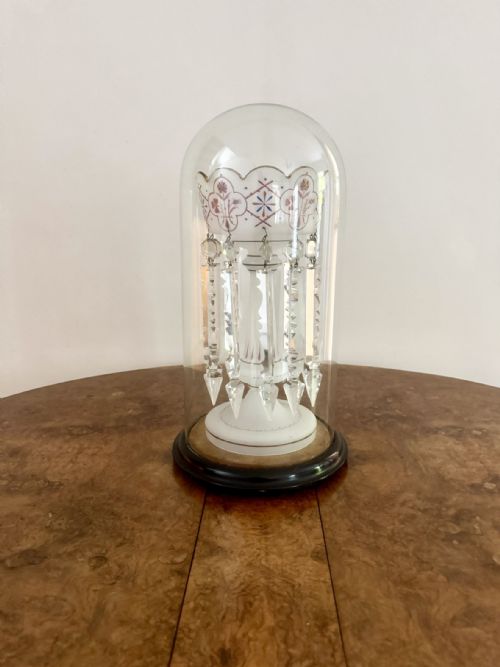
The pieces on this page appear as matched pairs of table lustres, small ceiling chandeliers, and complete candelabra units incorporating glass domes. French and Scandinavian influences join English and Victorian designs among the current selections.
Mantel lustres and wall sconces also fall under this heading, offering decorative prismatic glass pendants suspended from heavy moulded or cut sockets. These objects serve both practical illumination and formal decorative display across different room settings.
How they were made
Makers formed these items using clear glass and crystal glass, frequently shaping the bodies through deep hand cutting. Cut glass and cut crystal components were then polished to maximise light reflection.
Brass, gilt brass, and wood provide the foundational metalwork and structural support for hanging drops and sconces. Individual glass pendants attach to the main body via small metal pins or wire loops.
Periods represented span from the Regency era through Victorian, Edwardian, and into the 1930s.
What varies in quality
The clarity and weight of the glass define the upper tier of these pieces, alongside the precision of the hand-cut facets. Heavier crystal glass and deep, sharp cutting produce superior refraction compared to lighter, plain moulded alternatives.
The integration of the metal mounts - such as gilt brass frames or solid brass fittings - determines the structural integrity of the piece. Complete sets of matching pendants without replacements indicate a higher grade of preservation.
Clarkes
The Clear Glass Lustre Light Glossary
- Lustre
- A decorative ornamental vase or candlestick hung with cut glass pendants designed to refract candlelight or daylight. These objects sit on mantelpieces or tables as formal decorative centrepieces.
- Cricklite
- A proprietary brand of table candelabra and lighting fixture, notably produced by Clarkes in the Victorian period. They often incorporate protective glass domes over the light source.
- Candelabra
- A branched candlestick holder designed to support multiple candles simultaneously. In this context, they frequently feature hanging glass prisms around the central stem.
- Regency
- An English design period spanning the early nineteenth century, known for classical restraint and elegant proportions. Pieces from this era often display fine geometric cut glass work.
- Edwardian
- The period covering the early twentieth century up to the First World War, noted for lighter domestic ornamentation. Lustre chandeliers from this era tend towards smaller proportions.
Clear Glass Lustre Light: Frequently Asked Questions
What is a lustre light?
A lustre light is a decorative glass fixture hung with cut crystal pendants designed to catch and refract light.
These pieces function as chandeliers, wall sconces, or mantel ornaments depending on their original intended placement.
How do I clean glass pendants?
Glass pendants require careful cleaning with warm water and a mild detergent while still attached, or gentle hand washing when removed.
Avoiding harsh abrasives protects the historic surface of the glass and any underlying gilt brass mountings.
Are these lights electrified?
Many smaller chandeliers and fixtures have been adapted for modern electrical wiring over time.
Table lustres and candelabras generally retain their original function for holding traditional candles rather than electrical bulbs.
How do I date a lustre light?
Dating relies on examining the cutting style of the glass, the composition of the metal frame, and overall design proportions.
Victorian and Regency pieces display heavier hand-cut crystal, while Edwardian and 1930s examples often appear in lighter formats.