
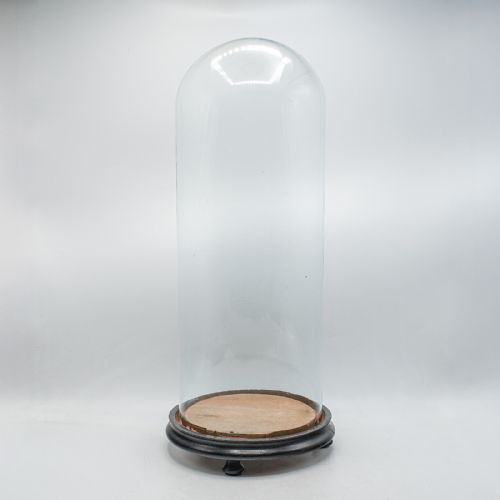


Clear Glass Display Case
A clear glass display case protects delicate specimens and ornaments under transparent domes from the Victorian and Edwardian periods.
Clear Glass Display Case
A clear glass display case usually takes the form of a glass dome or cloche designed to cover and protect an object resting upon a wooden base. These pieces emerged strongly during the nineteenth century, encompassing Victorian and Edwardian examples intended for domestic display.
The objects gathered here span tall showcases, oval collector's domes, and wide clock cases, reflecting various uses across different eras. Many house taxidermy specimens, botanical collections, or timepieces, separating them from general decorative glassware.
The most common version met on this page is the English taxidermy showcase or clock dome, paired with an ebonised wood, oak, or pine base. Such forms range from modest small enclosures to large tall domes dating from around eighteen sixty to nineteen hundred and five.
Variations in Quality
Quality rests in the clarity and uniformity of the blown glass cover, where superior examples maintain an even thickness without excessive distortion or bubbles. The proportion between the height of the dome and the depth of the wooden base dictates the visual balance of the piece.
The standard of the timber base and its internal lining also sets individual pieces apart, with finer examples featuring careful joinery, turned feet, or fitted velvet and baize interiors. Retaining the original wooden base and interior fabric enhances the integrity of the display case.
Materials recorded across the inventory include glass, ebonised wood, oak, pine, fabric, felt, velvet, and baize.
The Clear Glass Display Case Glossary
- Dome
- A rounded glass cover used to protect and display objects. It sits upon a flat base to enclose items such as clocks or taxidermy.
- Cloche
- A bell shaped glass cover historically utilised for protecting plants or delicate ornaments. In display contexts, it performs a similar role to a small dome.
- Ebonised wood
- Timber treated with a dark stain or finish to imitate ebony. This material appears frequently on the bases of Victorian display cases.
- Baize
- A coarse woolen material resembling felt, often used to line the interior floors of display domes. It provides a soft surface for resting specimens.
- Marquetry
- Decorative woodwork created by fitting small pieces of veneer into a base panel. It occasionally decorates the timber plinths of collector's cases.
Clear Glass Display Case: Frequently Asked Questions
What fits inside a glass display case?
These enclosures traditionally house taxidermy birds, botanical specimens, carriage clocks, and delicate ornaments. Collectors also utilise them for still life arrangements and curious objects.
Selecting a dome depends on the height and width of the item requiring protection. The transparent glass ensures the contents remain visible while shielding them from dust.
How do I date a glass display case?
Dating relies upon the style of the wooden base, the thickness of the glass, and manufacturing traits associated with the nineteenth and early twentieth centuries. Victorian and Edwardian examples often display distinct timber turnings.
Examining the base material, such as ebonised wood or pine, alongside the type of internal lining offers further clues to the period of origin.
Are these cases suitable for modern homes?
These pieces integrate well into contemporary interiors by providing a structured way to display natural history specimens and curiosities. Their transparent nature keeps items safe from accidental damage.
Placing a dome on a sideboard or table creates an immediate focal point. The combination of glass and dark wood complements traditional and modern rooms alike.
What is the difference between a clock dome and a taxidermy dome?
Clock domes were specifically manufactured to cover mantel and carriage clocks, often featuring lower profiles or specific apertures for winding keys. Taxidermy domes tend to be taller to accommodate standing bird or animal specimens.
Both types utilise blown glass over a timber base, but their internal proportions reflect the original purpose for which they were built.