



Clear Glass Candlestick Pair
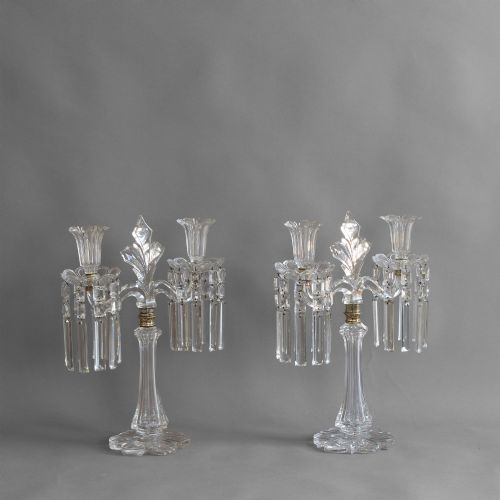
A clear glass candlestick pair brings brilliant sparkle to a dining table or mantelpiece, catching and refracting candlelight through cut or moulded surfaces.
Clear Glass Candlestick Pair
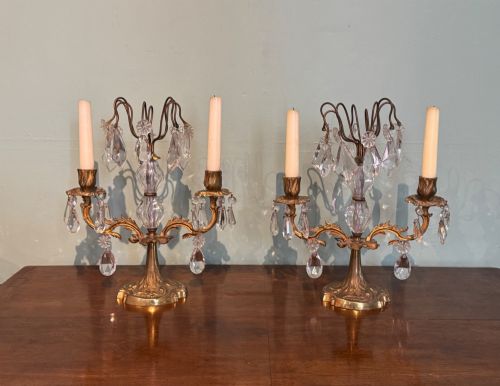
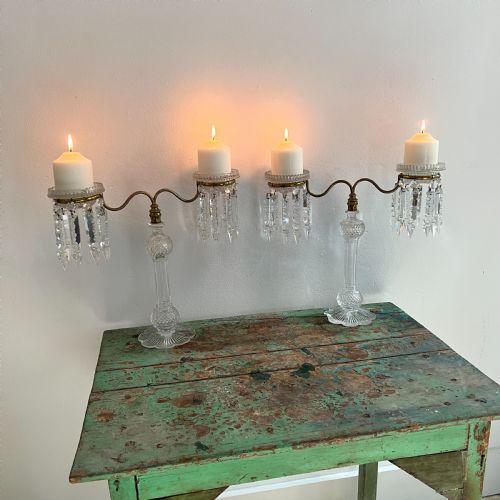
When you search for a clear glass candlestick pair, you encounter items designed to hold candles securely while illuminating a room with reflected light. The examples seen here range from simple domestic sticks to grand table candelabra and hanging lustres.
Most entries belong to the Victorian, Edwardian, and early twentieth-century periods, alongside Regency and Art Deco iterations. You will frequently find cut crystal designs and pieces incorporating brass mounts or glass chimneys.
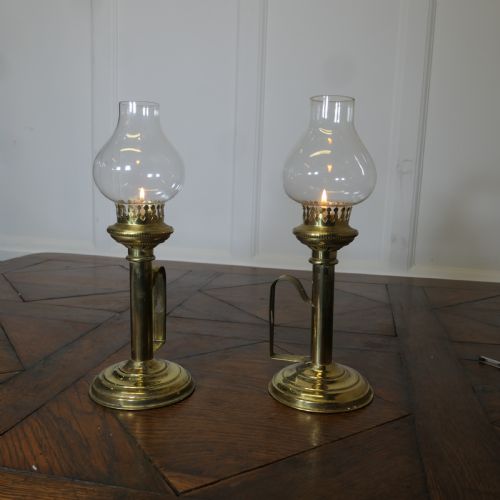
Forms vary from barley twist crystal shafts with domed feet to specialised items like Clarke's Patent Cricklite lamps. These pairs originate mainly from British and French makers working in lead glass and cut crystal.
Materials and construction methods
Makers utilised heavy lead glass and crystal, shaping the material through blowing, moulding, and intricate wheel-cutting. Cut glass facets were polished to maximise brilliance under candlelight.
Metal components such as brass and gilt brass frequently provide structural support or decorative collars, sometimes paired with delicate glass chimneys to shield the flame.
Some Victorian glass cylinders were patented specifically to keep adventurous insects away from the flickering flame during late-night garden suppers.
Judging quality and craftsmanship
Quality rests upon the crispness of the glass cutting and the overall weight of the lead crystal. Superior examples display sharp, hand-cut facets and perfectly balanced proportions rather than soft, moulded edges.
The integration of secondary materials like brass or gilt bronze dictates standard. Finer pairs show meticulous casting work and secure joining between the glass shafts and metal bases.
R Lalique
The Clear Glass Candlestick Pair Glossary
- Lustre
- A decorative tabletop vessel hung with glass prisms designed to catch and refract light. These are often found paired alongside traditional candlesticks.
- Cricklite
- A patented nineteenth-century lamp and candelabra system using a specialised glass shade or dome to enclose the candle flame safely. Clarke's Patent examples are particularly sought after by collectors.
- Barley twist
- A spiral column turned into the glass or metal shaft, creating a dynamic helical pattern that twists upwards toward the nozzle. This decorative turn appears frequently in crystal examples.
Clear Glass Candlestick Pair: Frequently Asked Questions
What is a clear glass candlestick pair?
A matched set of two candle holders made primarily from transparent glass, crystal, or lead glass. They are designed to hold taper candles securely while illuminating living spaces.
They appear in various historical forms, ranging from simple domestic table sticks to elaborate multi-branch candelabra hung with glass prisms.
How were these candle holders used?
They were placed on dining tables, sideboards, and mantelpieces to provide ambient illumination before electric lighting became common. Tall chimneys were sometimes added to shield the flame from draughts.
Many examples functioned as decorative centrepieces, utilising cut facets and hanging lustres to reflect light from candles or oil lamps.
How do I date a clear glass candlestick pair?
Dating relies on identifying stylistic markers, manufacturing techniques, and material composition characteristic of periods like the Regency, Victorian, or Art Deco eras. Cut patterns, pontil marks on the base, and metal mount styles offer strong chronological clues.
Patent marks or signatures, such as those associated with Clarke's Cricklite or Lalique, provide precise manufacturing attribution.
How do I live with antique glass candlesticks?
Display them on stable surfaces away from heavy footfall, as historic lead glass can be vulnerable to knocks. Use standard taper candles that fit securely in the sockets without requiring excessive force.
Cleaning requires gentle warm water and mild soap, avoiding harsh abrasives that might scratch the polished crystal or damage any applied brass mounts.