

Clear Cut Glass
Clear cut glass brings together centuries of light-refracting tableware, lighting and decorative vessels.
Clear Cut Glass
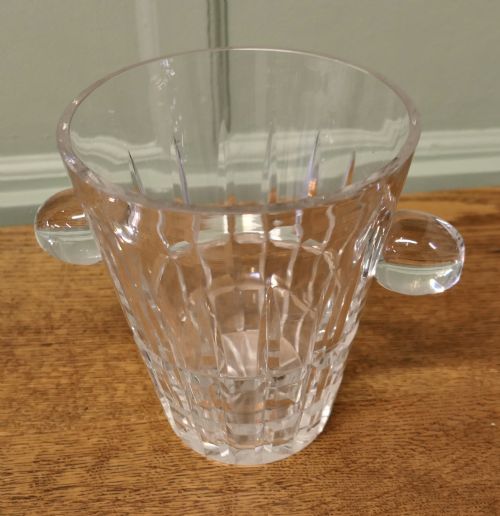
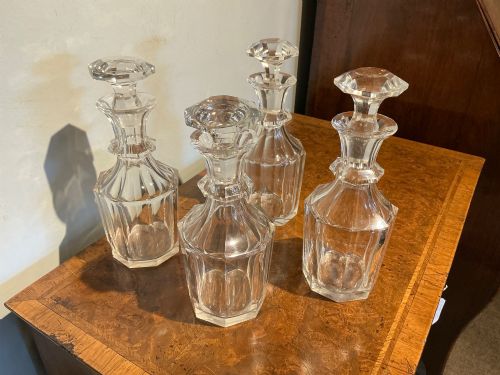
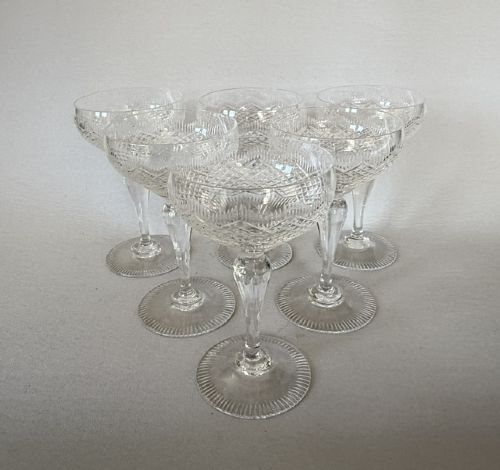
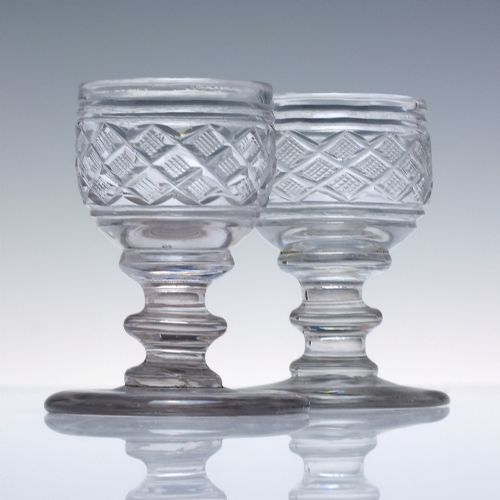
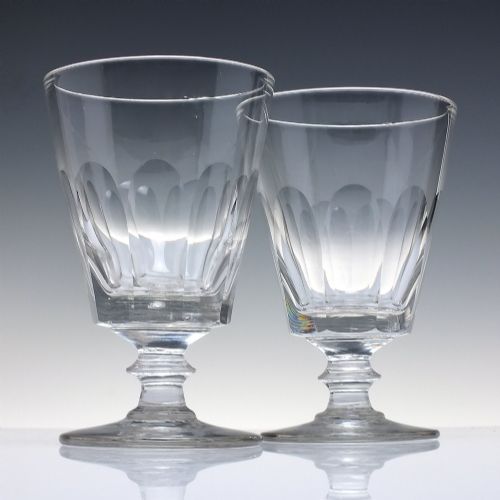
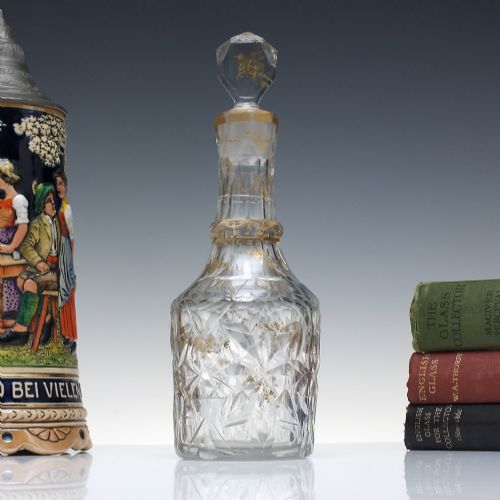
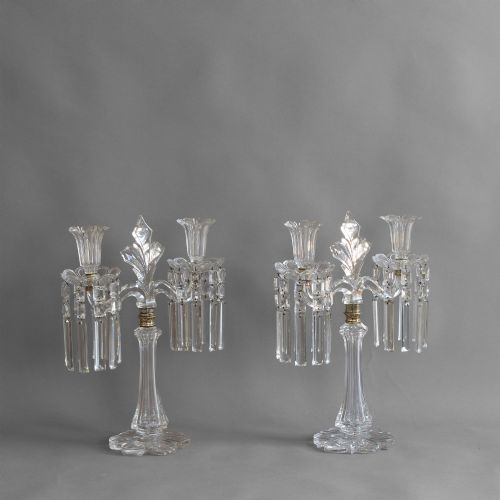
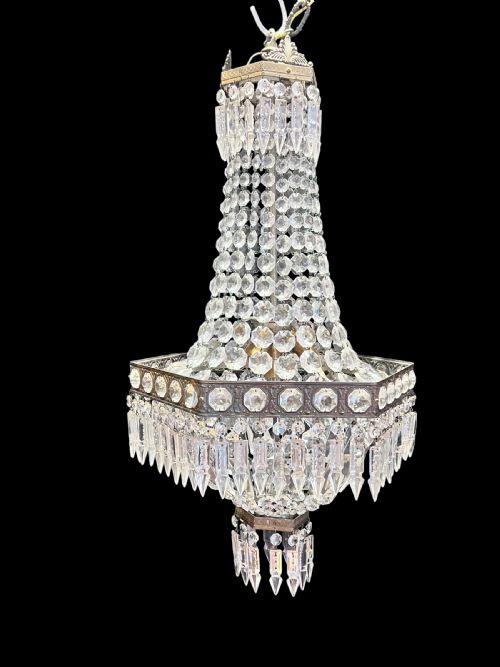
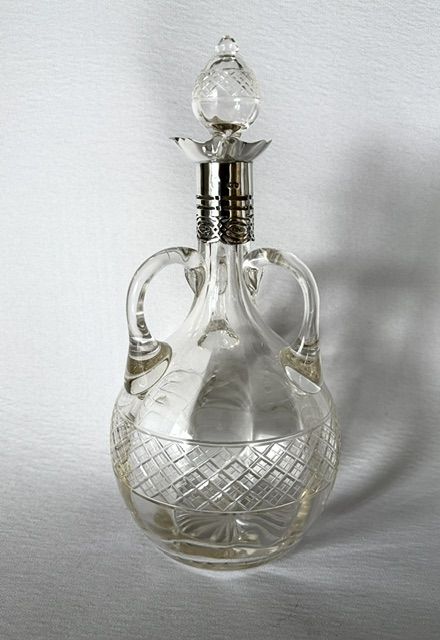
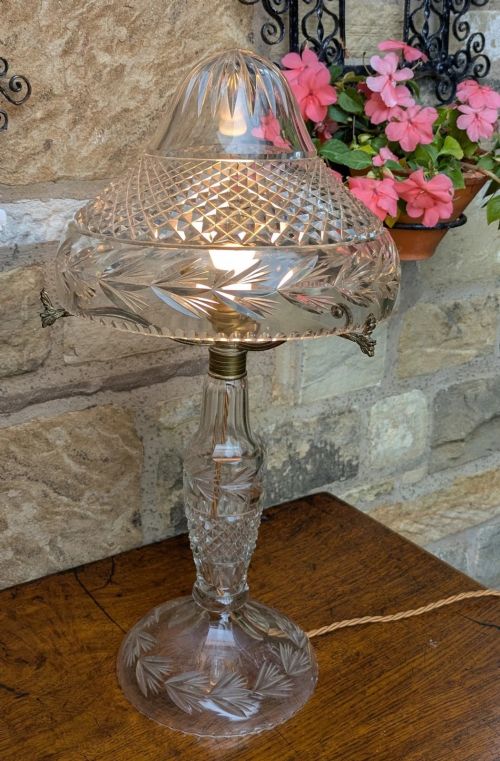
When you search for clear cut glass, you encounter items spanning the Georgian, Victorian, Edwardian and Art Deco periods. These pieces include practical drinkware such as rummers, champagne flutes and decanters alongside grand lighting fixtures like chandeliers and wall lights.
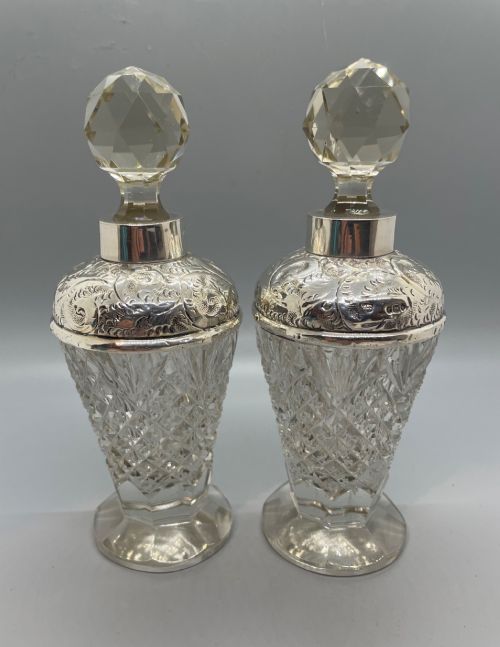
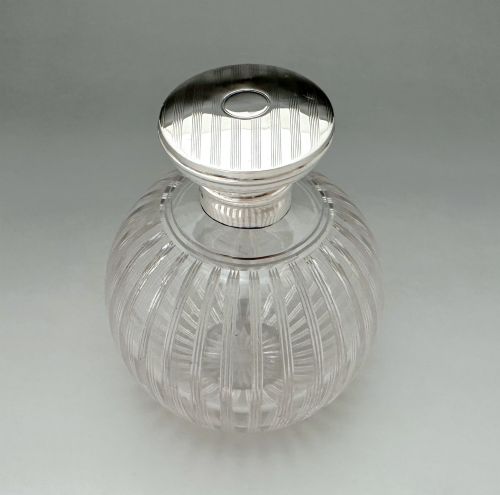
The objects most frequently met on this page range from small scent bottles with sterling silver mounts to large table lamps and ceiling pendants. They originate from English, French and Bohemian workshops, demonstrating varied functional forms across multiple decades.
How clear cut glass was made
Makers utilised heavy lead crystal and clear glass, combining them with mounts of sterling silver, brass and gilt bronze. Artisans shaped vessels through blowing before applying precise wheel-cut patterns.
Surface decoration involved deep faceting, pillar and prism cutting, and intaglio engraving. Metal components were then securely fitted to glass bodies using collars and bezels.
Some Victorian gentlemen used heavy cut glass rummers so substantial they doubled as defensive weapons in rowdy taverns.
What varies in quality
Quality rests upon the clarity of the material and the crispness of the wheel cutting. Superior examples exhibit deep, sharply defined facets that refract light intensely without optical distortion in the glass body.
The weight of the crystal and the integration of secondary materials such as hallmarked silver or gilded bronze define the tier of the piece. Master ateliers achieved a balance between substantial material and balanced proportions.
James Giles·Stevens and Williams·Moser·Webb
The Clear Cut Glass Glossary
- Rummer
- A large drinking glass used for wine or beer during the Georgian and Victorian periods. These heavy vessels often feature thick stems and cut bases.
- Plafonnier
- A bowl-shaped ceiling light mounted close to the ceiling. This lighting form frequently incorporates cut crystal panels held in a brass frame.
- Intaglio
- A design carved into the surface of the glass rather than raised. This technique creates a sunken motif that appears polished and distinct against clear facets.
- Claret jug
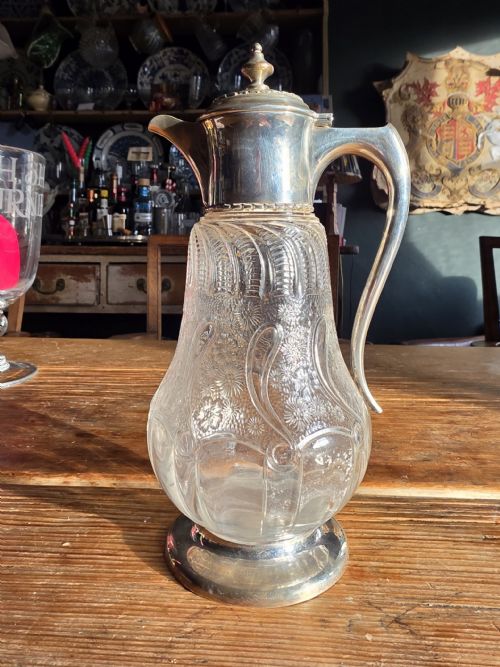
- A pouring vessel designed for red wine, typically fitted with a hinged silver handle and collar. Examples often display geometric cutting across the glass body.
- Lustre
- A decorative tabletop ornament hung with cut glass pendants. These objects catch and scatter ambient candlelight.
Clear Cut Glass: Frequently Asked Questions
What periods do these glass pieces span?
The selection covers items produced from the Georgian era through the Victorian and Edwardian decades, extending into Art Deco designs of the early twentieth century.
Each era brought distinct cutting styles and object types, ranging from eighteenth-century decanters to twentieth-century lighting fixtures.
How were silver mounts attached?
Silver mounts, collars and tops were secured directly to the glass necks using specialised adhesives or mechanical tension. Hallmarks stamped onto the silver often help date the complete object.
Craftsmen matched the metalwork precisely to the contours of the blown and cut glass bodies.
Where were these glass items made?
Production centres included English glasshouses, French ateliers and Bohemian workshops. Each region developed distinct preferences for glass weights and cutting motifs.
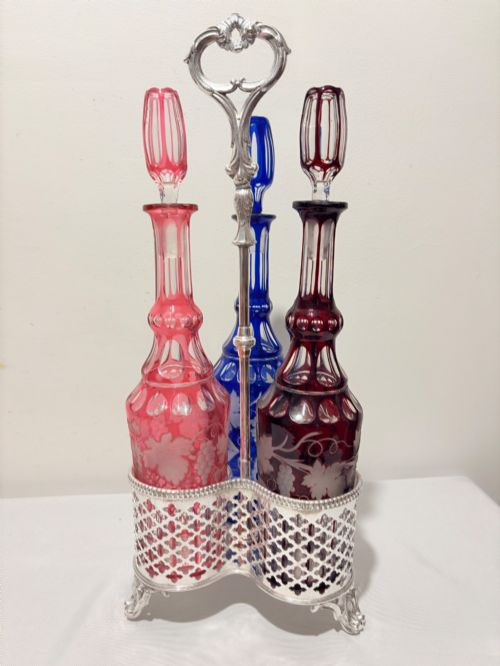
English and Irish factories focused heavily on heavy table glass, while French and Bohemian makers often incorporated coloured overlays and gilt highlights.
How do I care for antique glass?
Wash pieces gently by hand in lukewarm water using mild detergent. Avoid sudden temperature changes to protect the material from thermal shock.
Dry the glass immediately with a lint-free cloth to maintain the brilliance of the wheel-cut facets.