


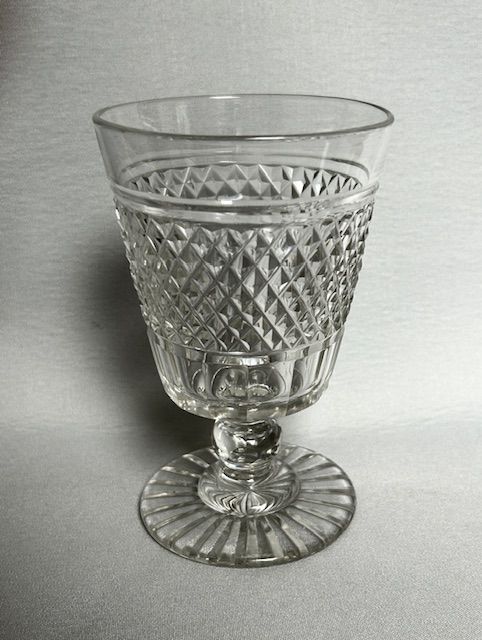


Clear Cut Glass Goblets
Clear cut glass goblets bring weight and brilliance to the table, spanning Georgian rummers to Victorian cut crystal.
Clear Cut Glass Goblets
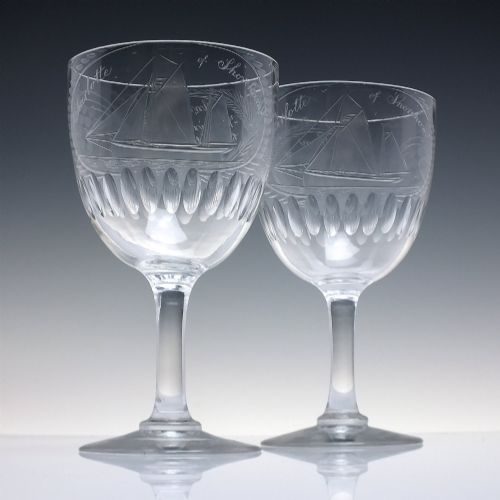
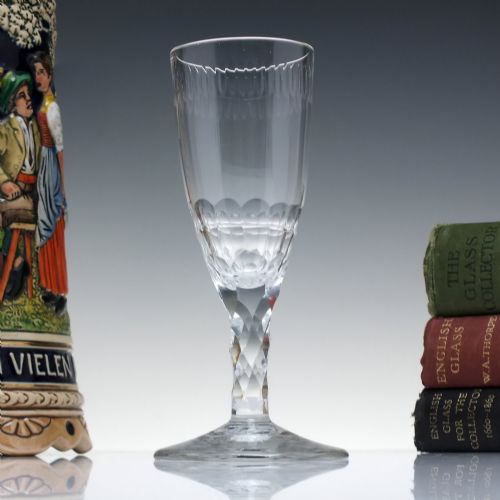
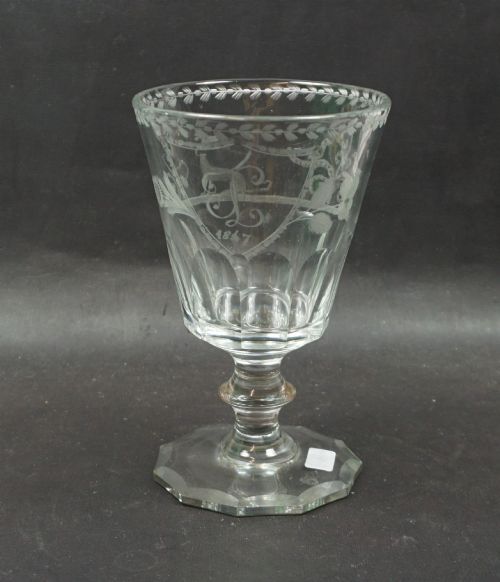
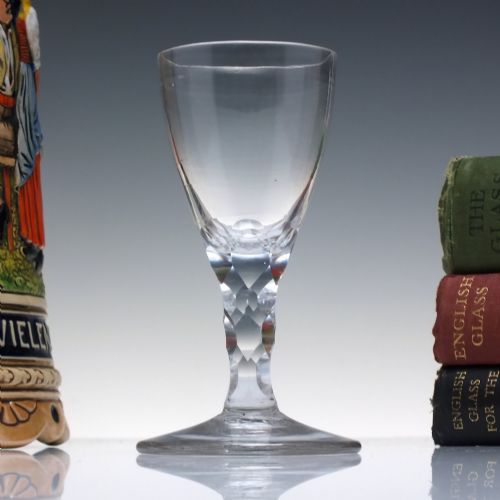
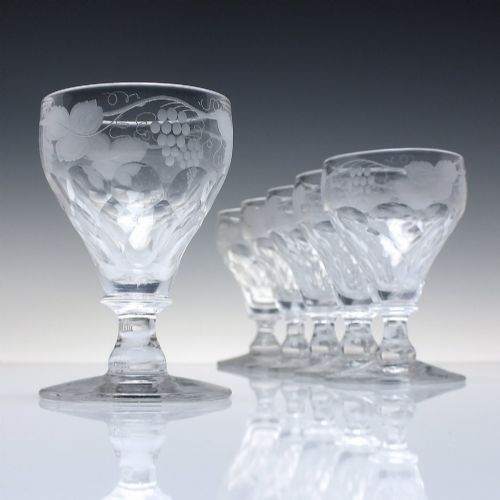
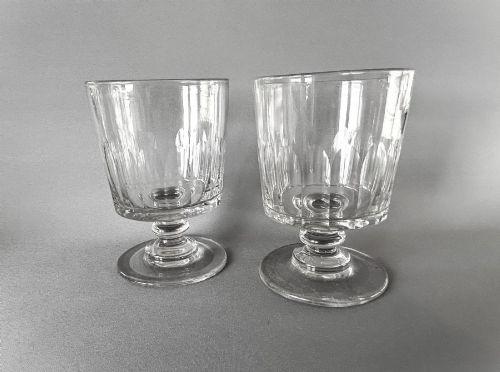
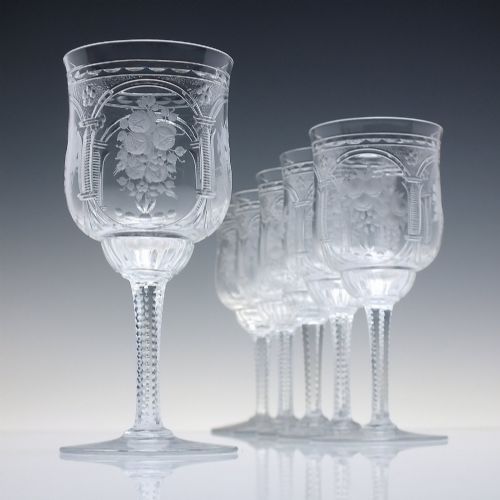
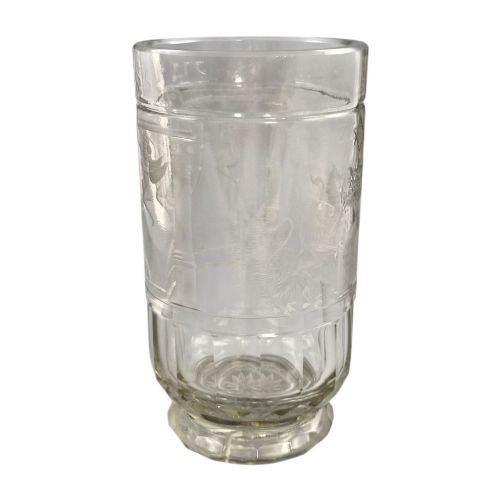
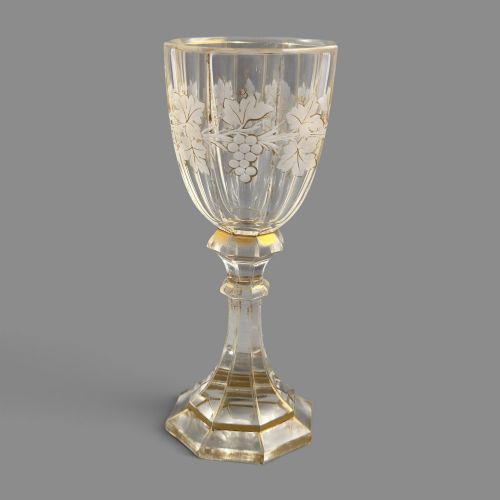
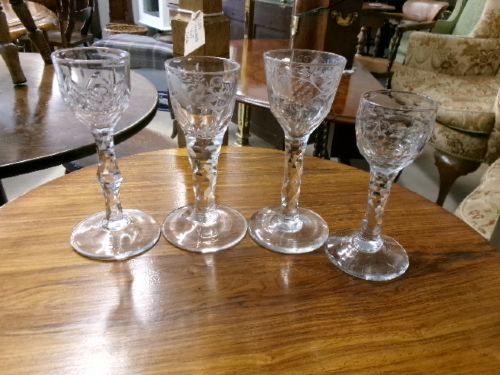
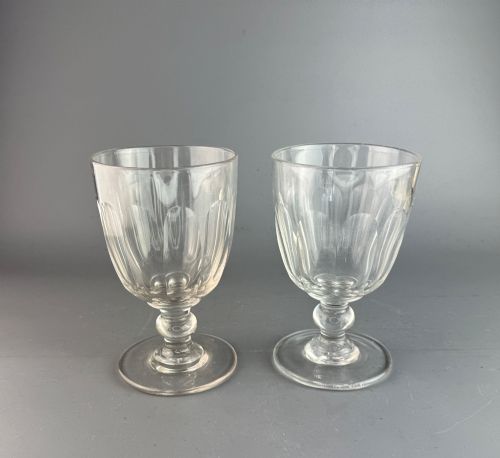
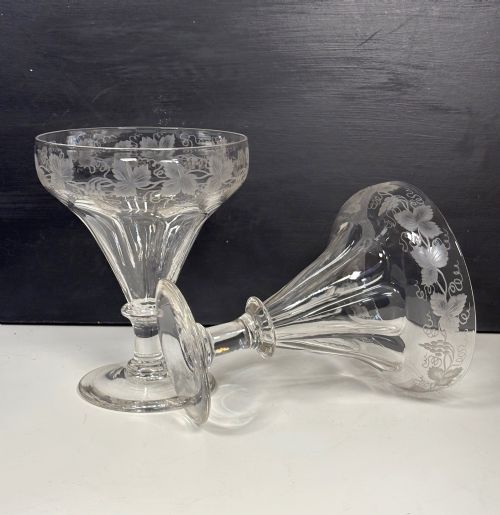
Clear cut glass goblets encompass drinking vessels, wine glasses, rummers, and commemorative beakers shaped across the eighteenth, nineteenth, and early twentieth centuries. When searching for clear cut glass goblets, buyers encounter robust rummers with square lemon squeezer feet, facet-stemmed wine glasses, and substantial engraved vessels.
The material ranges from heavy lead glass and crystal to clear glass, often enriched with cutting, etching, and gilding. Pieces originate from English, Irish, and Bohemian workshops, reflecting periods from the Georgian era through to Edwardian production.
Judging quality and character
Quality rests in the clarity of the metal, the precision and depth of the wheel-cutting, and the overall heft of the vessel. Superior examples display sharp, clean facets without blurring, alongside well-proportioned stems and stable foot bases.
The crispness of engraved motifs and the integration of decorative gilding or casing separate standard production from finer cabinet pieces. Consistency within matching sets of wine glasses or rummers also defines the desirability of the group.
Clear Cut Glass Goblets Retail Price Guide 2026
Typical asking prices for clear cut glass goblets among the pieces listed under this phrase on Sellingantiques today, from the lower quarter to the upper quarter. They describe what is for sale here now, not the wider market.
Masonic ceremonial beakers carried secret symbols into nineteenth-century toasts.
Moser·Webb Corbett·Stevens and Williams·James Giles
The Clear Cut Glass Goblets Glossary
- Rummer
- A large, sturdy drinking glass popular in the Georgian and Victorian periods, often utilised for ale, wine, or punch. These vessels typically feature substantial bowls and thick stems.
- Lemon squeezer base
- A square, pressed glass foot shape resembling a lemon squeezer, characteristic of Georgian and Regency rummers. This form provided extra weight and stability to the base.
- Facet cut
- A decorative technique involving the grinding of flat, geometric planes into the surface of the glass. This method enhances light refraction across the bowl or stem.
- Lead crystal
- Glass containing a high proportion of lead oxide, increasing the weight, clarity, and refractive index of the material. It remains the preferred medium for deep cutting.
- Intaglio
- A design carved into the surface of the glass so that the motif sits below the outer plane. This technique requires skilled wheel-engraving.
Clear Cut Glass Goblets: Frequently Asked Questions
What is a rummer?
A rummer is a large, heavy drinking glass designed for wine, ale, or punch during the Georgian and Victorian periods. They typically feature sturdy stems and capacious bowls suited to communal dining.
Many examples sit upon square lemon squeezer feet, providing the necessary weight to balance their substantial upper portions.
How do I date antique goblets?
Dating relies on observing form, stem construction, and the style of cutting or engraving. Georgian pieces often display facet stems or bucket bowls, while Victorian examples introduce heavier press-moulding and varied etching techniques.
Matching the stylistic markers of periods such as Regency or Edwardian production helps narrow the date of manufacture.
Can I use these for dining?
These historical drinking vessels are robust enough for careful contemporary use, particularly sturdy rummers and heavy crystal glasses. Hand washing in warm water preserves the clarity and surface finish of the glass.
Avoid thermal shock by keeping water temperatures moderate when washing or serving drinks.