



Clear Crystal Decanter Pair
A clear crystal decanter pair brings symmetry and light to a sideboard, offering matched vessels shaped by decades of glassmaking traditions.
Clear Crystal Decanter Pair
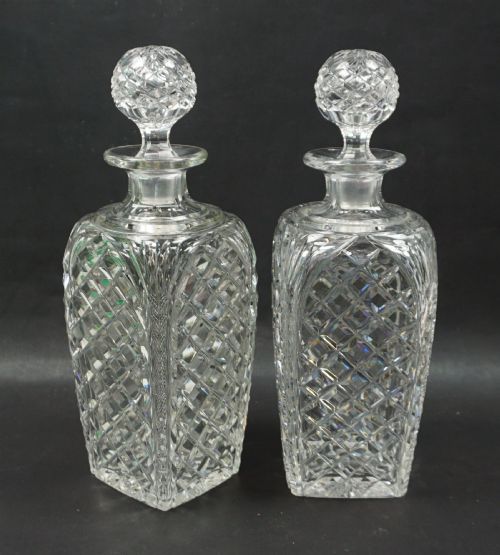
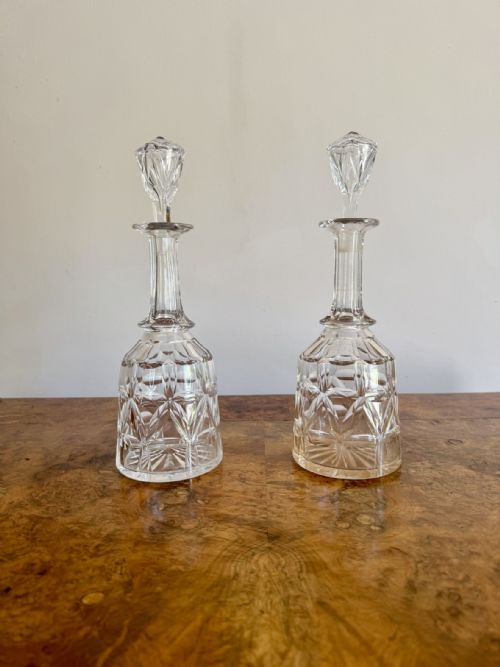
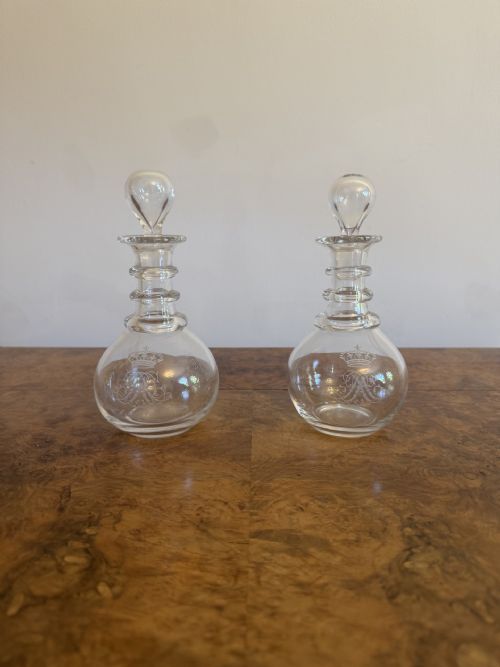
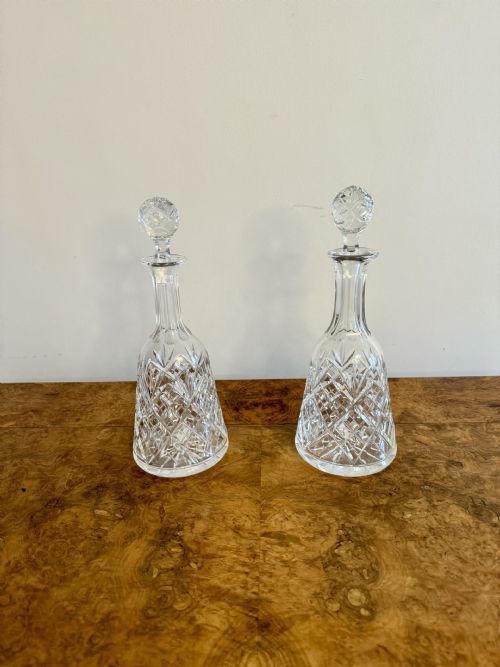
A clear crystal decanter pair comprises matched twin vessels designed for serving wine, spirits or water on a dining table or sideboard. These items appear in various historical forms, from Georgian three-ring shapes to Edwardian spirit decanters and tall Victorian shaft and globe designs.
The pieces listed on this page originate predominantly from the Victorian and Edwardian eras, alongside Georgian and early twentieth-century examples. Buyers frequently encounter bell-shaped profiles, square tapered bodies and pillar-cut designs produced in England and France.
Beyond standard beverage service, the selection includes related matched pairs such as claret jugs, carafes and smaller perfume bottles with silver collars. Each pairing reflects the social dining habits of its period, prioritising visual symmetry on the table.
What varies in quality
The clarity and weight of the material determine much of the distinction between standard vessels and finer examples. High-grade lead crystal yields a resonant ring when tapped and displays greater brilliance under ambient light.
The precision of the wheel-cut facets and the depth of the hand engraving dictate the refinement of the design. Sharply defined prismatic rings and well-balanced proportions separate accomplished workshop output from simpler commercial production.
James Powell·Rene Lalique·Mappin & Webb
The Clear Crystal Decanter Pair Glossary
- Prussian style
- A decanter shape featuring a broad base and neck rings, popular during the Georgian period. The design keeps the centre of gravity low for stability on ship or dining table.
- Shaft and globe
- A silhouette defined by a spherical lower body rising into a long, slender neck. This form appears frequently in Victorian tavern and domestic service.
- Pillar cut
- A decorative technique involving wide, vertical flutes cut deeply into the shoulders or body of the vessel. It reflects light effectively across the heavy glass surface.
- Optically blown
- A method where molten glass is inflated inside a ribbed mould to impart spiral or vertical patterns to the walls before final shaping. This process creates subtle texture within clear crystal.
- Silver plate
- A thin layer of silver fused to a base metal, commonly utilised for the collars, handles and spouts of Edwardian claret jugs and decanter services.
Clear Crystal Decanter Pair: Frequently Asked Questions
How do I clean a cloudy decanter?
Residue builds up inside antique vessels over decades of use, leaving a hazy film along the lower walls. Gentle cleaning requires warm water and non-abrasive methods rather than harsh scrubbing.
Harsh chemicals risk damaging the interior surface or historic glass composition. Patience during soaking yields better preservation of the material.
Can I use these decanters daily?
These historical vessels suit regular dining and entertaining provided they receive careful handling during washing and pouring. The robust lead crystal withstands everyday service of wine and spirits.
Hand washing remains essential to protect any delicate wheel-cut engraving or attached silver elements. Sudden temperature changes should be avoided to prevent thermal stress.
How do I match stoppers safely?
Stoppers were individually ground to fit each specific neck during manufacture, meaning they are rarely interchangeable between antique vessels. Keeping the original pair together maintains historical integrity.
Forcing a mismatched stopper risks chipping the delicate rim of the decanter. Examining the ground glass mating surface reveals whether the components belong together.
What defines an Edwardian decanter?
Edwardian examples typically display bright, clear lead crystal with crisp mechanical cutting or simpler geometric motifs. These pieces often reflect lighter dining trends of the early twentieth century.
Proportions became more streamlined compared to heavy Victorian counterparts. Many were produced as matched sets for spirit cabinets and trays.