
Clear Crystal Ceiling Fitting
A clear crystal ceiling fitting brings historic illumination into a room through cut glass prisms and brass frames.
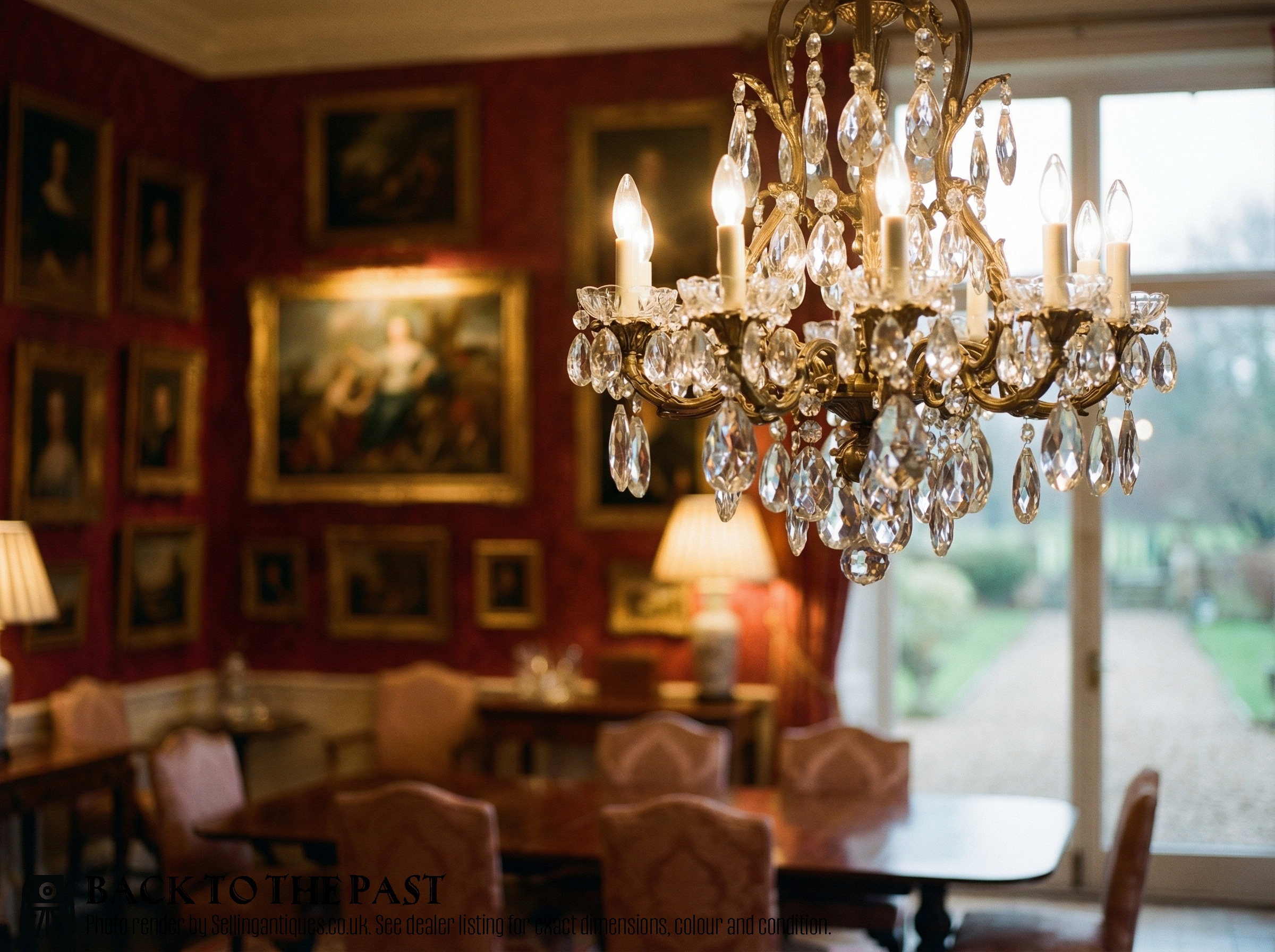
Clear Crystal Ceiling Fitting
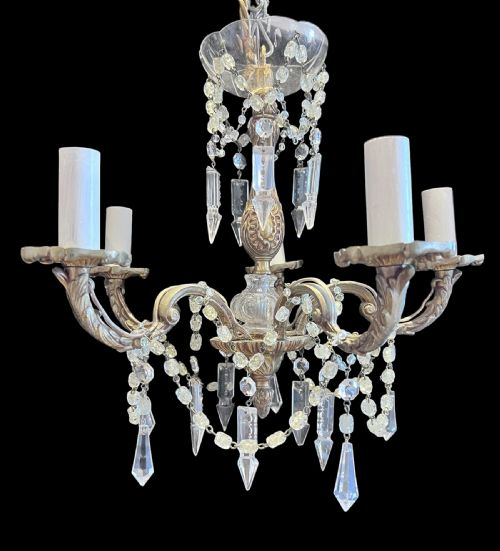
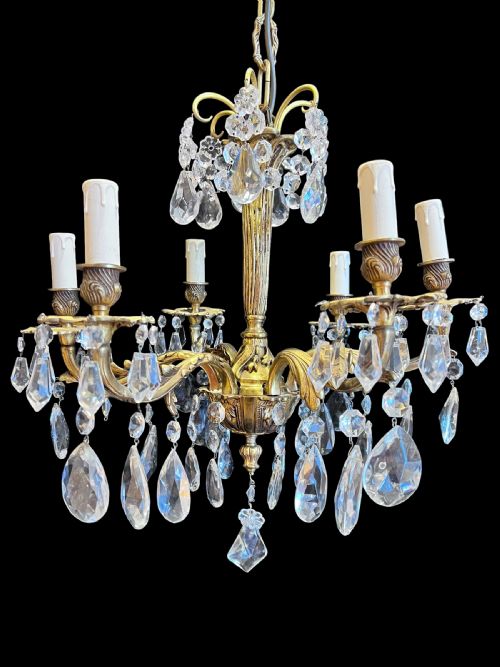
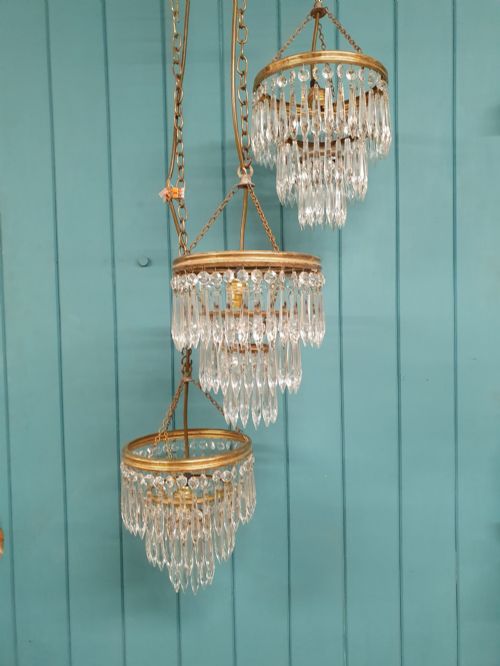
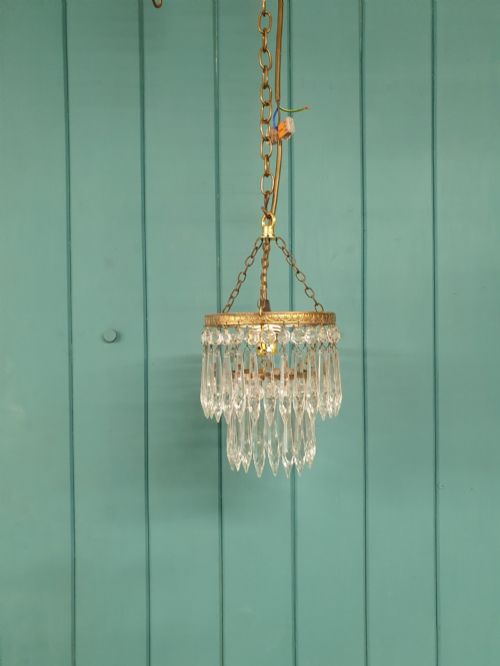
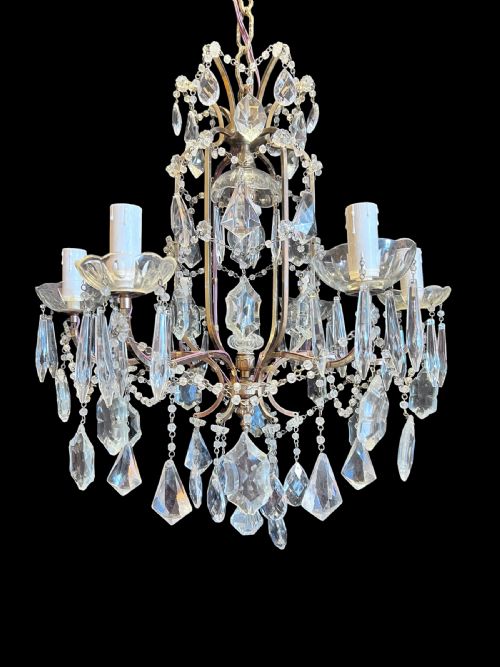
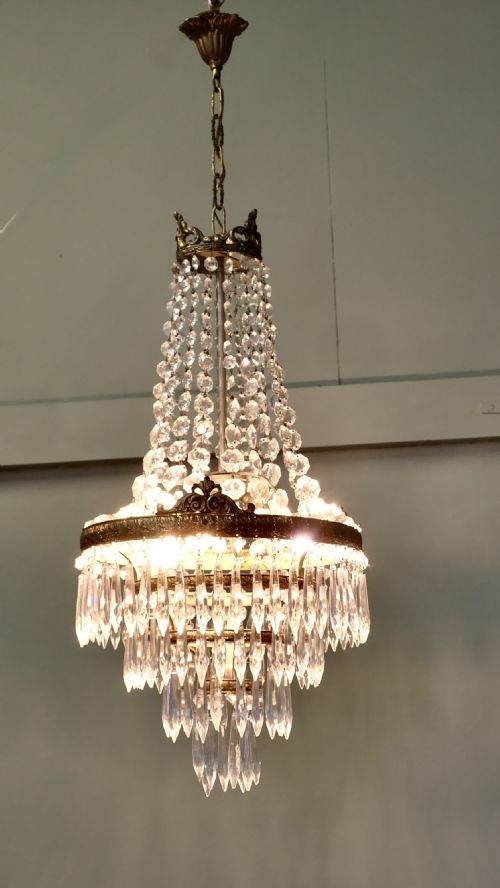
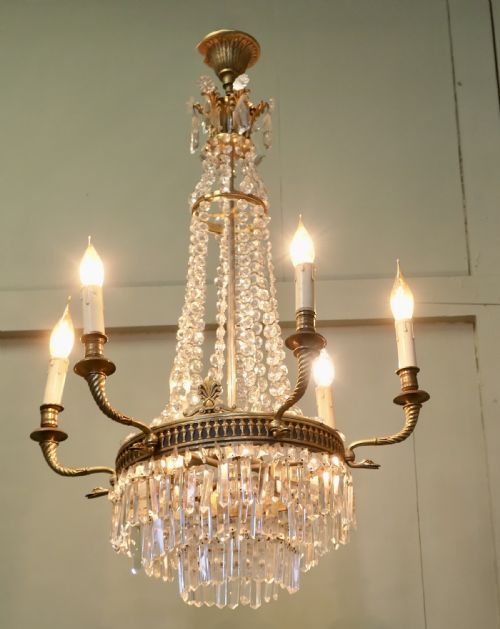
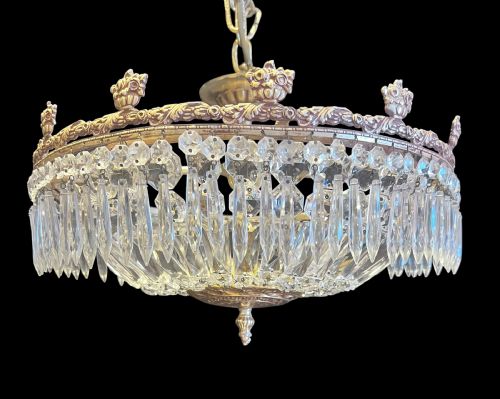
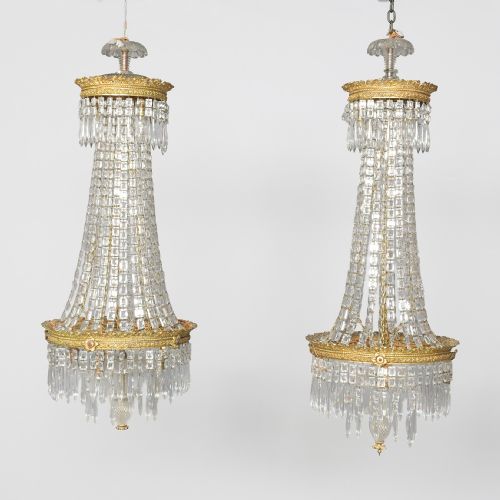
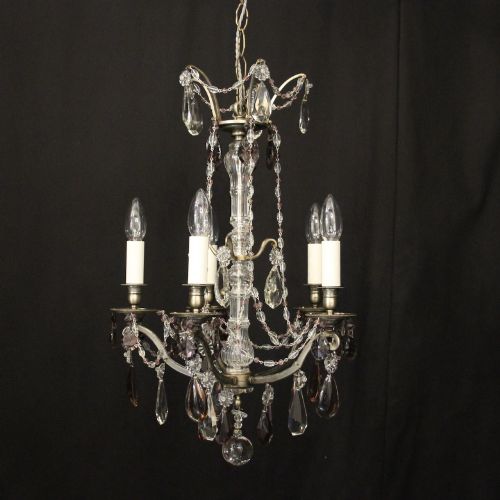
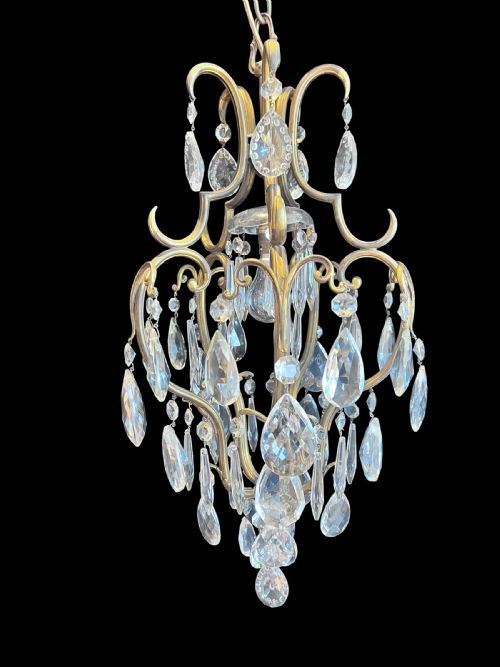
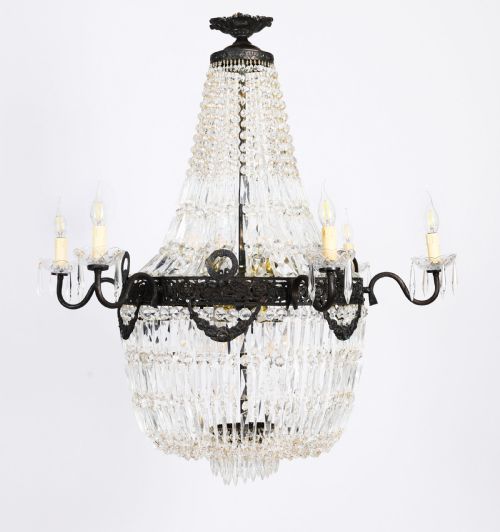
A clear crystal ceiling fitting encompasses hanging light fixtures designed to distribute illumination through cut glass and crystal components. When searching for a clear crystal ceiling fitting, buyers encounter diverse forms ranging from small single-light pendants and domes to multi-armed chandeliers spanning French Empire, Art Deco, and Edwardian styles.
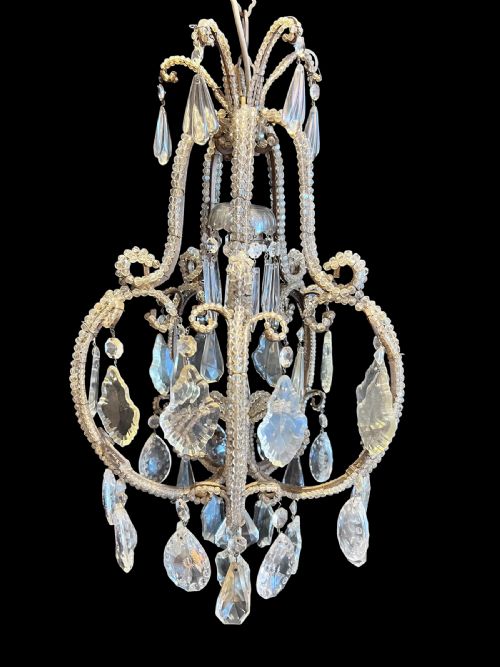
The selections span production from the nineteenth century through the 1930s, incorporating brass, bronze, and wrought iron frameworks. Pieces frequently originate from French, Italian, and Swedish workshops, displaying distinct regional silhouettes like the classic tent and waterfall or the basket configuration.
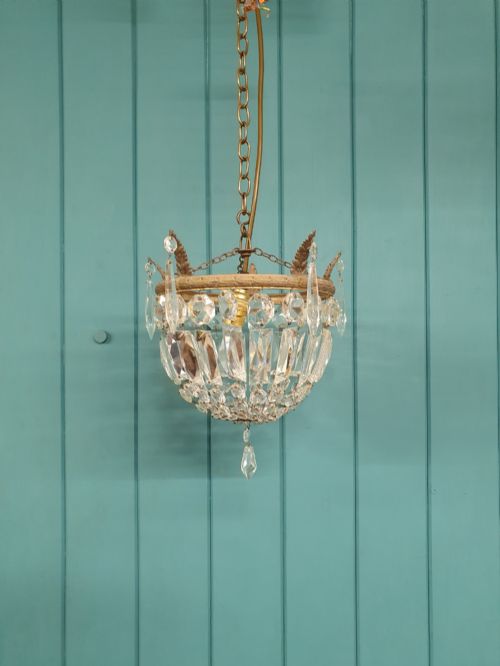
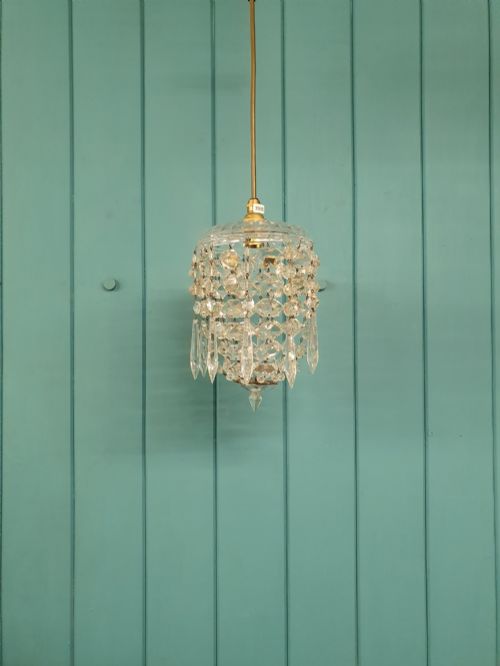
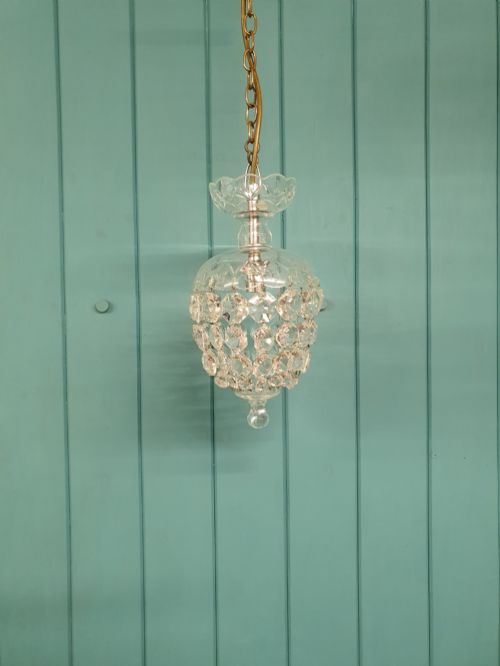
Smaller examples include bag chandeliers and compact spike fittings measuring only a few inches, whilst larger ballroom fixtures carry numerous branches and tiers. Buyers meet these varied proportions across domestic spaces where period lighting serves both decorative and functional roles.
How these fittings were constructed
Makers built these fittings using structural skeletons of cast brass, bronze, or wrought iron to support the heavy weight of glass elements. Metal mounts and brass frames hold together complex configurations of suspended drops, beads, and prisms.
Cut glass and crystal components were individually shaped and polished before being wired or pinned to the metal armature with brass wire. Drop prisms, coffin prisms, and lustres refract light across the room from central frames or tiered rings.
Periods represented span from the nineteenth century through the Edwardian era and the 1930s.
What separates the finest examples
Quality rests in the precision of the glass cutting and the structural integrity of the metal mounts. Superior pieces display deep, sharp facets on the crystal drops that catch and disperse light cleanly, alongside heavier cast brass or bronze frameworks that maintain rigidity under the weight of the glass.
The complexity of the assembly distinguishes standard production from exceptional work, visible in dense arrays of beaded chains, multi-tiered drops, and intricate wire or frame construction. Original gilding or silvering on the metal elements further elevates the finish of the piece.
The Clear Crystal Ceiling Fitting Glossary
- Tent and waterfall
- A chandelier style featuring an upper conical section of strung beads above a cascading shower of crystal drops.
- Bag chandelier
- A compact fitting where crystal drops cluster closely around the light source in a bag-like silhouette.
- Coffin prism
- A long, flat-backed glass drop shaped like a coffin, used widely on Edwardian and early twentieth-century light fittings.
- Plafoniere
- A ceiling-mounted bowl or shallow fitting positioned close to the plaster rather than suspended on a long chain.
Clear Crystal Ceiling Fitting: Frequently Asked Questions
How do I hang a crystal chandelier?
Hanging requires fixing a heavy-duty ceiling hook directly into the ceiling joist to support the combined weight of the metal frame and glass components. Professional electrical installation ensures the wiring safely accommodates the lamp holder configuration.
Once secured to the ceiling, fragile glass drops and beaded swags attach to the frame by hand. Taking time with this final dressing stage prevents tangling and breakage.
What rooms suit a ceiling fitting?
Smaller dome fittings, bag chandeliers, and single-light pendants suit hallways, bedrooms, and low-ceilinged spaces where compact proportions matter. Their modest drop keeps walkways clear while adding period character.
Larger multi-armed chandeliers and multi-tiered fixtures find their place in reception rooms and dining spaces with higher ceilings. These substantial pieces provide a strong focal point for the interior.
How do I clean a crystal fitting?
Cleaning involves wiping individual glass drops with a mild solution of warm water and vinegar while the fitting remains suspended. Leaving the crystals attached on the frame prevents damage to the delicate wire fixings.
Soft cloths dry the glass pieces to restore their refractive clarity without scratching the surface. Regular dusting maintains the sparkle of the cut glass.
How do I date a crystal fitting?
Dating relies on examining the metal casting techniques, frame styles, and the specific cut of the glass prisms. Edwardian and 1930s pieces often show characteristic spike forms, coffin prisms, or Art Deco tiered geometries.
Earlier nineteenth-century examples display heavier bronze or brass frameworks with distinct patination and French Empire styling. Comparing the wiring type and construction methods helps confirm the era of manufacture.