

Classical Table Urns
Classical table urns transform grand neoclassical vessels into functional lighting and centrepieces, bringing monumental proportion and historic gravitas directly to domestic interiors.
Classical Table Urns
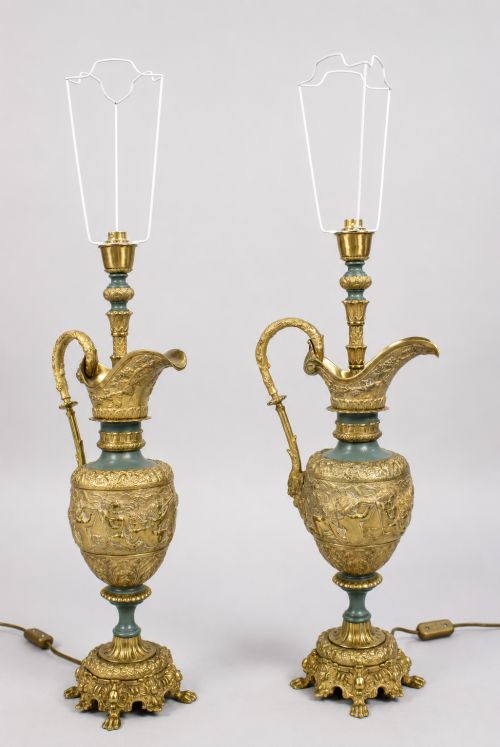
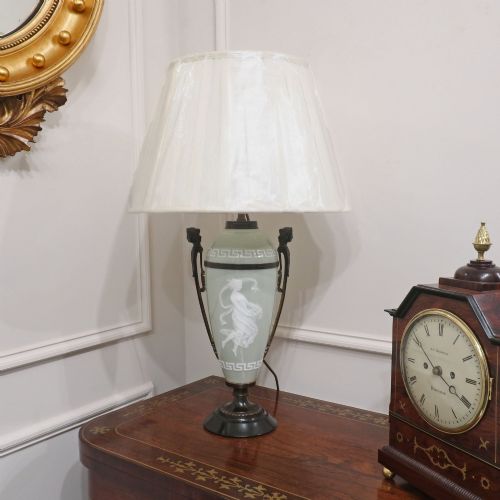
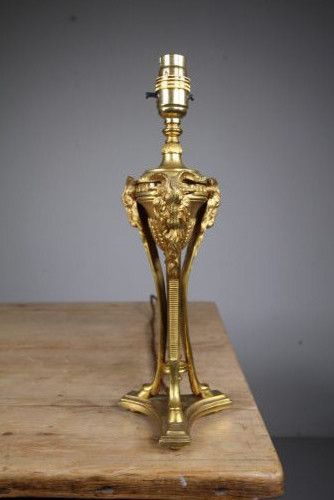
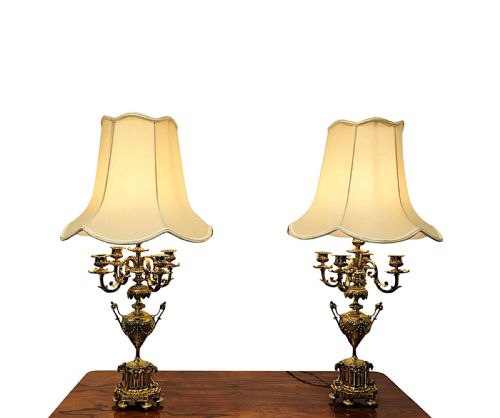
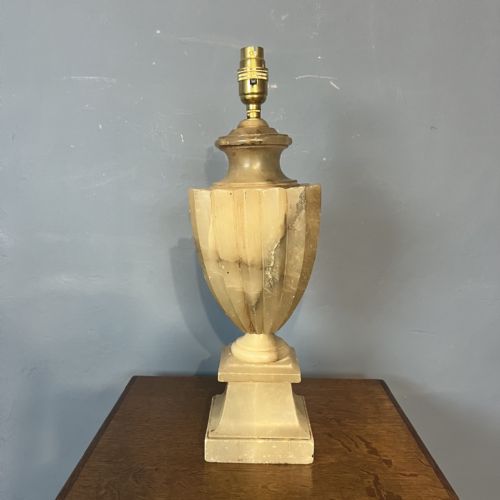
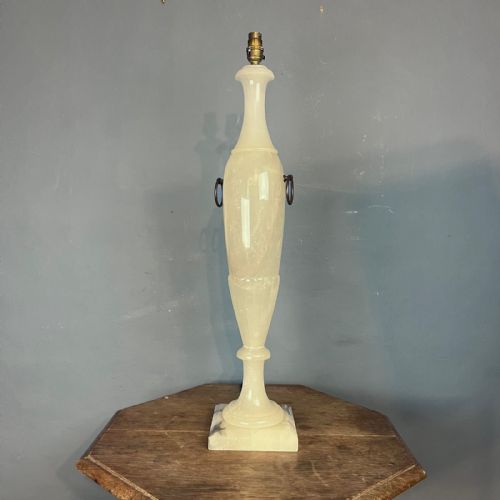
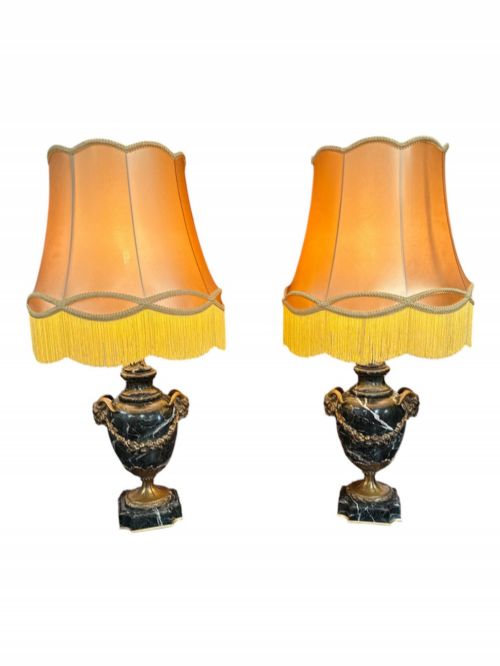
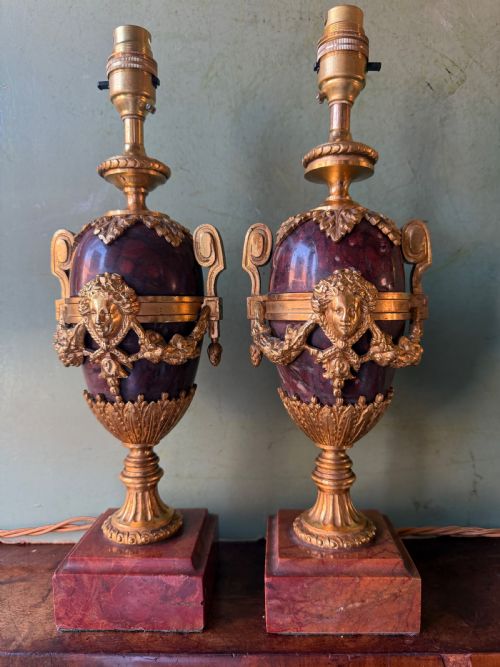
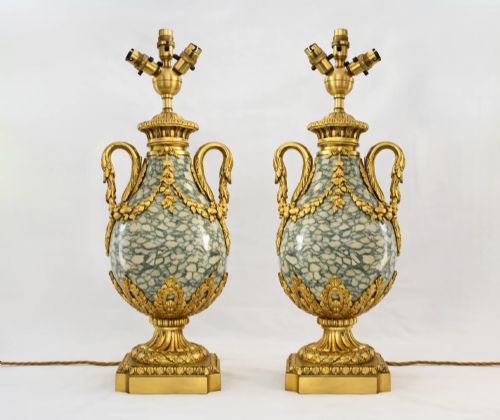
Classical table urns draw on the architectural forms of antiquity, taking shape as ewers, cassolettes, and amphorae adapted for interior display. Buyers searching for classical table urns encounter pieces that bridge decorative urns and functional objects, frequently converted into table lamps.
The pieces listed here span the nineteenth century through the early twentieth century, encompassing Victorian, Edwardian, and Regency periods. French Neoclassical and Louis XVI revival designs dominate the selection, alongside English brass and Italian alabaster interpretations.
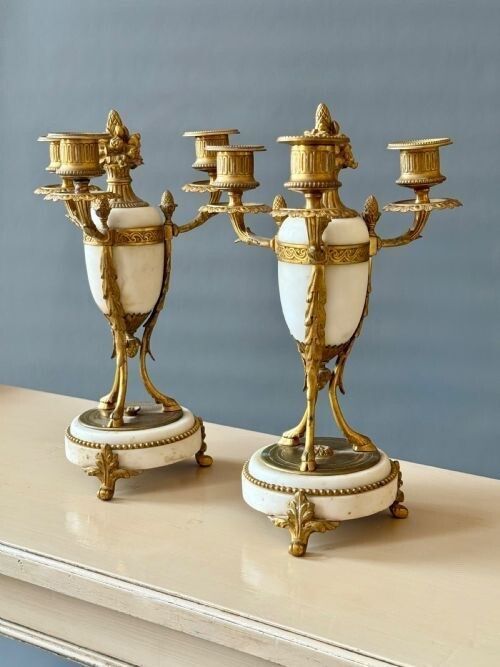
Most examples originate from the transformation of decorative urns, candelabras, and clock garnitures into electrified table lamps. Pairs predominate, retaining the symmetry essential to formal nineteenth-century interior schemes.
How they were made
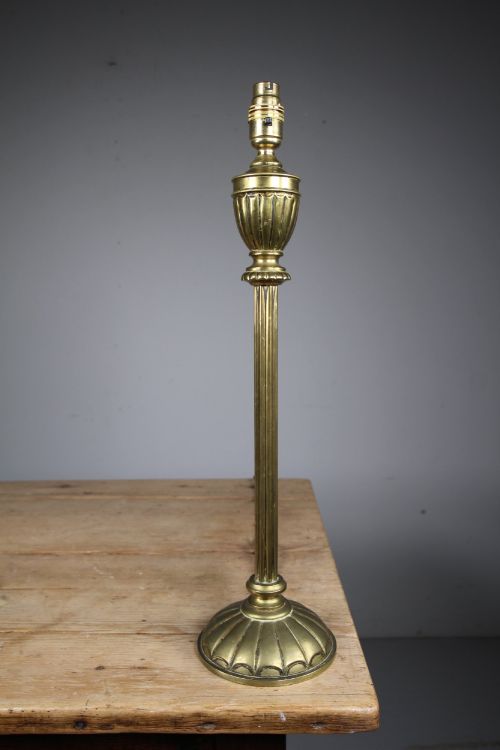
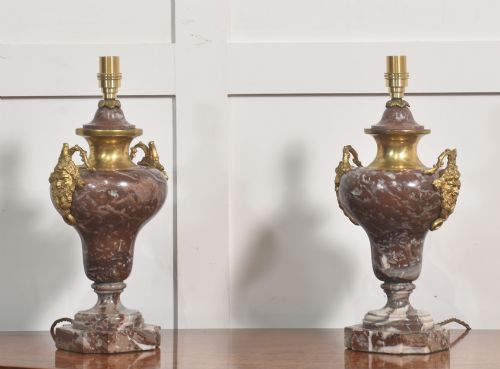
Foundry work combined cast bronze, brass, ormolu, and gilded metal with carved natural materials including rouge marble, white onyx, and alabaster. Metal mounts and paw feet were cast and chased by hand before fire gilding or plating.
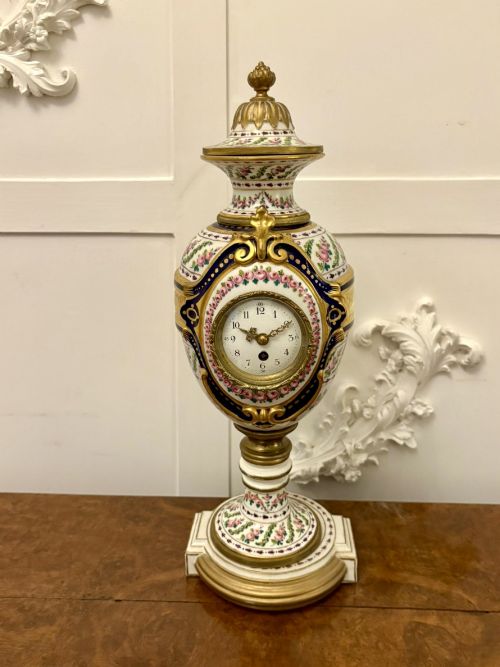
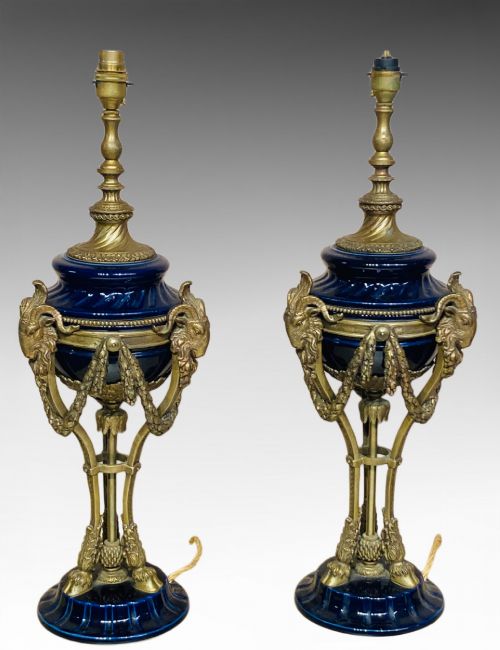
Vessels incorporated ceramic elements such as porcelain bodies decorated with pate-sur-pate or hand-painted details, mounted on stone plinths. Conversion to lamps involved channelling internal wiring through the original bodies, often during later twentieth-century updates.
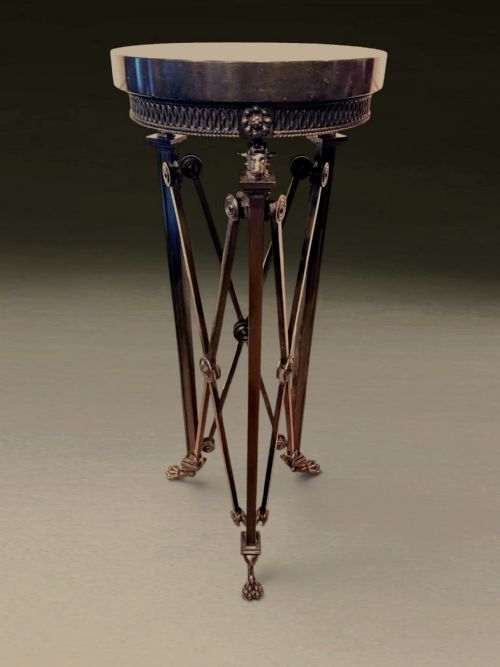
Several nineteenth-century urns stand firmly on cast bronze paw feet, bringing an unexpected touch of mythological beastly support to the tabletop.
What varies in quality
The distinction between ordinary and exceptional pieces lies in the crispness of the bronze chasing and the density of the marble or alabaster. Finer specimens display deeply undercut cast ornament and substantial ormolu mounts rather than light surface plating.
Proportion and material selection separate standard production from superior examples. Heavy rouge marble bases, finely veined onyx, and robust cast brass hardware define the upper tier of the range.
Walker And Hall·Harrison Brothers And Howson
The Classical Table Urns Glossary
- Ormolu
- Gilded bronze produced through a mercury amalgamation technique, creating a durable golden finish on decorative mounts. This process was widely used in French workshops during the eighteenth and nineteenth centuries.
- Cassolette
- A decorative vase or urn designed with a reversible lid that functions as a candleholder or reveals an incense burner. These dual-purpose vessels frequently appear in neoclassical garniture sets.
- Pate-sur-pate
- A ceramic decorating technique where wet white porcelain slip is built up in layers on a contrasting coloured body to create a low relief cameo effect. It requires immense skill from the ceramic artist.
- Ewer
- A large jug with a wide spout and elaborate handle, originating from ancient vessel forms used for pouring water. In nineteenth-century lighting, ewer bodies were repurposed as lamp bases.
- Amphora
- A two-handled ancient vessel with a narrow neck, adapted during the neoclassical revivals as a decorative urn or lamp body. These forms often rest on detailed cast metal bases with paw feet.
Classical Table Urns: Frequently Asked Questions
What periods do these urns date from?
The selection spans the nineteenth century through the 1930s, incorporating Victorian, Edwardian, and Regency eras. French revival styles from the late nineteenth century feature prominently alongside early twentieth-century Italian stone pieces.
Dates are established through material analysis, manufacturing techniques, and stylistic markers tied to specific revival periods like Louis XVI.
Were these originally made as lamps?
Most pieces began life as decorative urns, candelabras, or cassolettes before being converted into table lamps at a later date. This adaptation preserves historic metalwork and stone bodies while rendering them functional for modern rooms.
Original oil or gas fittings are occasionally retained, but the majority show evidence of twentieth-century electrical conversion.
How do I identify French neoclassical style?
French neoclassical pieces rely on strict symmetry, architectural proportions, and classical motifs such as rams' heads, swags, and acanthus leaves. They frequently employ ormolu mounts paired with rouge marble or white alabaster.
This aesthetic draws directly from archaeological discoveries of the eighteenth century, revived with vigour during the nineteenth century.
How should I care for marble and ormolu?
Maintain marble and onyx surfaces with a dry or barely damp microfiber cloth, avoiding acidic cleaners that etch stone. Ormolu mounts require gentle dusting without abrasive polishes to preserve the underlying gilded bronze layer.
Stable indoor humidity prevents cracking in natural stone bodies and protects historical metal finishes.