
Classical Silver Table Candlesticks
Classical silver table candlesticks bring formal symmetry and polished reflection to a room, drawing on Georgian and Victorian architectural ideals.
Classical Silver Table Candlesticks
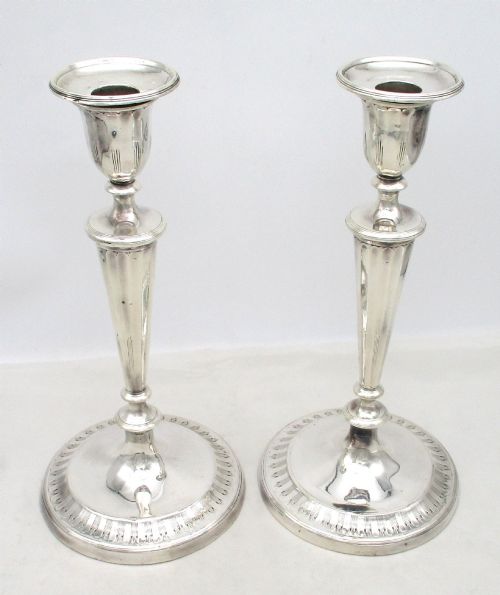
Classical silver table candlesticks are formal lighting pieces designed to stand on dining tables, sideboards, or mantels. When you search for classical silver table candlesticks, you encounter items shaped by Georgian, Victorian, and Edwardian design principles.
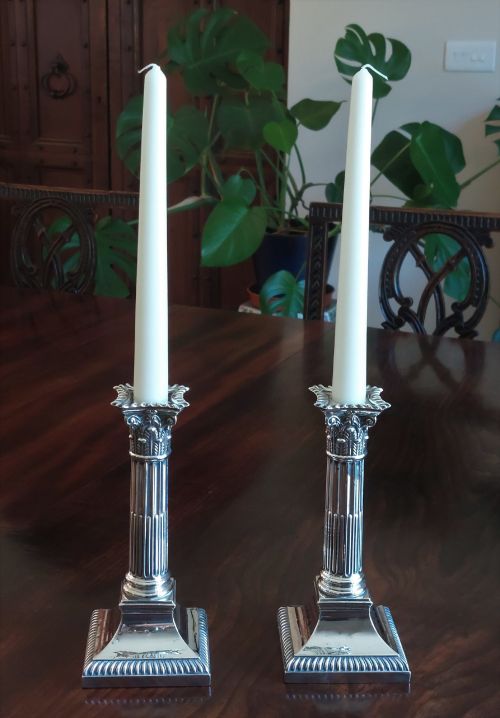
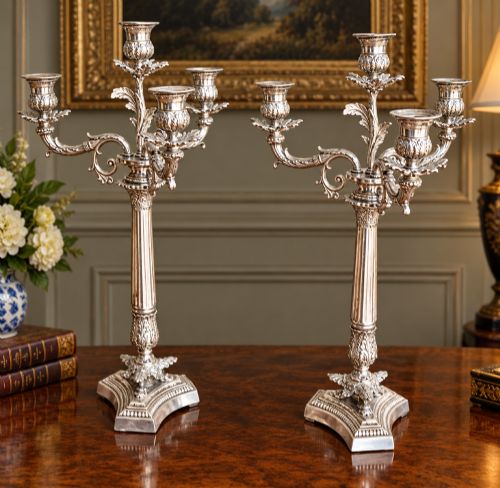
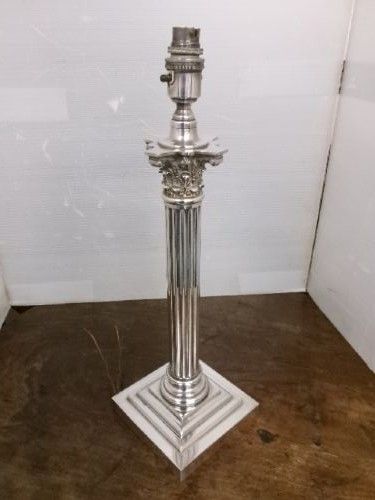
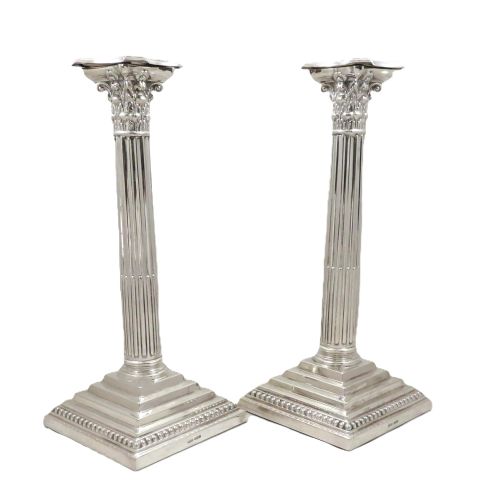
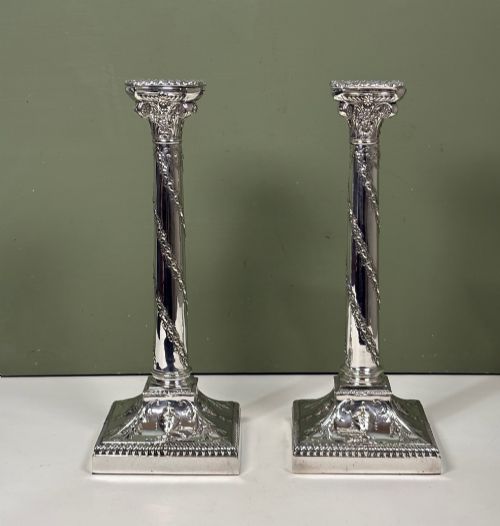
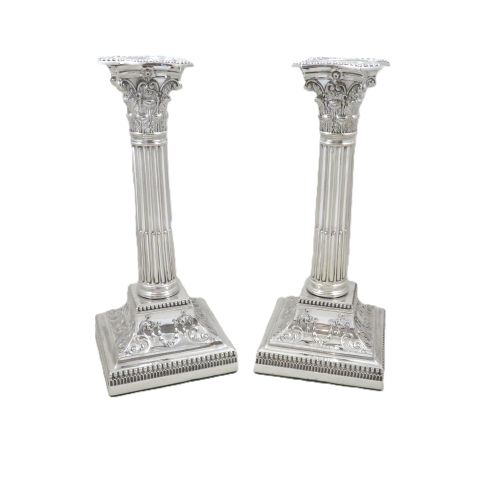
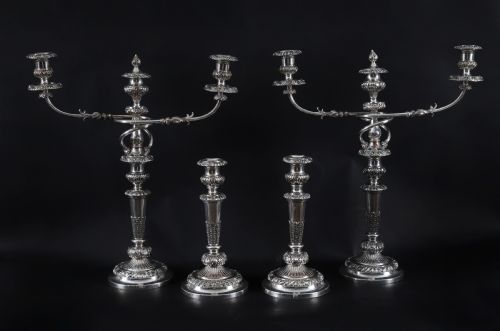
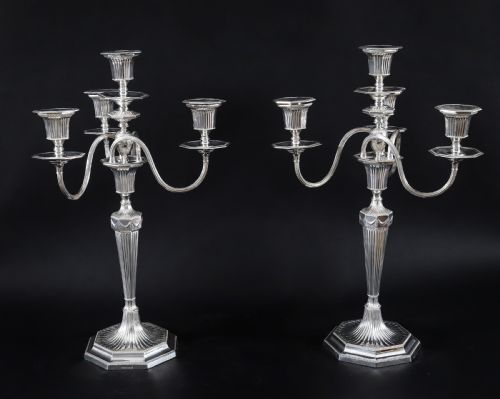
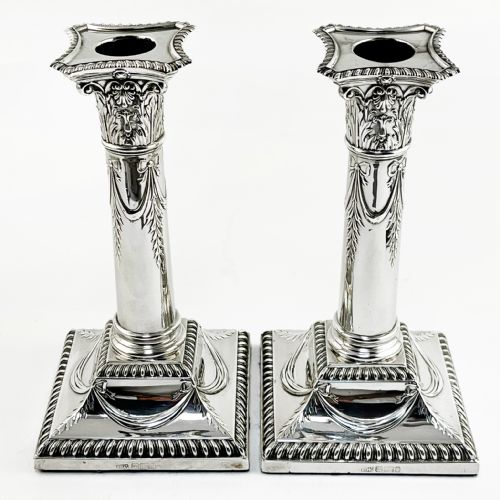
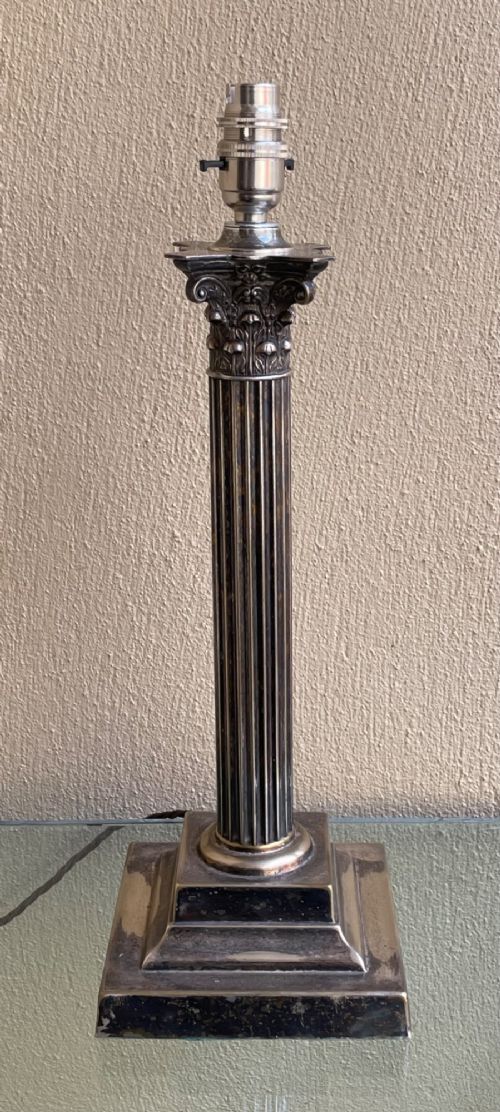
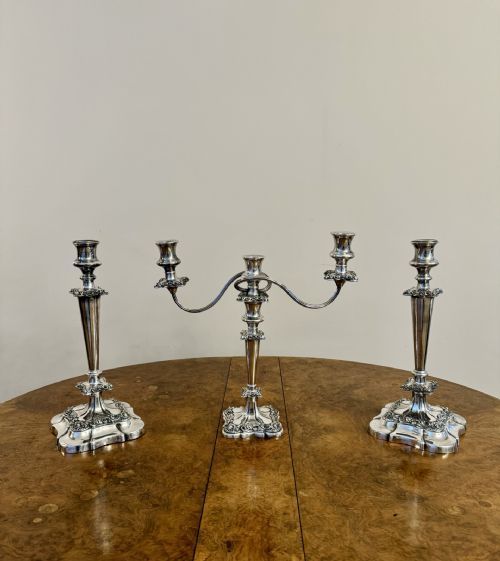
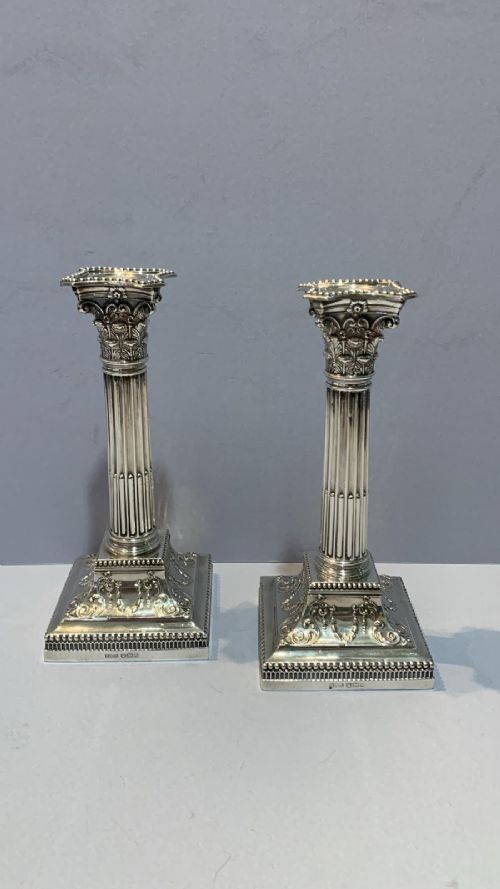
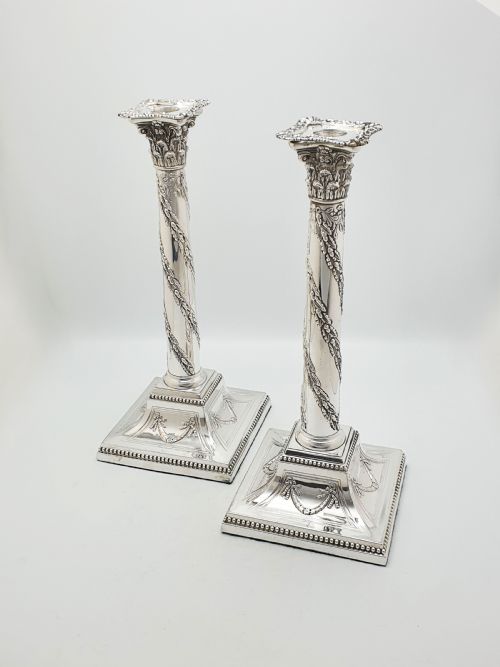
The most common versions on this page are pairs of column-form candlesticks and multi-light candelabra. Many examples draw directly on neoclassical architecture, using fluted shafts and Corinthian capitals rendered in sterling silver or silver plate.
How they were made
Makers utilised sterling silver and silver plate over base metals, alongside Old Sheffield plate techniques for earlier Georgian pieces. Cast components like capitals and bases were soldered to drawn columns or weighted interiors to provide stability.
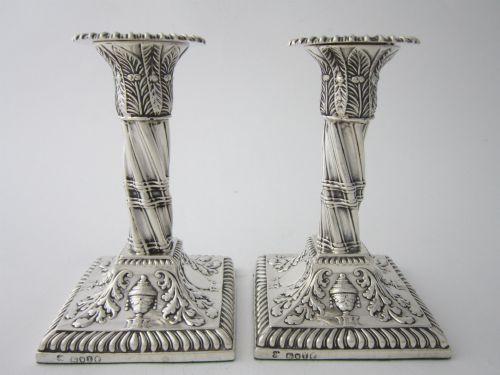
Surface decoration often involved chased or engraved detailing, while columns relied on precise fluting and classical proportions derived from architectural orders.
Some telescopic examples adjust in height to ensure candlelight stayed at eye level while the candles burned down.
What varies in quality
Quality rests in the crispness of the casting and the integrity of the metal. Superior pieces retain sharp leaf details on Corinthian capitals and substantial plating or solid gauge silver without distortion.
Proportion and maker attribution elevate certain examples. Pieces bearing clear hallmarks or stamps from known makers demonstrate superior workshop standards.
Garrard & Co·Hawksworth Eyre·Harrison Brothers & Howson·Walter Latham & Son·John Pound & Co·Elkington·Ferdinand Barbedienne
The Classical Silver Table Candlesticks Glossary
- Corinthian column
- A pillar form topped with ornate acanthus leaves and scrolls, frequently used in neoclassical candlesticks. This design mimics ancient Greek and Roman temple architecture.
- Old Sheffield plate
- A method of fusing a thin sheet of silver to a thicker copper core by heat and pressure. This technique predates modern electroplating.
- Candelabra
- A multi-branched lighting fixture that holds several candles or can convert to lamps. These pieces often accommodate detachable arms.
- Hallmark
- An official stamp indicating the metal purity, assay office, and date letter of silver items. British sterling pieces carry these marks for identification.
Classical Silver Table Candlesticks: Frequently Asked Questions
How do I clean classical silver candlesticks?
Use a soft cloth and a gentle, non-abrasive silver polish formulated for plated or sterling items. Avoid harsh scrubbing that can wear away thin silver layers on plated surfaces.
Take care around weighted bases, keeping moisture away from the interior filling material to prevent damage to the structure.
Were these candlesticks converted to lamps?
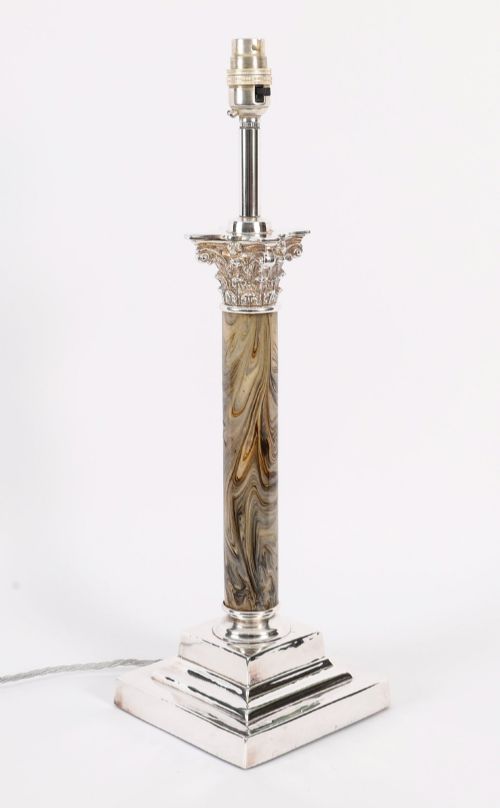
Many examples on the market began as standard candle holders and were later adapted for electricity. Conversions often retain the original column or base structure.
Original table lamps also exist from the period, specifically designed for electrical or oil use rather than wax candles.
How can I tell sterling silver from silver plate?
Sterling items usually display official hallmarks indicating a specific silver standard, such as a lion passant for British pieces. Silver plate lacks these standard assay marks and may show base metal beneath worn areas.
Heft and appearance also offer clues, though testing by an expert provides certainty.
What is Old Sheffield Plate?
Old Sheffield plate is an early form of composite metal made by fusing silver and copper together. Items produced this way date mostly to the eighteenth and early nineteenth centuries.
Closer inspection sometimes reveals a thin line of copper along edges where the silver layer has worn through over generations of use.
How do I date these candlesticks?
Hallmarks on sterling pieces provide exact assay office symbols and date letters. Stylistic clues like neoclassical columns or Victorian ornamentation help narrow down unmarked items.
Construction methods, such as the type of weighting and assembly, also point to specific manufacturing decades.