

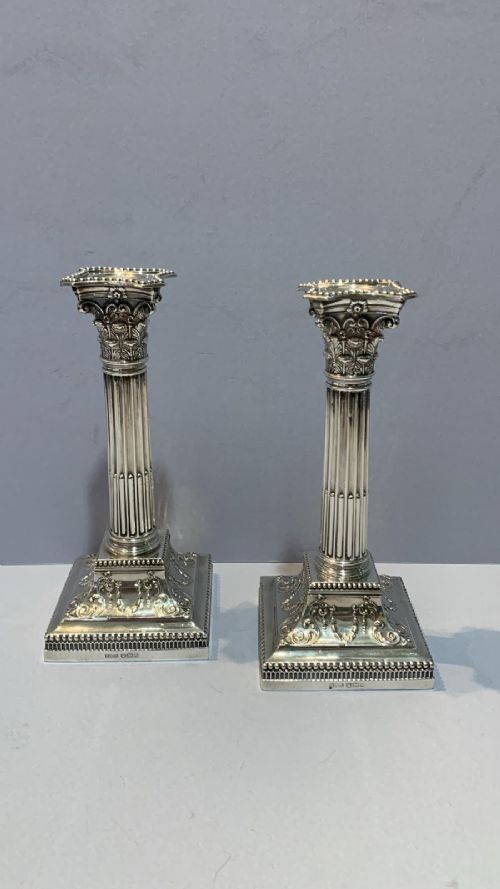


Classical Silver Candle Stands
Classical silver candle stands bring stately proportion to a room, offering the clean architectural lines and polished surfaces that define neoclassical design.
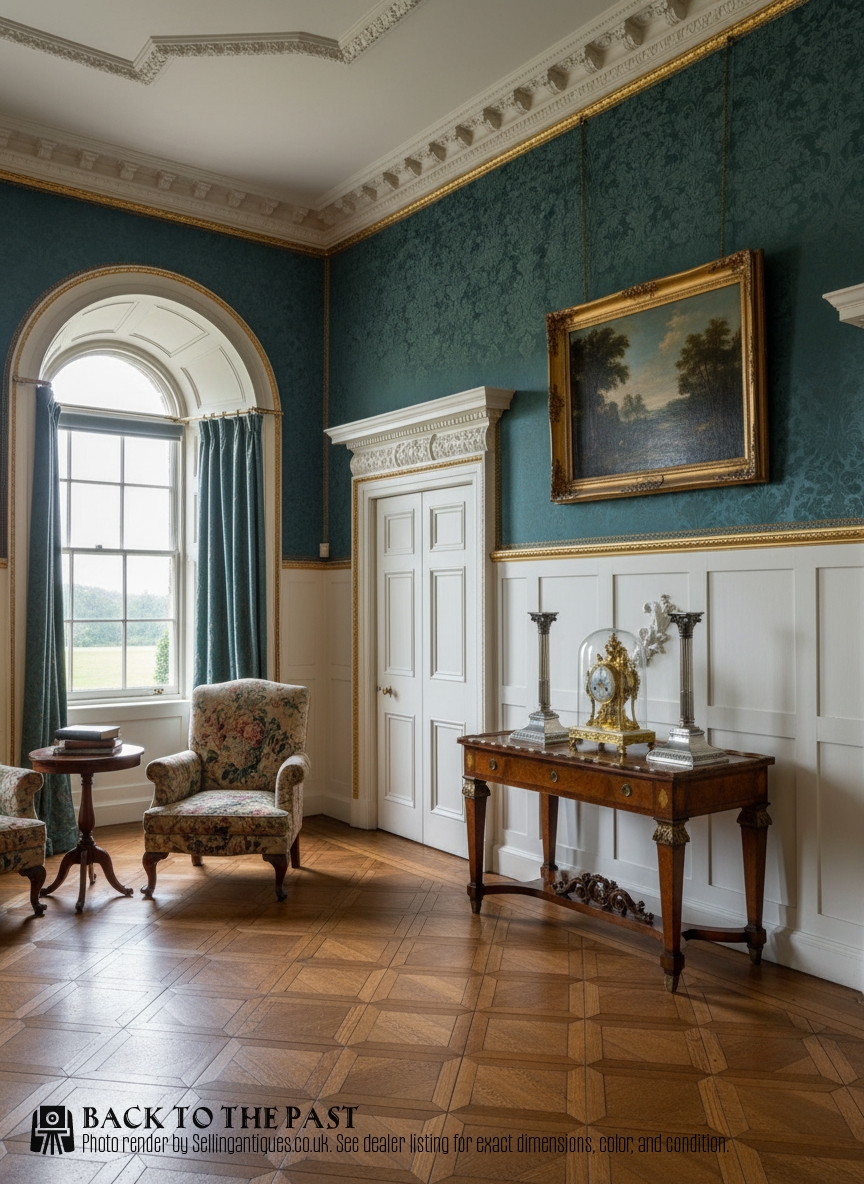
Classical Silver Candle Stands
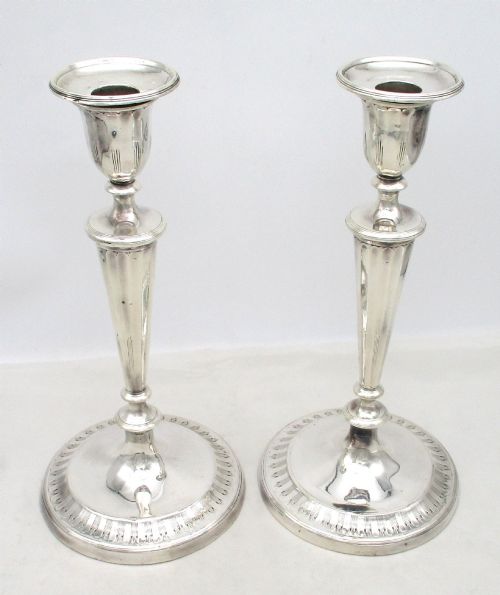
Classical silver candle stands encompass both single candlesticks and multi-light candelabras designed in neoclassical, Regency, and Georgian styles. These lighting pieces rely on formal symmetry and classical architectural vocabulary to create an orderly decorative presence.
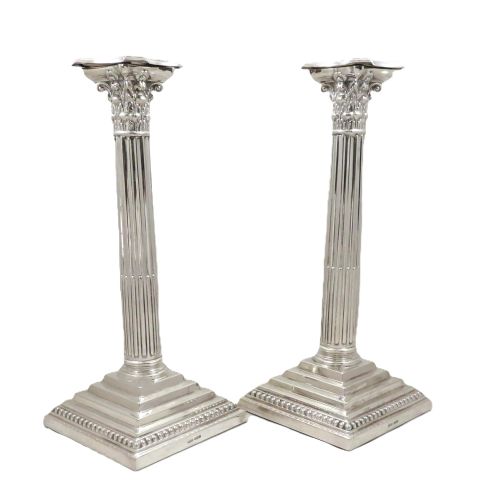
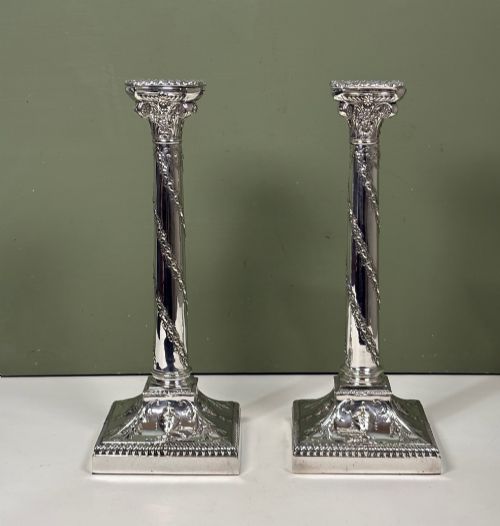
The versions most commonly met on this page are pairs of silver plated or sterling silver candlesticks originating from the Victorian and Edwardian eras. Makers often utilised column forms, particularly the Corinthian order, alongside stepped square bases.
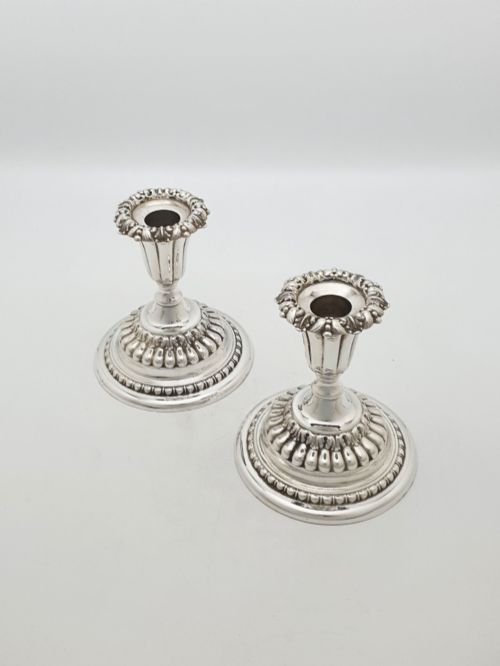
Examples range from low mantelpiece stands to tall telescopic designs, reflecting varied domestic requirements across the eighteenth, nineteenth, and twentieth centuries. Georgian and Old Sheffield Plate pieces sit alongside later Victorian and Edwardian interpretations.
Materials and construction methods
Construction relies heavily upon sterling silver, Old Sheffield Plate, and standard silver plate over copper, brass, nickel silver, or base metal cores. Old Sheffield Plate involves fusing a thin sheet of silver to a copper base, creating a distinct material signature visible at seams and edges.
Later nineteenth and twentieth-century pieces frequently employ electroplated nickel silver or standard silver plate applied to base metals. Hollow-ware pressing and casting techniques allow for intricate fluting, bead work, and classical detailing on shafts and bases.
Some telescopic candlesticks allow you to adjust their height on the fly, perfect for when the dinner conversation requires a clearer view across the table.
Distinctions in quality
Quality separates through the crispness of classical detailing, such as the acanthus leaves on Corinthian capitals and the precision of bead and reel mouldings. Finer specimens retain thick silver layers over their base metals and demonstrate substantial weight in the weighted bases.
The integrity of the plate, the subtlety of chased ornament, and the correct proportions between base, shaft, and drip pan determine the standing of an individual pair. Earlier Georgian and Old Sheffield Plate examples display hand-finished construction details absent in mass-produced twentieth-century counterparts.
The Classical Silver Candle Stands Glossary
- Old Sheffield Plate
- An early fusing technique where a sheet of silver is fused to a copper ingot before rolling. This method leaves subtle copper edges visible on close inspection.
- Corinthian Column
- A classical column form featuring an ornate capital decorated with acanthus leaves. This motif appears frequently on nineteenth-century candlesticks.
- Telescopic Candlestick
- A design allowing the shaft height to be adjusted mechanically. These pieces utilise sliding inner tubes housed within the main column.
- Candelabra
- A branched lighting fixture holding multiple candles upon a single central stem. These pieces often accommodate up to five lights in period configurations.
- Silver Plate
- A thin layer of silver bonded to a base metal such as copper, brass, or nickel silver. This process provides the visual appeal of solid silver at a different scale of production.
Classical Silver Candle Stands: Frequently Asked Questions
How do I clean my silver candle stands?
Use a soft cloth and a reputable silver polish formulated to protect plated or sterling surfaces. Avoid abrasive pads that wear down thin silver layers.
Take care around weighted bases and felted bottoms to prevent moisture ingress during routine maintenance.
Are these candle stands suitable for everyday use?
Many period stands function well for dining tables and mantelpieces, provided standard taper candles fit securely in the sockets. Use bobeches or drip pans to catch melting wax.
Ensure stands sit upon stable, level surfaces to prevent tipping, particularly with taller or telescopic examples.
How can I tell the difference between Old Sheffield Plate and later electroplate?
Old Sheffield Plate reveals a faint line of copper along cut edges or seams where the silver sheet meets the base metal. Electroplated pieces show a uniform silver layer across all surfaces.
Weight and manufacturing era also provide clues, as true Old Sheffield Plate generally dates from the eighteenth and early nineteenth centuries.
What does neoclassical style mean for these candlesticks?
Neoclassical design draws inspiration from ancient Greek and Roman architecture, featuring straight lines, symmetry, and geometric motifs. You will notice fluted columns, urn-shaped sconces, and stepped square bases.
This aesthetic offers a formal, restrained contrast to the more exuberant scrollwork of later Victorian periods.