





Classical Ruin Art
Classical ruin art captures the enduring fascination with antiquity, offering atmospheric views of crumbling temples and classical architecture that bring historical grandeur into a room.
Classical Ruin Art
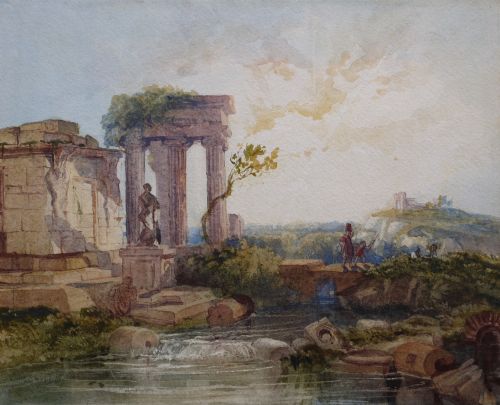
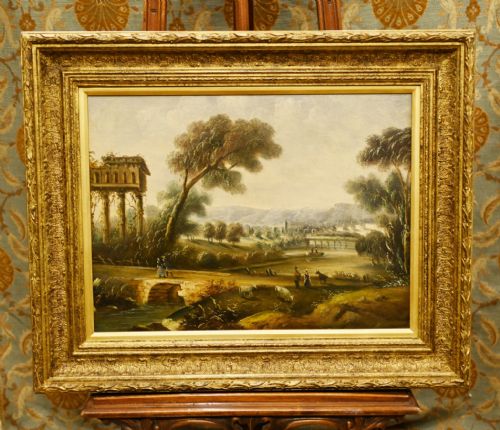
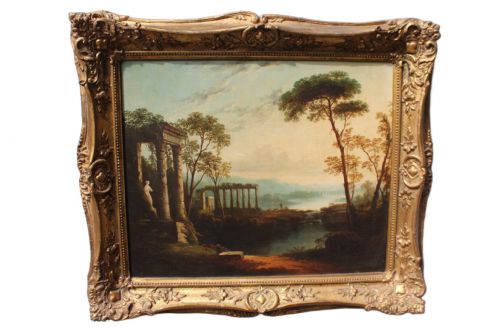
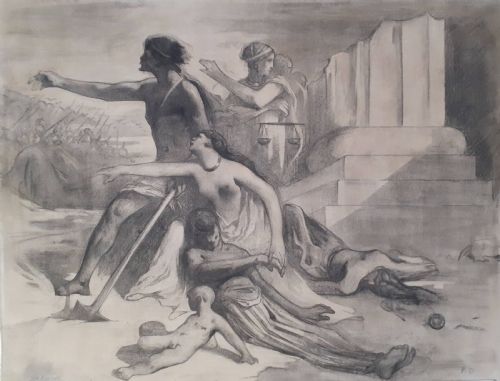
Classical ruin art encompasses paintings, watercolours, gouaches, etchings, prints, drawings, and tapestries depicting remnants of ancient architecture, often set within pastoral or Mediterranean landscapes. These works frequently emerge from the Grand Tour tradition, where artists recorded the monuments of Rome, Pompeii, Tivoli, and other Italian sites for travellers. You will most commonly encounter nineteenth-century watercolours and oil paintings, alongside eighteenth-century works and large framed tapestries.
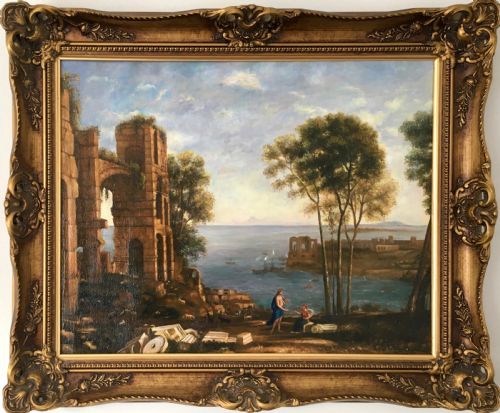
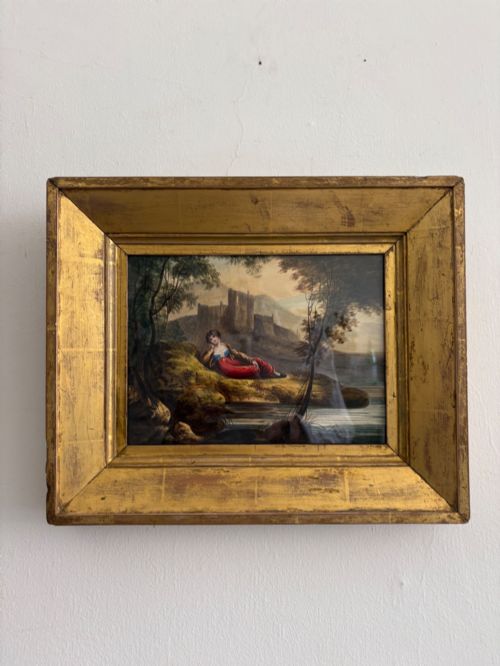
The subjects range from imaginary capriccios blending real and invented monuments to topographical studies of specific structures like the Colosseum, the Arch of Titus, or the Forum of Nerva. Figures of shepherds, travellers, or reclining ladies often populate the foreground, adding scale and a sense of pastoral idyll to the decaying masonry. These pieces span various formats, from intimate gouache sets to large oil paintings housed in gilt frames.
Dating primarily from the seventeenth through the nineteenth centuries, these works reflect shifting stylistic movements including Neoclassicism, Romanticism, and the Rococo capriccio. British and European artists recorded these archaeological vistas using diverse media, capturing both the stark reality of excavation sites and the romantic melancholy of fallen empires.
Materials and technique
Artists captured classical ruin art using oil on canvas, watercolour, gouache, and graphite on paper, applying pigments with precision to delineate weathered stone and classical proportions. Etchings and coloured prints provided reproducible formats for collectors, while French woven tapestry panels translated architectural scenes into textile form on a grand scale.
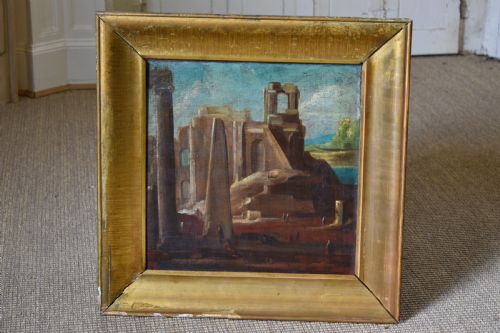
Support structures range from traditional canvas and fine paper to papier-mâché panels, often housed in original gilded wood frames featuring intricate moulding. The handling of light and shadow remains central to the technique, particularly in oil paintings and watercolours where atmospheric haze illuminates crumbling columns and overgrown foundations.
Classical Ruin Art Retail Price Guide 2026
Typical asking prices for classical ruin art among the pieces listed under this phrase on Sellingantiques today, from the lower quarter to the upper quarter. They describe what is for sale here now, not the wider market.
Listings feature works spanning the seventeenth to the twentieth centuries, utilising oil, watercolour, gouache, etching, and woven tapestry.
Judging quality in architectural depictions
Quality in classical ruin art depends heavily on the precision of the perspective, the atmospheric depth of the landscape, and the skill with which stone textures and crumbling masonry are rendered. Weaker examples offer stiff, formulaic representations of columns and foliage, whereas superior pieces display confident brushwork, subtle tonal gradations, and a convincing sense of scale and atmosphere.
The integration of figures within the landscape also dictates the calibre of the work, distinguishing routine topographical records from masterly capriccios that evoke genuine romantic resonance. Furthermore, the presence of period framing, whether original gilt wood or contemporary matching surrounds, contributes significantly to the integrity of the piece.
Francesco Guardi·Richard Principal Leitch·Angelo Maria Crivelli·Giovanni Paolo Panini·Claude Lorrain·Francesco Piranesi·Francesco Zuccarelli·William Crouch
The Classical Ruin Art Glossary
- Capriccio
- An architectural fantasy placing imaginary and real buildings together in a fictional landscape. Artists used this genre to compose picturesque scenes rather than strict topographical records.
- Grand Tour
- A traditional trip through Europe, particularly Italy, undertaken by upper-class young men in the eighteenth and nineteenth centuries to study the arts and classical antiquity. Travellers frequently purchased local art as souvenirs.
- Gouache
- An opaque water-based paint that dries to a matte finish, allowing artists to build dense layers of colour and light. It was frequently employed in sets for vivid Mediterranean landscape scenes.
- Tapestry
- A form of textile art woven on a loom, depicting pictorial scenes on a large scale. French workshops produced substantial wall panels featuring classical architectural motifs.
Classical Ruin Art: Frequently Asked Questions
What is a capriccio painting?
A capriccio is an architectural fantasy that combines real ancient monuments with invented ruin compositions. Artists used this approach to create picturesque scenes rather than exact topographical records.
These paintings often place classical columns, triumphal arches, and crumbling temples into dramatic Mediterranean landscapes alongside pastoral figures.
Why are so many ruin paintings from Italy?
Italy served as the primary destination for the Grand Tour, where travellers sought visual records of classical antiquity. Rome, Pompeii, and Tivoli provided endless inspiration for visiting artists.
Paintings and watercolours of these sites became prized souvenirs for collectors returning to Britain and the rest of Europe.
How do I hang a large tapestry panel?
Large woven tapestry panels require even weight distribution across a sturdy wooden batten or hidden hanging rod. This prevents distortion of the textile fibres over time.
Position the tapestry away from direct sunlight to protect the dyes from fading against the wall.
What distinguishes gouache from watercolour?
Gouache is an opaque water-based medium that includes a white pigment filler, resulting in a heavier, matte finish. Watercolour remains translucent, relying on the white of the paper for luminosity.
In ruin art, gouache allows for bold highlights on stone surfaces while watercolour captures soft atmospheric mists.