

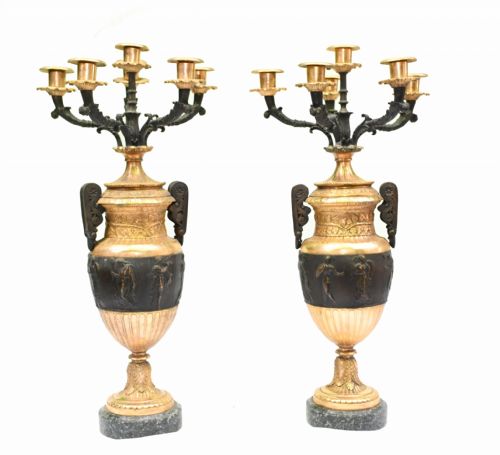


Classical Revival Candlesticks
Classical revival candlesticks bring grand architectural form and rich patinated metalwork straight into a room, offering an immediate sense of classical antiquity.
Classical Revival Candlesticks
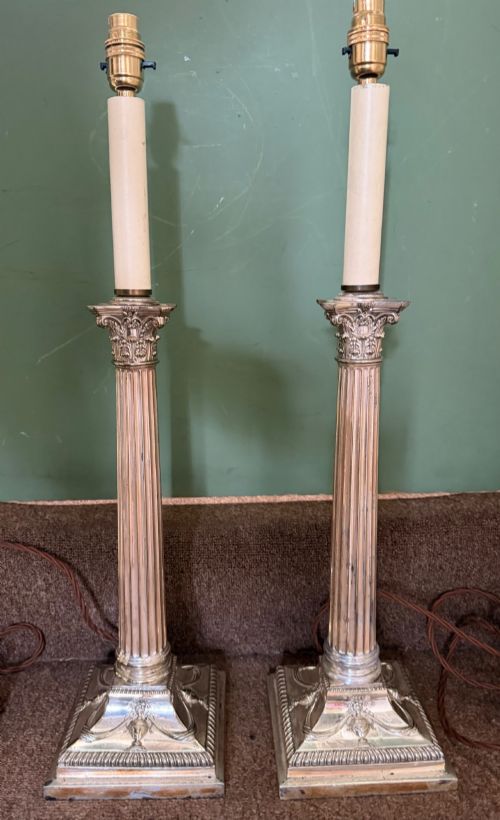
Classical revival candlesticks draw directly upon ancient architectural motifs, translating stone columns and Greco-Roman proportions into domestic lighting. These pieces take the form of heavy metal sticks, multi-branch candelabras, and occasional columnar lamps designed to elevate a table setting.
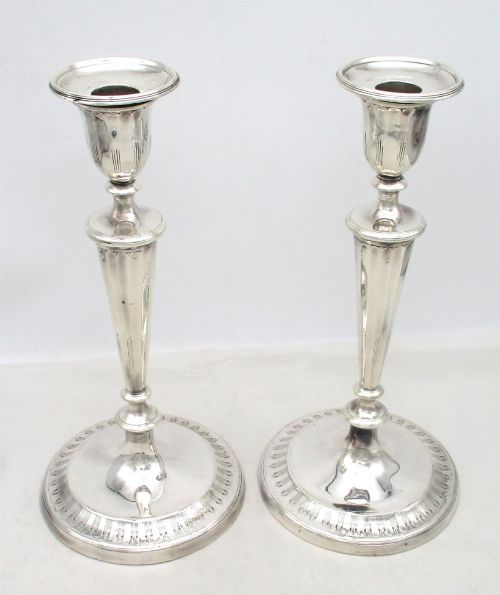
The selections encountered here span the nineteenth century, including Victorian interpretations, Regency pieces, and Edwardian examples. Materials range from solid bronze and polished brass to silver plate, gilt bronze, and contrasting marble bases.
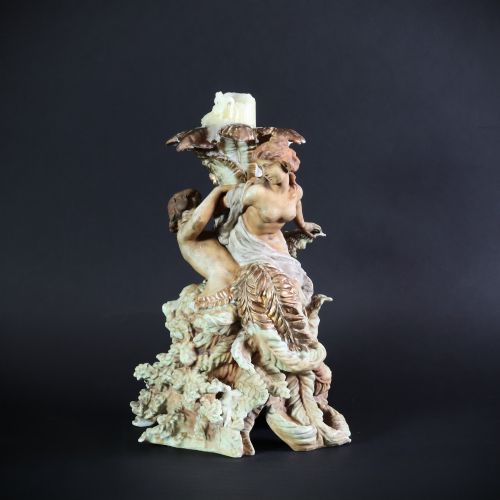
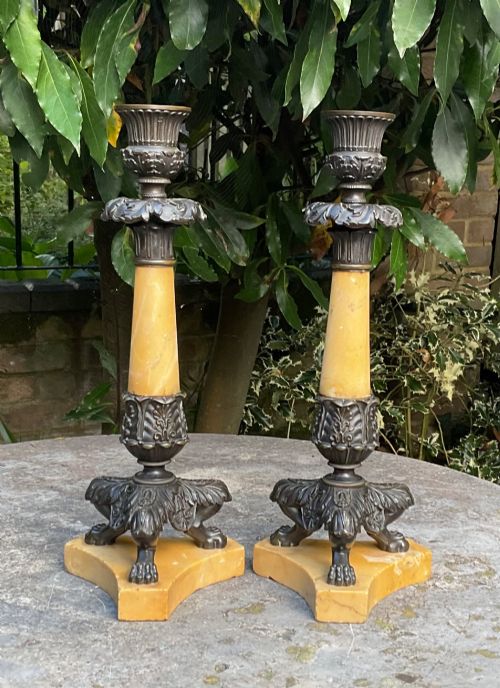
Buyers frequently find pairs featuring Corinthian capitals, lion's paw feet, or sculptural figural elements derived from Grand Tour souvenirs. Formats stretch from simple single-branch sticks up to heavy five-light candelabras and tall torchere pedestals.
Assessing quality and finish
Quality rests primarily in the crispness of the casting and the depth of the chased detail across acanthus leaves, fluting, and figural mounts. Finer examples show sharp architectural lines and careful hand-finishing rather than smoothed edges from worn moulds.
The weight of the object and the integrity of the materials dictate the upper tier, where heavy bronze, genuine marble, and substantial silver plating replace lighter base metals and hollow construction.
Classical Revival Candlesticks Retail Price Guide 2026
Typical asking prices for classical revival candlesticks among the pieces listed under this phrase on Sellingantiques today, from the lower quarter to the upper quarter. They describe what is for sale here now, not the wider market.
Several heavy classical columns conceal sturdy weighted iron rods inside to keep towering candelabras from toppling over during dinner.
Harrison Brothers & Howson
The Classical Revival Candlesticks Glossary
- Ormolu
- A method of applying finely ground high-carat gold to a bronze base using a mercury amalgam. This technique creates a rich, warm golden finish characteristic of luxury nineteenth-century metalwork.
- Candelabra
- A branched candlestick designed to hold multiple taper candles simultaneously. These fixtures often feature removable branches to function as single sticks.
- Grand Tour
- A cultural journey undertaken by wealthy young Europeans to study classical antiquities. Souvenirs from these travels heavily influenced nineteenth-century domestic design.
- Corinthian
- An architectural order marked by elaborate capitals decorated with rows of acanthus leaves. It appears frequently on the columns of revival candlesticks and table lamps.
- Torchere
- A tall stand or pedestal originally designed to carry a torch or light. In later metalwork, the term describes heavy columnar supports built with classical proportions.
Classical Revival Candlesticks: Frequently Asked Questions
Can these candlesticks hold modern candles?
Many older sockets accommodate standard taper sizes, though slight variations in nineteenth-century diameters may require fitted wax inserts.
Checking the nozzle diameter carefully ensures a secure and straight fit for standard dinner tapers.
Are table lamps original to the base?
A significant number of heavy columnar sticks and candelabras were converted to wiring during the twentieth century for modern domestic use.
Conversions are standard practice, though retaining original weight distribution and mounting hardware remains important.
How do I tell Regency from Victorian pieces?
Regency items typically display restrained neoclassical lines inspired by direct archaeological finds, often utilising rich bronze and marble.
Victorian and later nineteenth-century pieces frequently embrace heavier proportions and more ornate revival styling such as Rococo or Neo-Grec.