


Classical Relief Wall Art
Classical relief wall art brings antiquity into interiors through moulded plaster, carved wood and cast bronze.
Classical Relief Wall Art
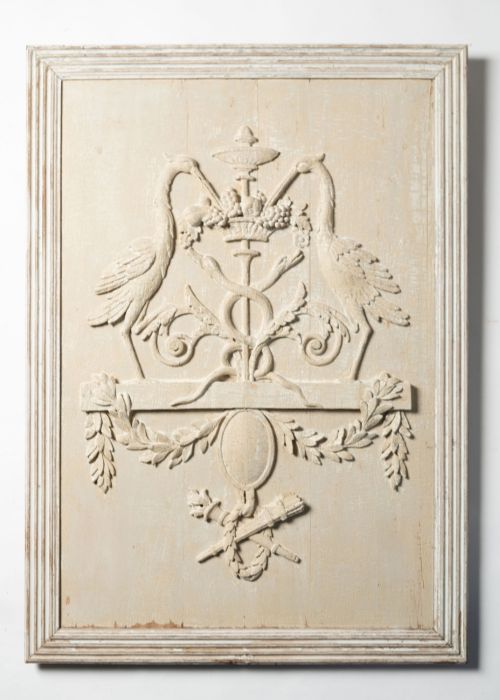
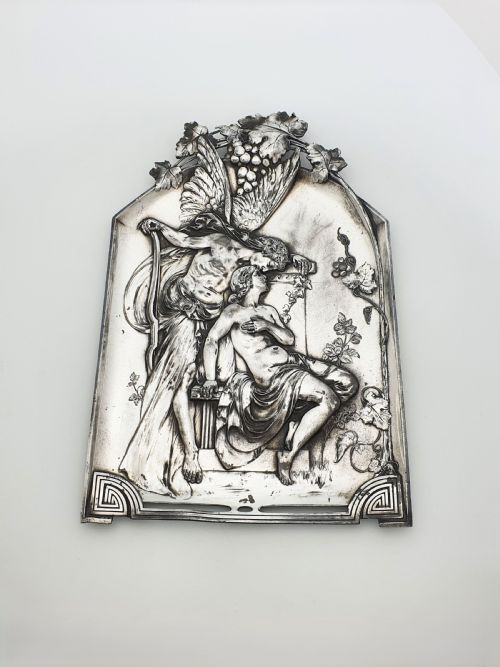
Classical relief wall art encompasses framed intaglios, carved wooden panels, plaster plaques and detailed metal castings. These pieces draw on neoclassical, baroque and art nouveau aesthetics to depict mythological scenes, historical profiles and architectural motifs.
Grand tour plaster cast collections and framed engravings from the eighteenth and nineteenth centuries dominate the selection. Pieces range from Italian marble profile plaques to large giltwood or carved mahogany wall hangings created across Europe.
Materials and Technique
Makers shaped plaster, marble dust, and cast metals into low and high relief to create depth within framed presentations. Wood carvers worked walnut and mahogany into detailed panels and roundels depicting classical figures and cherubs.
Paper prints and engravings utilised fine ink work on paper, often recording antiquities and architectural details. Metalwork relied on bronze, silver plating and bronzed copper to capture intricate sculptural forms.
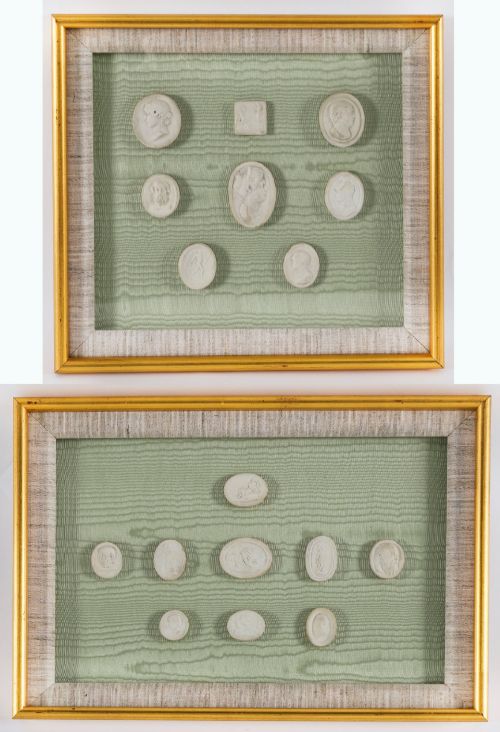
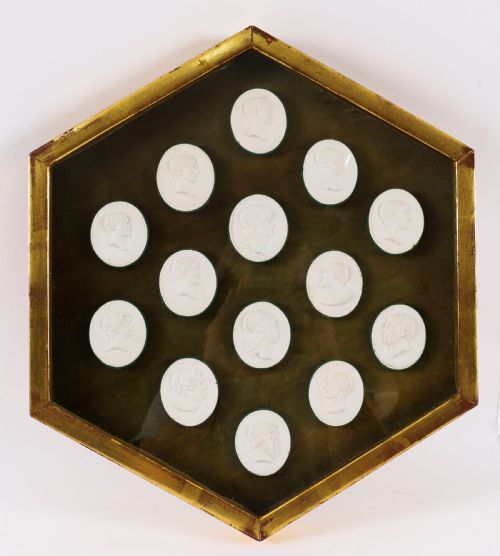
Surviving grand tour collections preserve miniature plaster profiles of Virgil and Dante alongside cheeky cherubs caught mid-play.
Quality and Execution
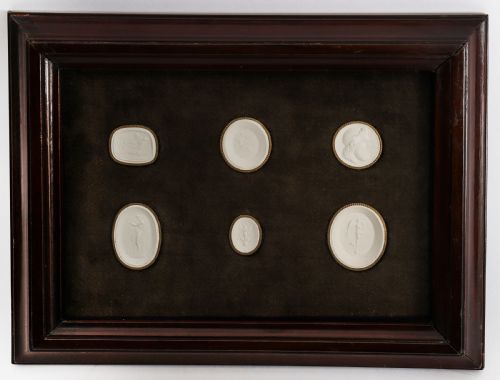
The definition in the carving or casting determines the merit of a piece, separating sharp details in hair, drapery and expression from softer, worn impressions. Superior examples demonstrate careful alignment of intaglios within box frames and precise mounting against velvet or paper backings.
The choice of framing material, such as turned mahogany or gilt wood, contributes to the overall integrity of the wall hanging. Original mountings and legible signatures or maker stamps elevate the standing of the work.
Giovanni Liberotti·James Basire·Edward Rooker·J. Brown·Gian Federigo Bonzagna
The Classical Relief Wall Art Glossary
- Intaglio
- A design engraved or incised into a material so that the impression rises above or sinks into the surface. Grand tour sets often feature collections of plaster or sulphur intaglios.
- Relief
- Sculpture technique where figures project from a flat background. Low relief shows minimal projection while high relief stands out prominently.
- Roundel
- A circular panel or plaque used for decorative wall display. These frequently portray portraits or allegorical scenes.
- Plaque
- A flat ornamental plate of metal, ceramic, wood or plaster hung upon a wall. They often celebrate historical figures or classical deities.
- Frieze
- A long, narrow band of sculpture decorating a wall or architectural feature. Eighteenth-century examples often depict winged cherubs.
Classical Relief Wall Art: Frequently Asked Questions
How were grand tour intaglios displayed?
Grand tour intaglios were typically arranged systematically inside custom box frames lined with velvet or paper. Wealthy travellers collected these miniature plaster casts as records of classical sculpture seen during travels across Italy.
Sets varied from a handful of profiles to dozens of individual medallions meticulously labelled and mounted for study and display in home libraries or studies.
How do I care for antique plaster and bronze plaques?
Antique plaster requires gentle dusting with a soft, dry brush to avoid disturbing fragile details. Moisture must be kept away from plaster and paper engravings to prevent staining.
Bronze and metal plaques benefit from occasional light dusting. Avoid using chemical polishes or water on historical surfaces to preserve original patinas.
How do I distinguish eighteenth-century engravings from later prints?
Eighteenth-century engravings often display plate marks where the edge of the printing plate pressed into heavy laid paper. The paper itself shows characteristic texture and ageing not found in modern reproductions.
Detail in the cross-hatching and the crispness of the impression help identify works produced by established historical engravers and architectural recorders.