


Classical Relief Painting
Classical relief painting brings sculptural depth and neoclassical elegance to interiors, offering sculpted detail combined with fine artistry.
Classical Relief Painting
When you search for classical relief painting, you encounter a mix of sculptural wall panels, porcelain caskets, mirrors, and urns from the eighteenth and nineteenth centuries. These pieces incorporate moulded or carved figures in relief alongside painted decoration, drawing on neoclassical, Regency, and French Empire styles.
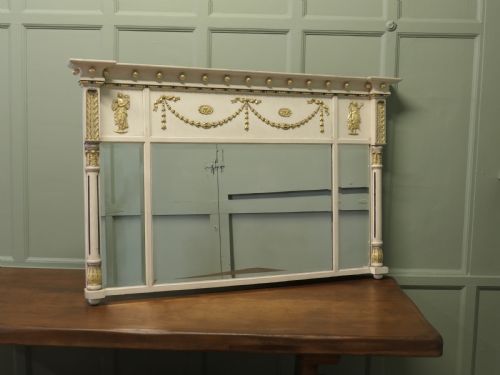
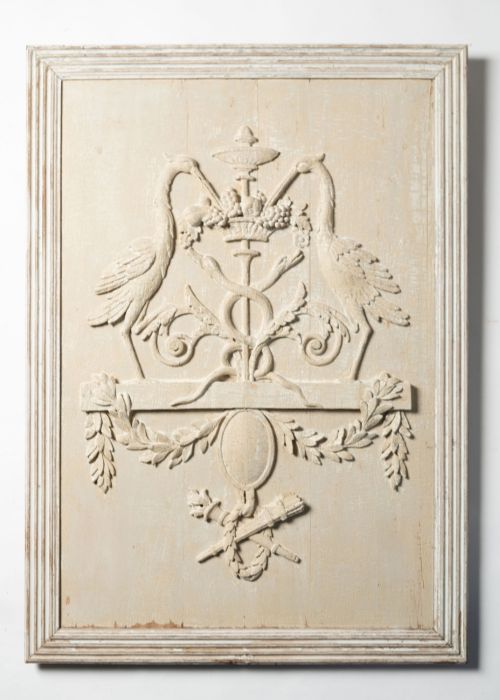
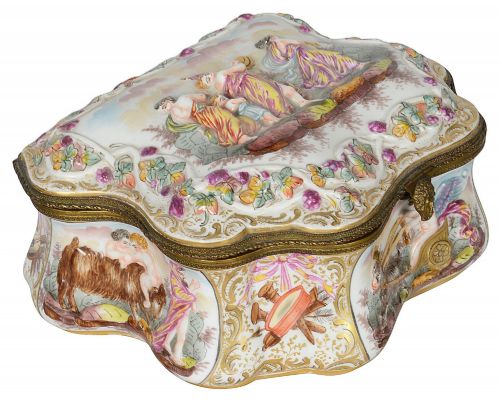
The objects appearing on this page range from carved wooden over-door panels and Italian porcelain caskets to trompe l'oeil cherub paintings and mirrors featuring decorative relief panels. They reflect classical mythology and historical motifs translated into household ornaments and furnishings.
You are most likely to meet nineteenth-century porcelain items and carved wooden panels, alongside mirrors set with decorative relief plaques depicting figures like Bacchus. Each piece blends dimensional form with painted surface detail in the manner of classical antiquities.
How they were made
Makers utilised porcelain, wood, and gesso to build up the three-dimensional forms before applying paint, enamel, and oil paint to the surface. Carved wooden panels and over-doors rely on hand-carved relief work in walnut or painted wood.
Porcelain caskets and urns combine moulded ceramic relief figures with detailed enamel and paint work, often produced by Italian factories such as Capodimonte and Naples. Mirrors and frames incorporate gesso and carved wood details finished with crackle paint or gilt highlights.
Listings feature eighteenth and nineteenth-century pieces, including nineteenth-century porcelain caskets, walnut cabinets, and carved wooden panels from the eighteen-eighties and eighteen-sixties.
What varies in quality
The sophistication of the modeling and the crispness of the carved or moulded relief dictate the standing of a piece. Finer examples display precise anatomical detail in figures like cherubs and mythological subjects, whereas simpler items show softer, less defined contours.
The integration between the painted surface and the relief structure separates standard production from superior work. Well-executed pieces balance the polychrome enamel or oil paint harmoniously with the sculptural background.
Capodimonte·Naples·James Basire
The Classical Relief Painting Glossary
- Relief
- Sculpture where the figures project from a flat background. This technique provides the dimensional quality seen on panels, caskets, and mirror frames.
- Trompe l'oeil
- An art technique that creates an optical illusion of three-dimensional space and objects on a flat surface. It appears in painted panels depicting figures such as cherubs.
- Capodimonte
- A type of Italian porcelain known for sculptural modeling and relief work. Pieces from this tradition frequently feature detailed figures in high relief.
- Overmantel
- A decorative panel, mirror, or painting designed to be placed above a fireplace mantel. Several examples incorporate classical relief panels depicting mythological scenes.
- Neoclassical
- A style inspired by the art and culture of classical antiquity, focusing on symmetry, proportion, and classical motifs. It dominates the design vocabulary of these pieces.
Classical Relief Painting: Frequently Asked Questions
What is classical relief painting?
Classical relief painting combines sculptural, raised elements with painted surfaces, drawing inspiration from ancient Greek and Roman art. These works appear on porcelain caskets, wooden panels, and decorative mirrors from the eighteenth and nineteenth centuries.
The style emphasises mythological themes, classical figures, and architectural motifs, translating grand antiquities into domestic furnishings and decorative objects.
How were these decorative panels used?
Carved wooden panels and painted plaques served as architectural ornaments, often mounted above doors or utilised as overmantel decorations in period rooms. They added texture and classical dignity to domestic interiors.
Smaller items like porcelain caskets and urns functioned as luxury containers or tabletop display pieces for affluent households.
How do I care for antique porcelain and wood?
Protect porcelain caskets and urns from sudden temperature changes and handle them carefully to preserve delicate relief details and enamel paint. Clean surfaces gently with a dry, soft cloth.
Maintain wooden panels and frames by keeping them away from direct sunlight and excessive moisture to protect the carved relief and gesso layers.
How can I tell the period of a piece?
Examine the materials, manufacturing techniques, and stylistic influences to determine the era, with eighteenth-century pieces showing hand-carved details and nineteenth-century items often featuring moulded porcelain or revival motifs. Stylistic markers like Regency and French Empire provide clear chronological clues.
Construction methods, such as the type of wood used in cabinets on stands or the formulation of the porcelain body, help confirm the nineteenth-century origins of Capodimonte and Naples wares.