




Classical Pastoral Artwork
Classical pastoral artwork captures idyllic rural scenes and rustic figures, offering collectors a serene window into idealised countryside life.
Classical Pastoral Artwork
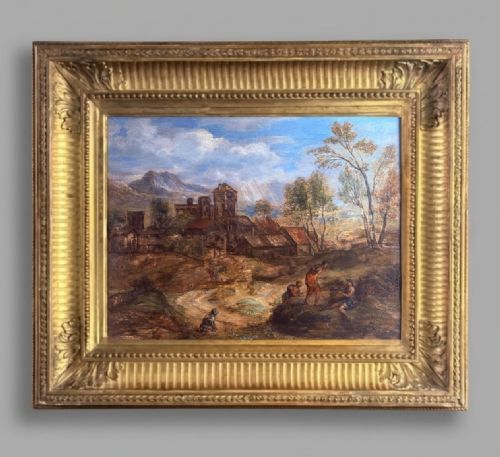
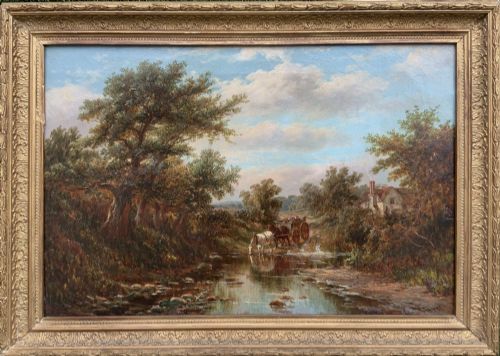
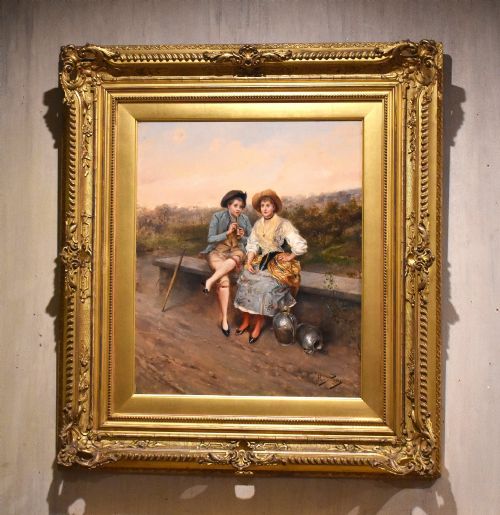
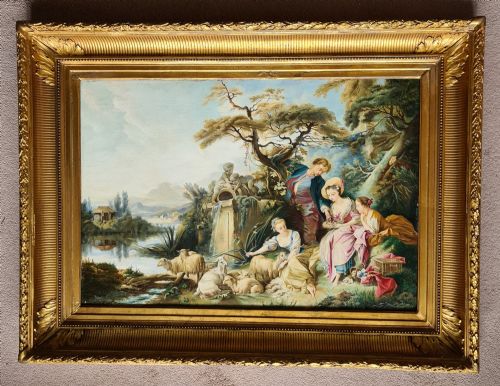
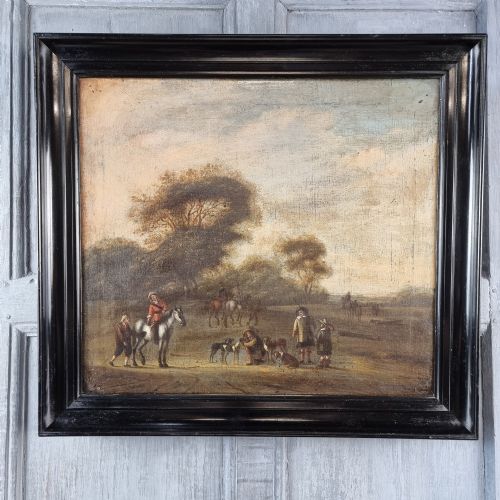
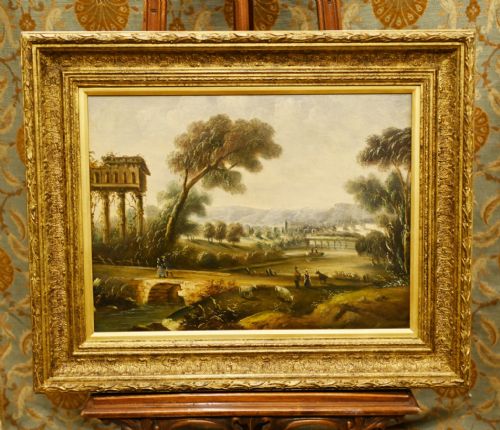
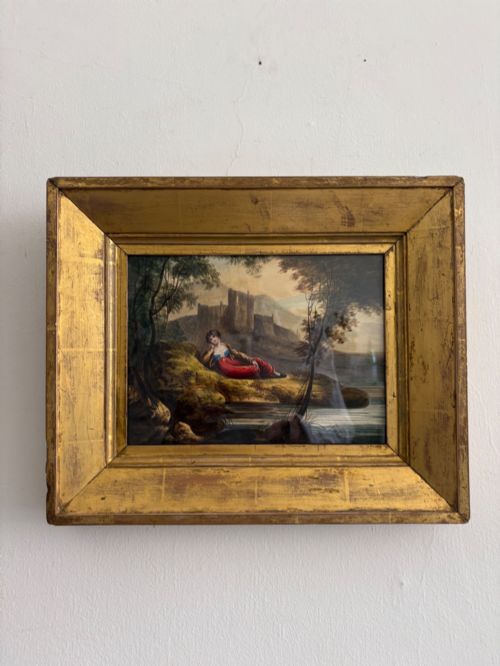
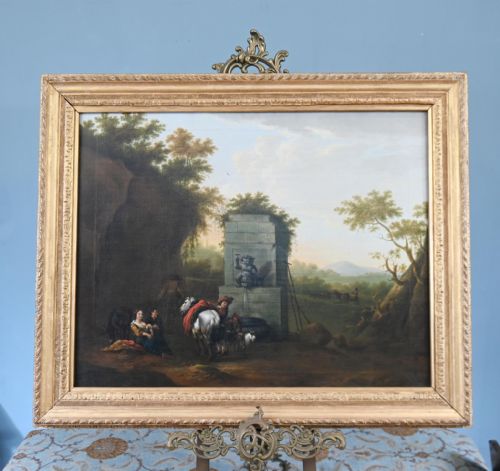
When you search for classical pastoral artwork, you encounter painted scenes of shepherds, rustic ruins, and idealised landscapes drawn from European traditions. These pieces reflect an enduring fascination with rural harmony, often set against Italianate rivers or mythical backdrops.
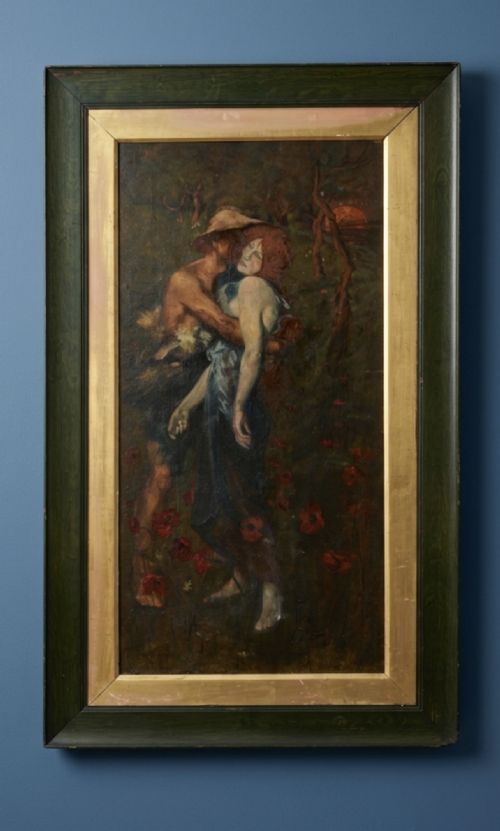
The selections span from the seventeenth century through to the early twentieth century, taking the form of oil paintings on canvas, framed prints, and watercolours. You meet works executed by regional English and French schools alongside grander compositions styled after canonical masters.
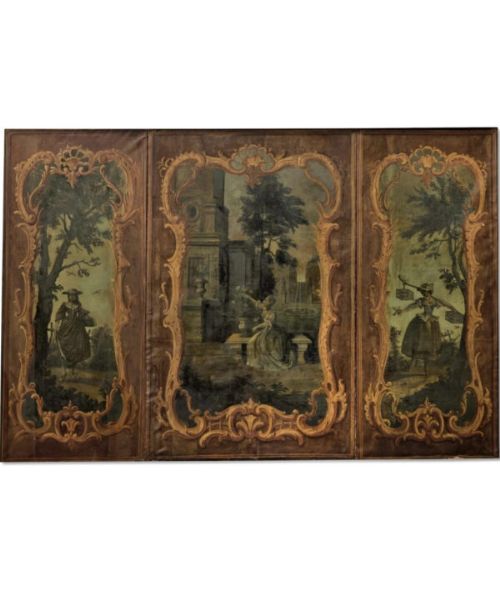
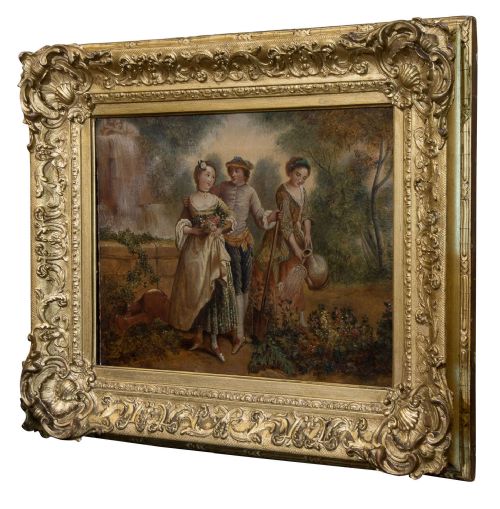
Works on this page range from modest nineteenth-century watercolours to large oil paintings bearing the influence of French Rococo and neoclassical aesthetics. Many adopt the visual language of the Grand Tour, recording idealised views of classical architecture and pastoral quiet.
How They Were Made
Makers built these compositions using oil paint on stretched canvas or wooden panels, applying pigments to construct balanced vistas of trees, water, and figures. Masterful layering of oil paint created the luminous skies and soft lighting characteristic of pastoral subjects.
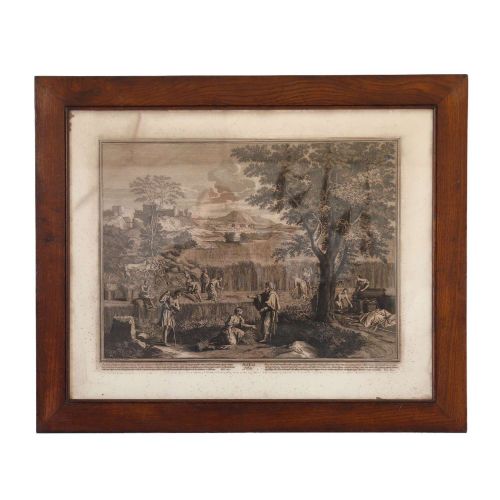
Works on paper, including engravings and sepia prints, relied on inked plates pressed onto fine paper sheets to capture minute linear details. Framed pieces frequently incorporated carved wooden frames finished with gesso and gold leaf to complement the artwork.
Classical Pastoral Artwork Retail Price Guide 2026
Typical asking prices for classical pastoral artwork among the pieces listed under this phrase on Sellingantiques today, from the lower quarter to the upper quarter. They describe what is for sale here now, not the wider market.
The listings feature oil on canvas and paper works spanning the seventeenth to the twentieth century, created by various European schools.
What Varies in Quality
Quality rests on the deftness of brushwork and the harmony of composition, distinguishing studio masterpieces from routine copies. Superior examples demonstrate a confident handling of light and atmospheric depth that draws the eye into the distance.
The preservation of the canvas and pigment integrity dictates the longevity and visual impact of each piece. Finer works retain their original frames and surface patination, whereas lesser pieces often show heavy restorations or darkened varnishes.
JACOB PHILIPP HACKERT·Margaret Maitland Howard·Jean-baptiste Joseph Pater·Eugene Verboeckhoven·Francesco Zuccarelli·Augustus Jules Bouvier·Richard Wilson·Francois Boucher·Thomas Jones·Peter de Wint
The Classical Pastoral Artwork Glossary
- Grand Tour
- A cultural journey undertaken by wealthy young Europeans through France and Italy to study classical art and antiquities. This tradition inspired numerous landscape paintings featuring classical ruins and pastoral figures.
- Neoclassical
- A style of art and architecture emerging in the mid-eighteenth century inspired by the classical art of ancient Greece and Rome. It prioritises order, solemnity, and clear linear definition.
- Gesso
- A white paint mixture consisting of a binder mixed with chalk, gypsum, or pigment, used as a prepared surface for painting or moulding frames. It provides a smooth base for subsequent layers of gold leaf.
- Rococo
- An exuberant artistic movement originating in eighteenth-century France, characterised by asymmetry, scrollwork, and light pastel palettes. In pastoral art, it manifests as playful, theatrical portrayals of rural life.
Classical Pastoral Artwork: Frequently Asked Questions
What defines a pastoral artwork?
A pastoral artwork depicts shepherds, herdsmen, or rustic figures inhabiting an idealised rural landscape, often featuring classical ruins, rivers, and soft lighting. These scenes romanticise country life and evoke a sense of calm harmony.
The tradition draws heavily from classical literature and European landscape painting traditions, particularly Italianate views popularized during the seventeenth and eighteenth centuries.
How do I care for an antique oil painting?
Keep antique oil paintings away from direct sunlight and fluctuating humidity to prevent the canvas from warping and the paint from cracking. Gentle dusting with a soft, dry brush is generally sufficient for surface maintenance.
Avoid using water or chemical cleaning agents on the painted surface. Professional conservation should be sought if the varnish yellows or structural damage occurs.
What is a Grand Tour landscape?
Grand Tour landscapes were paintings purchased by travellers exploring continental Europe during the eighteenth and nineteenth centuries. They served as tangible records of scenic Italian views and classical architecture encountered abroad.
These works often combine topographical accuracy with romanticised pastoral elements, capturing the picturesque quality of foreign countryside and ancient ruins.
How can I tell the period of a framed print?
Dating a framed print involves examining the paper quality, printing technique, and framing construction. Etchings and engravings from the eighteenth century typically exhibit plate marks and handmade paper characteristics.
Examining the back of the frame, nails, and paper backings provides additional clues regarding the age of the assembly. Stylistic cues within the print itself align with historical art movements.