

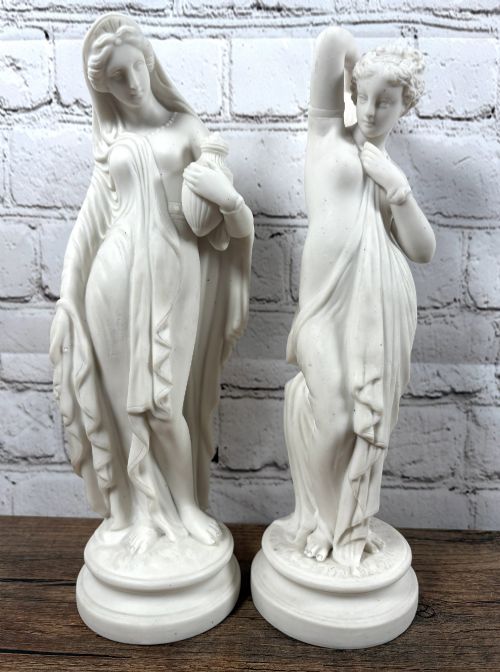
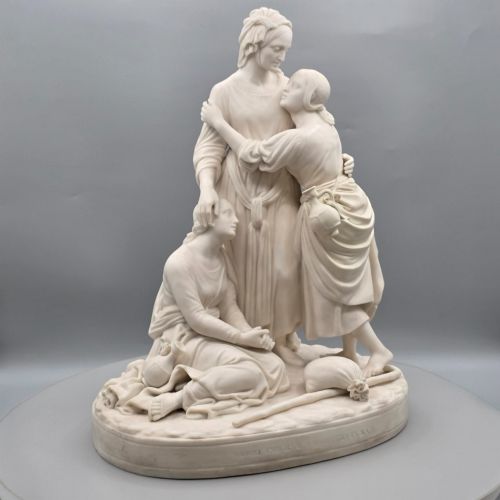

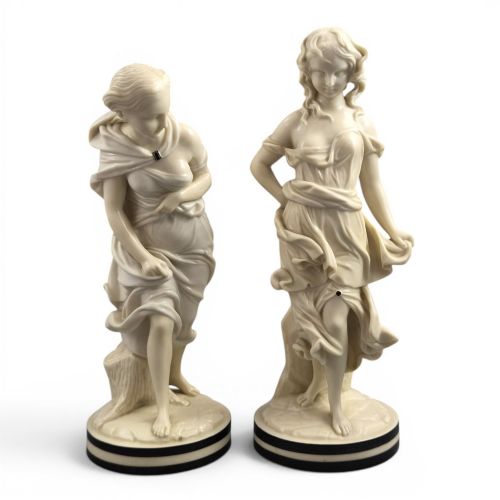


Classical Parian Figurine
A classical parian figurine brings tactile nineteenth-century neoclassical sculpture into domestic spaces through unglazed porcelain forms.
Classical Parian Figurine
A classical parian figurine represents a sculptural subject executed in unglazed white ceramic during the nineteenth century. These pieces translate ancient and neoclassical sculpture into tabletop scale for Victorian interiors.
The objects take the form of individual figures, groups, and mythological studies. Examples range from classical women with attributes like doves and cornucopias to complex literary and sculptural groups.
Most entries belong to the nineteenth century and the Victorian period, spanning decades from the 1840s to 1900. English works appear alongside continental European pieces such as Swedish studies.
Materials and construction
Makers utilised parian porcelain, bisque porcelain, and biscuit porcelain to achieve a matt surface resembling carved marble. This unglazed body allowed ceramic sculptors to capture crisp detail without the reflective shine of traditional glaze.
Certain pieces incorporate enamel, glaze, and paint to accent specific details on the white porcelain body. Production methods relied on slip casting in moulds to reproduce intricate neoclassical forms faithfully.
Classical Parian Figurine Retail Price Guide 2026
Typical asking prices for classical parian figurine among the pieces listed under this phrase on Sellingantiques today, from the lower quarter to the upper quarter. They describe what is for sale here now, not the wider market.
Listings combine nineteenth-century periods, Victorian styles, and materials including parian porcelain, bisque porcelain, and enamel.
Assessing quality and execution
Quality rests upon the crispness of the moulding and the refinement of hand-finished details. Finer pieces retain sharp drapery folds and facial expressions without blurring from worn moulds.
Scale and ambition separate standard decorative figures from significant sculptural studies. Larger scale works and named subjects after known sculptors demonstrate greater ambition in execution.
Minton·Royal Worcester·Copeland
The Classical Parian Figurine Glossary
- Parian porcelain
- A fine white unglazed porcelain developed in the nineteenth century to imitate marble. It fires to a smooth, matt finish suitable for neoclassical figures.
- Bisque porcelain
- Unglazed ceramic fired once or twice to create a porous, marble-like surface. It is synonymous with biscuit porcelain in these nineteenth-century figures.
- Neoclassical
- A style inspired by the art and culture of classical antiquity. It appears frequently in Victorian sculpture depicting mythological and historical subjects.
- Cornucopia
- A horn-shaped container overflowing with fruit and flowers, symbolising prosperity. It often appears as an attribute held by classical female figures.
Classical Parian Figurine: Frequently Asked Questions
What is a parian figurine?
A parian figurine is a nineteenth-century sculptural object cast in unglazed white porcelain designed to mimic carved marble.
These pieces typically depict classical, mythological, or literary subjects suited to Victorian display.
How do I clean parian porcelain?
Parian porcelain requires gentle dusting with a soft brush because the unglazed surface absorbs dirt easily.
Avoid using harsh chemical cleaners or soaking the unglazed ceramic body in water.
When were these figures made?
The listings span the nineteenth century, with a concentration in the Victorian era from the 1840s to 1900.
Individual pieces often date from specific decades such as the 1850s, 1860s, and 1870s.
Are all parian figures white?
Most parian figures present a uniform matt white surface intended to resemble marble.
Selected examples incorporate enamel, glaze, or paint to highlight specific garments or decorative attributes.