




Classical Outdoor Urns
Classical outdoor urns bring sculptural form and classical symmetry to terraces and gardens, drawing on historic shapes from the nineteenth century onwards.
Classical Outdoor Urns
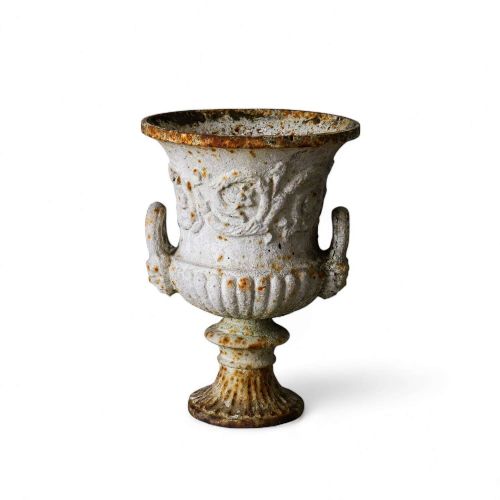
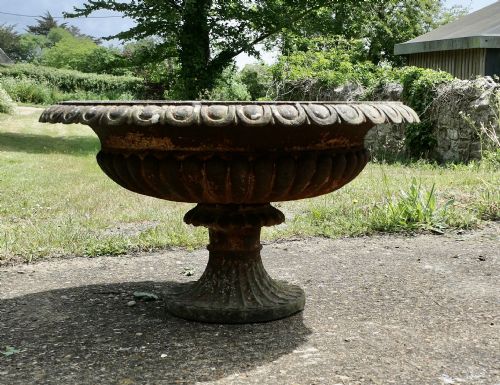
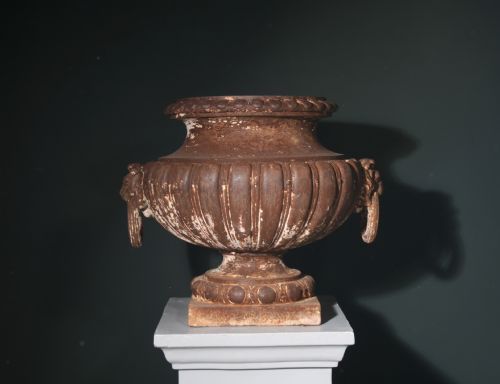
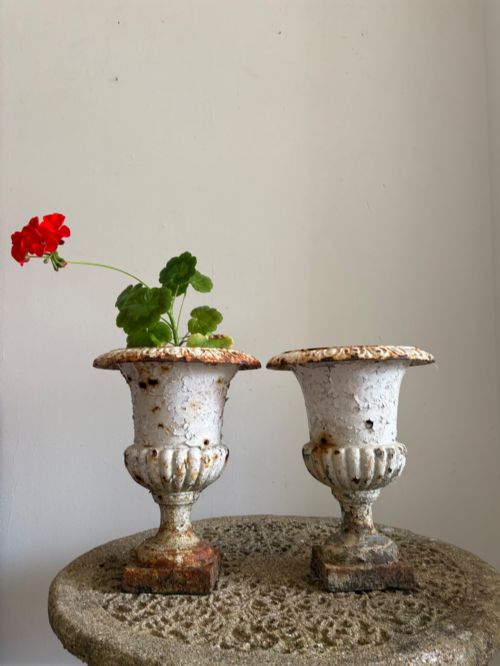
Classical outdoor urns include garden vessels and planters shaped in traditional campana, tazza and gadrooned profiles. Most examples found here date from the nineteenth century, with Victorian, Regency and early twentieth century periods well represented.
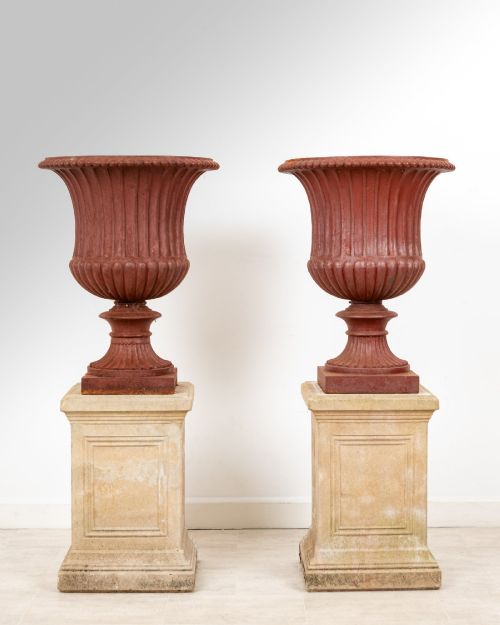
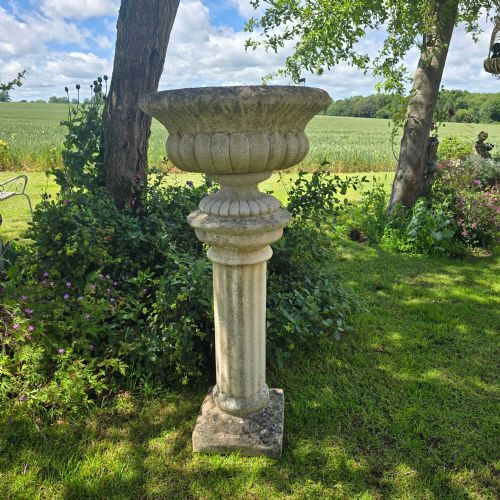
These pieces frequently appear paired with matching plinths and pedestals to elevate them on lawns and patios. The selection ranges from substantial iron garden ornaments to terracotta vessels and carved stone forms.
How they were made
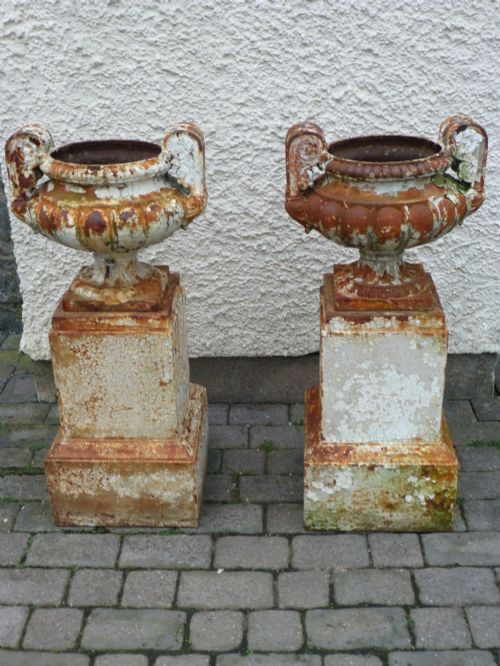
Foundries produced many classical outdoor urns in cast iron, utilising industrial moulding techniques to achieve crisp neoclassical ornament such as acanthus leaves. Prominent foundries like Coalbrookdale, Falkirk Carron, Andrew Handyside and Val d'Osne turned molten metal into durable garden vessels.
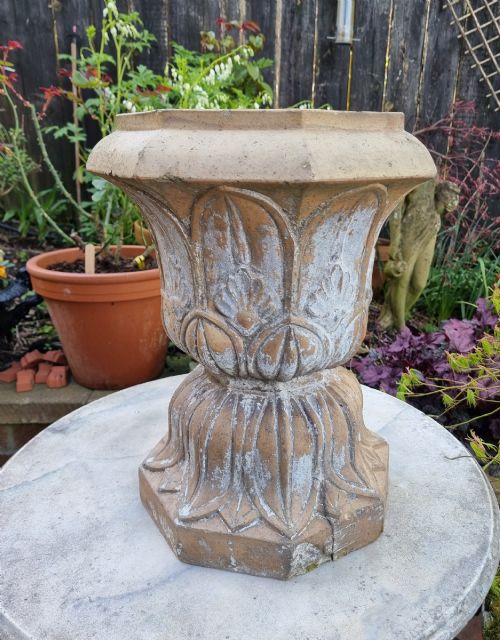
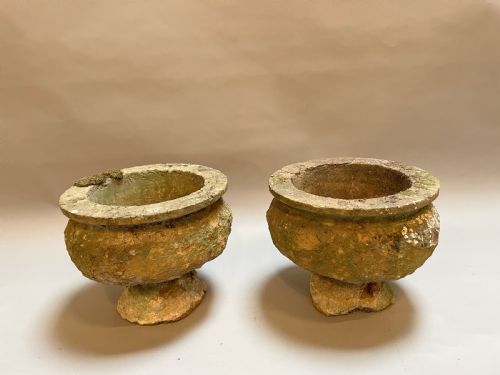
Makers also utilised terracotta, reconstituted stone, soft stone and carved marble, shaping clay and stone into garden planters and jardinières. Surviving pieces often retain traces of original paint or natural patination from weathering outdoors.
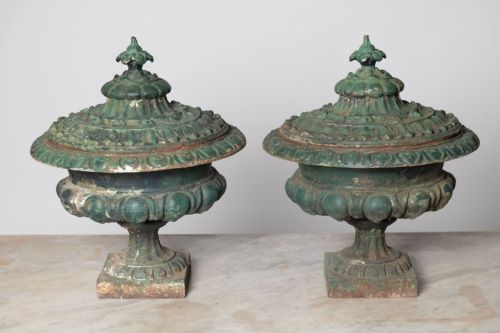
Some nineteenth-century iron urns retain their original lids, proving that garden vessels occasionally came with rain hats.
What varies in quality
The standard of a classical outdoor urn depends on the crispness of its casting detail and the integrity of its material. Foundry-marked iron pieces with deep relief work and original pedestals stand apart from standard utilitarian planters.
Balance of proportion and the presence of matching original components like lids or plinths elevate the character of these garden ornaments.
Falkirk Carron foundry·Coalbrookdale·Andrew Handyside·Val d'Osne Foundry
The Classical Outdoor Urns Glossary
- Campana
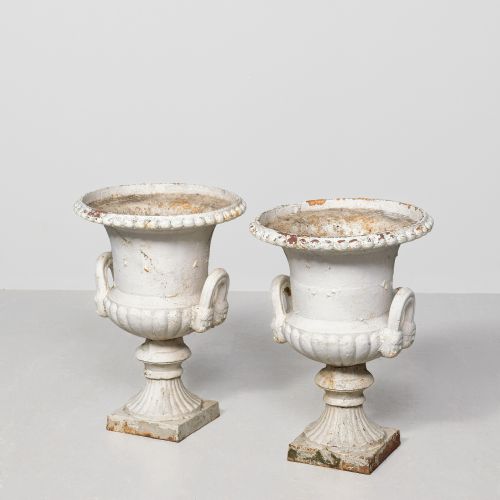
- A bell-shaped garden urn with a flared rim and footed base. This classic silhouette dominates nineteenth-century garden ornament design.
- Tazza
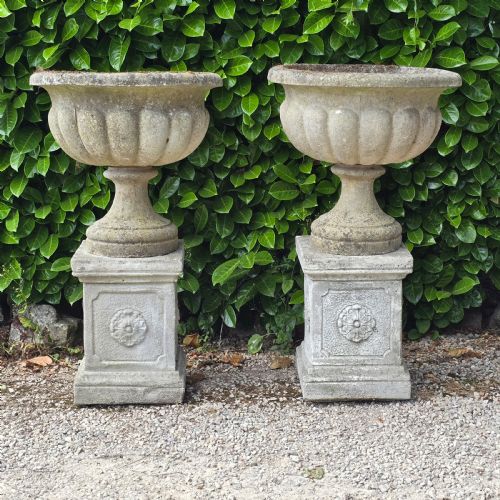
- A shallow cup-shaped vessel raised on a stem and foot. These wide bowls function as ornamental garden planters.
- Gadrooned
- Decorated with a series of rounded, parallel convex curves or flutes. This ornamental carving often encircles the body of an urn.
- Plinth
- A heavy base block supporting an urn or column. Pedestals elevate the garden vessel to improve sightlines in a landscape.
- Terracotta
- Fired unglazed clay of a brownish-red colour. This porous material weathers with a distinctive earthy surface over time.
Classical Outdoor Urns: Frequently Asked Questions
How do I choose the right size?
Consider the scale of your garden space and the presence of matching plinths. Larger iron urns require substantial stone pedestals to balance their weight.
Proportion dictates placement on terraces and lawns where classical garden ornaments anchor the surrounding landscape design.
Can cast iron urns stay outside all winter?
Cast iron garden urns tolerate exposure to weather well, developing patinated surfaces over decades outdoors. Ensure proper drainage inside the bowl to prevent water accumulation during freezing temperatures.
Terracotta and soft stone varieties may require more sheltered placement depending on local frost conditions.
How do I identify foundry marks?
Inspect the inner rim, base or exterior surface of cast iron urns for raised lettering or foundry stamps. Names like Coalbrookdale or Andrew Handyside often appear clearly on nineteenth-century pieces.
These foundry signatures help date the metalwork and confirm its manufacturing origin.