


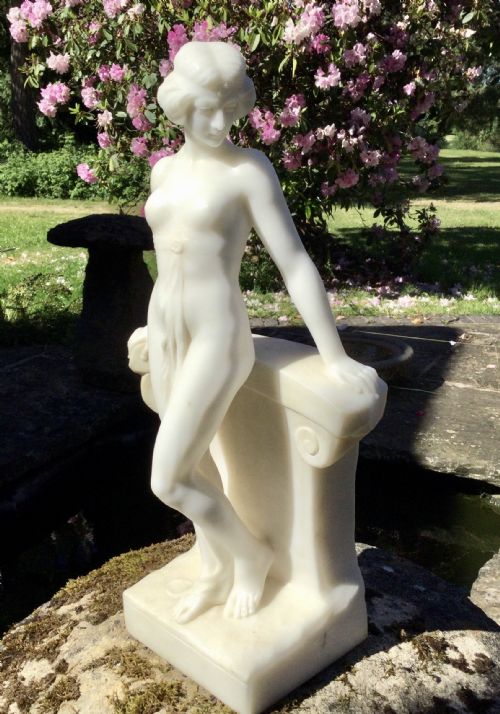


Classical Nude Female Sculpture
A classical nude female sculpture brings mythological grace and figurative tradition into a room through enduring bronze, marble, and alabaster forms.
Classical Nude Female Sculpture
A classical nude female sculpture depicts mythological figures, allegorical subjects, and idealized bathers cast in metal or carved in stone. These pieces draw directly from antique precedents and the Grand Tour tradition that shaped nineteenth-century taste.
The selections encountered here span the nineteenth century and early twentieth century, taking the form of mantel statuary, cabinet figurines, bookends, and larger gallery bronzes. French foundries and independent artists produced the vast majority of these works, moving from strict neoclassical subjects toward the fluid lines of Art Nouveau and Art Deco.
How They Were Made
Foundries utilised the lost-wax casting method or sand-casting to produce bronze and patinated bronze figures, often assembling multiple cast components before applying chemical patinas. Marble, alabaster, limestone, and terracotta were hand-carved or modelled, capturing the subtle musculature and drapery of the human form.
Many works combine materials, mounting bronze figures upon marble or slate bases, or pairing carved stone with turned mounts. Surface finishing involved meticulous hand-chasing of metal details and polishing of stone surfaces to create contrast between skin and drapery.
Listings feature works from the nineteenth century alongside pieces created up through the nineteen-thirties in bronze, marble, and alabaster.
What Varies in Quality
Carved stone works depend upon the purity of the marble or alabaster and the sensitivity with which the sculptor handles translucency and grain. Master carvers achieve organic fluidity in limbs and torso that lesser hands miss entirely.
Ferdinand Barbedienne·Fritz Kochendorfer·Hector Lemaire·S. Kinsburger·Aristide Maillol·Hans Müller·Edmond Leveque·Eugène Désiré Piron·James Pradier·Ferdinando de Luca·Mario Korbel·Falconnet
The Classical Nude Female Sculpture Glossary
- Grand Tour
- A nineteenth-century educational journey through Europe undertaken by the wealthy, returning with small-scale bronze or marble souvenirs of classical antiquities.
- Patinated Bronze
- A metal sculpture treated with chemical solutions to produce a coloured surface layer, ranging from deep brown to verdigris.
- Lost-wax casting
- A historic method for creating metal sculptures from an original model by encasing it in wax and molten material.
- Alabaster
- A soft, fine-grained stone used for carving figures, prized for its natural translucency when polished thin.
Classical Nude Female Sculpture: Frequently Asked Questions
What periods do these sculptures cover?
The available selection spans the nineteenth century through the early twentieth century, capturing distinct stylistic shifts from neoclassical revivals to modernist forms.
Makers and foundries operated across these decades, producing everything from souvenir reductions to large salon bronzes.
How were these figures displayed originally?
Many of these pieces served as decorative cabinet bronzes or mantel ornaments in nineteenth-century drawing rooms. Larger works occupied prominent pedestals, while functional versions served as bookends.
Collectors also brought home smaller reductions as souvenirs from European travels.
What materials are most common?
Bronze and patinated bronze dominate the selection, frequently mounted on marble or slate bases. Carved alabaster and various types of marble also appear regularly among the figurative works.
Terracotta, biscuit porcelain, and limewood represent alternative mediums utilised by period sculptors.
How do I identify the subject matter?
Subjects often reference classical mythology, featuring figures such as Venus, Ariadne, or nymphs caught in moments of bathing. Titles frequently record these literary and historical inspirations.
Artists also sculpted allegorical representations of times of day or specific dance movements.