
Classical Metal Urn
A classical metal urn brings the architectural dignity of antiquity into domestic and garden spaces through enduring bronze, cast iron, and brass forms.
Classical Metal Urn
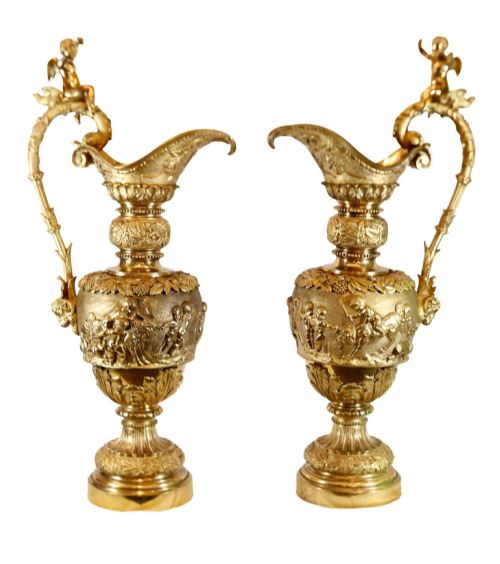
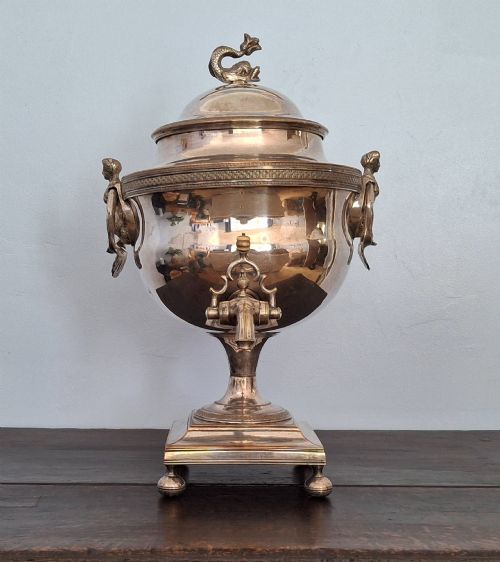
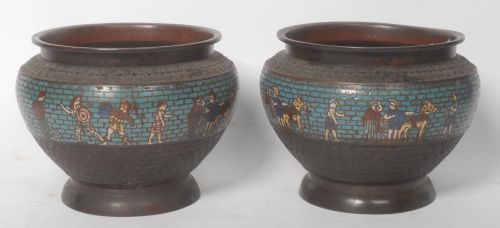
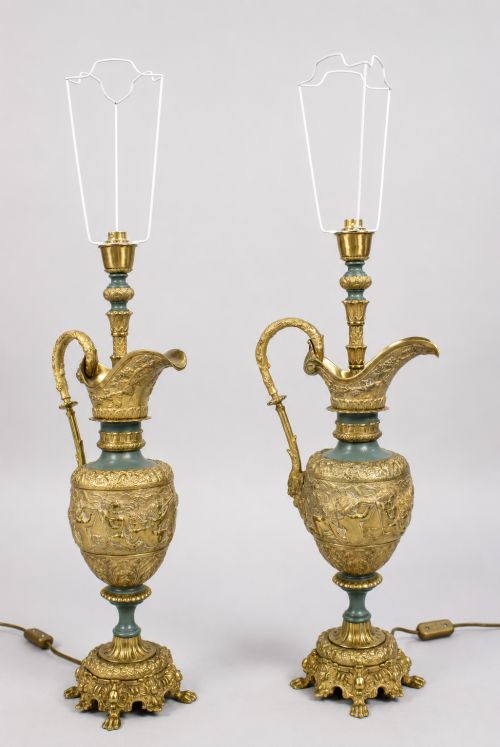
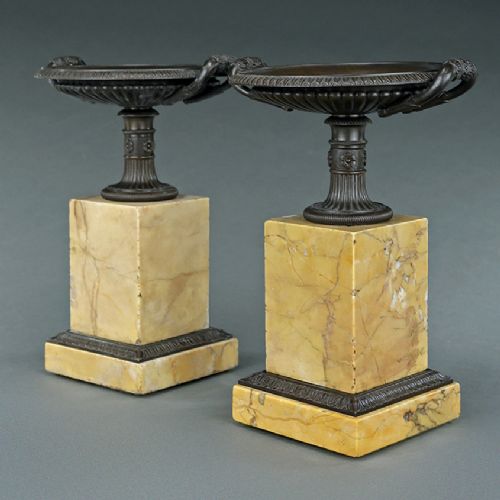
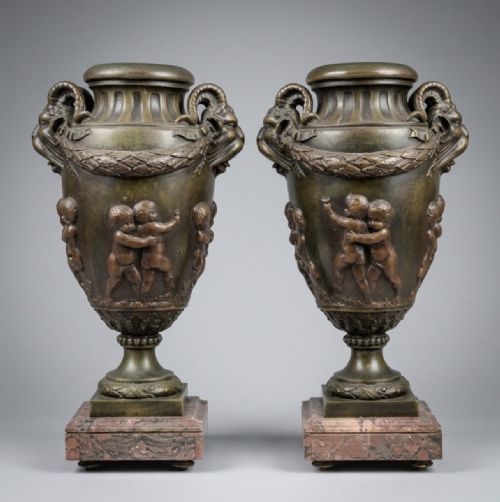
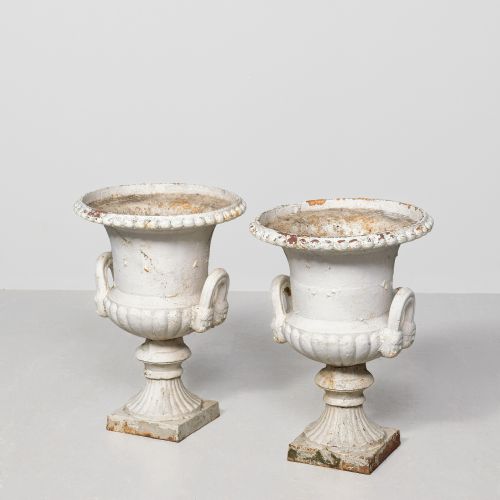
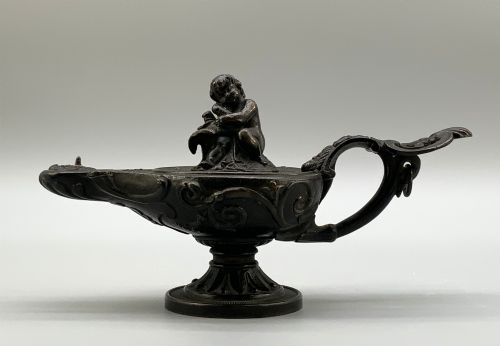
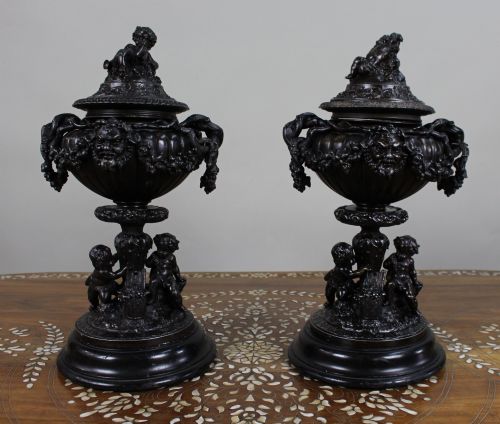
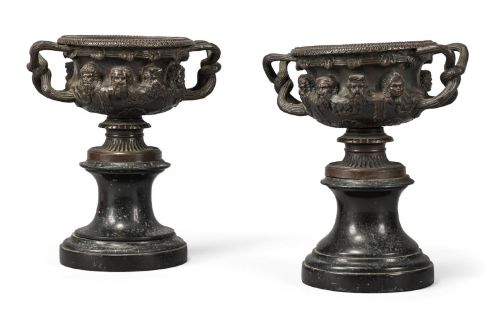
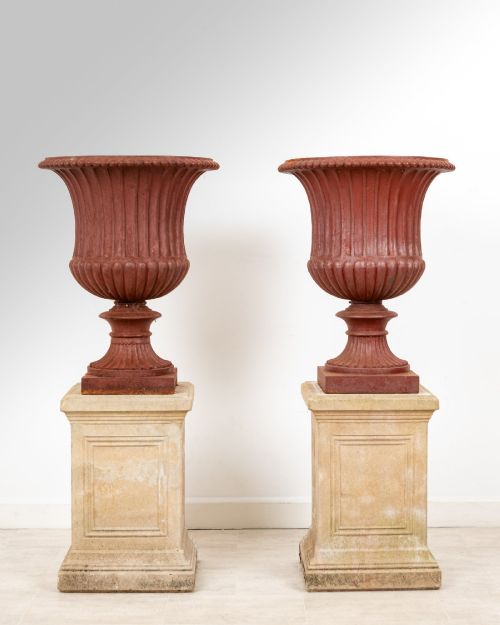
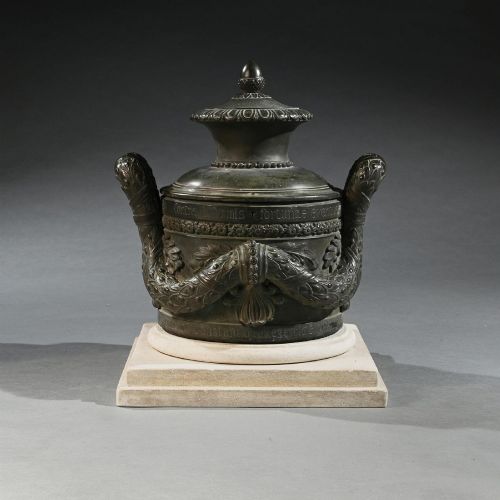
When you search for a classical metal urn, you encounter vessels rooted in the architectural and decorative traditions of ancient Greece and Rome. The examples seen on this page span the eighteenth, nineteenth, and early twentieth centuries, reflecting persistent revivals through the Victorian and French Empire periods. Garden urns and robust cast iron jardinières stand alongside refined bronze tazzas, table lamps, and decorative objects.
The most common versions met here are nineteenth-century Grand Tour bronzes and heavy cast iron garden pieces, often styled as Campana or Warwick vases. Makers and foundries drew directly upon antique archetypes, incorporating bacchic masks, putti, and acanthus leaf detailing. These pieces serve primarily as focal points for terraces, libraries, and formal reception rooms, bridging architectural ornament and portable sculpture.
How they were made
Foundries utilised traditional sand casting and lost-wax techniques to shape heavy metals like bronze, cast iron, and brass into complex vessel profiles. Bronze components often received chemical patination or gilt finishes, while iron garden pieces were sometimes painted or left to weather naturally in the elements.
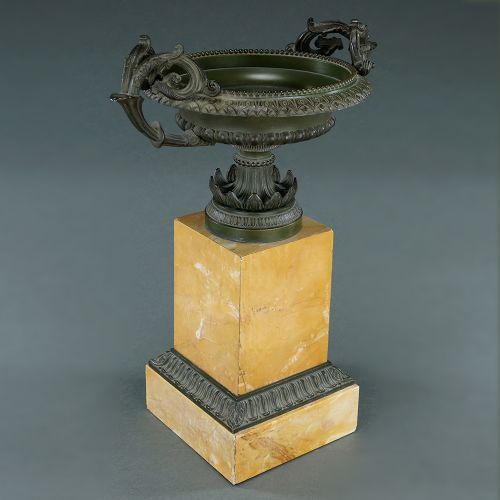
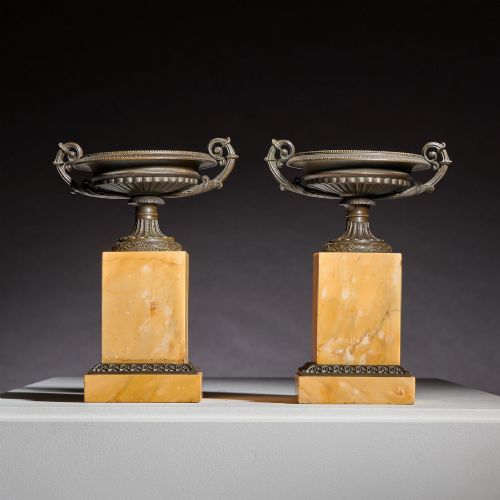
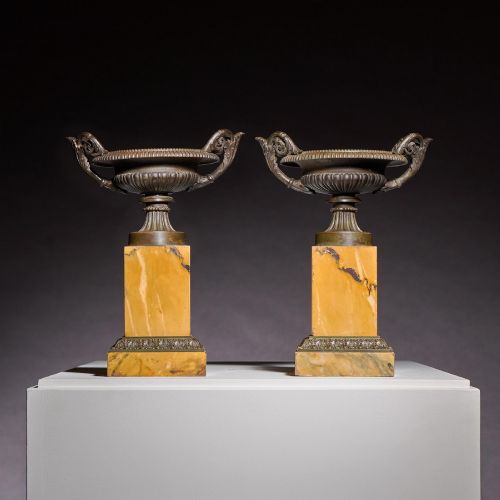
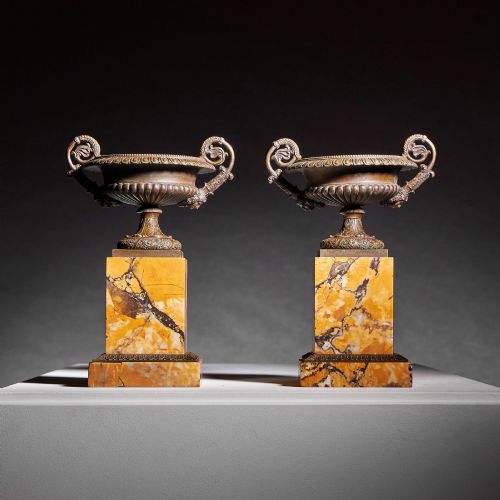
Many refined interior objects combine cast bronze with contrasting materials such as Siena marble bases or ormolu mounts. Foundries such as Val d'Osne utilised cast iron for large garden forms, ensuring durability through thick-walled construction and bolted architectural mounts.
Listings demonstrate a strong presence of nineteenth-century French and British production, spanning cast iron garden pieces to grand tour bronzes.
What varies in quality
Proportion and the integration of secondary materials also dictate standing. Pieces that unite carefully turned marble plinths with fire-gilt or finely patinated bronze elements demonstrate a higher order of workshop execution than unarticulated utility castings.
Andrew Handyside·Val d'Osne Foundry·Walker and Hall
The Classical Metal Urn Glossary
- Campana urn
- A bell-shaped vessel with a flaring rim and a pedestal foot, widely used for garden and decorative ornaments. This form originates from ancient marble excavations in Italy.
- Grand Tour
- A cultural journey undertaken by nineteenth-century elites across Europe, acquiring bronze reductions, tazzas, and antiquities as souvenirs. These objects reflect a deep neoclassical aesthetic.
- Ormolu
- Gilded bronze produced by applying a mercury and gold amalgam to a bronze base, then firing to leave a rich golden layer. It appears frequently on fine French neoclassical table objects.
- Tazza
- A shallow bowl or cup mounted on a stem and foot, used historically for display or serving. In nineteenth-century metalwork, these take the form of decorative centrepieces.
- Spelter
- An alloy of zinc used as a less expensive alternative to bronze for decorative figures and urns. It often received a bronze-like patination to mimic heavier metal.
Classical Metal Urn: Frequently Asked Questions
What is a campana urn?
A campana urn is a bell-shaped vessel characterised by a wide flaring rim, deep bowl, and a sturdy pedestal foot. This classic silhouette draws directly from ancient Roman marble excavations.
In nineteenth-century metalwork, these vessels were cast in iron for gardens or executed in bronze and brass for interior display.
How do I date a bronze urn?
Dating relies upon examining the casting technique, patination methods, and stylistic cues associated with specific revival periods like the French Empire or Victorian eras. Earlier nineteenth-century examples often exhibit hand-chased surface details and heavier material weights.
Secondary materials, such as Siena marble bases or hand-cut fasteners, also provide reliable chronological markers for workshop production.
What does Grand Tour mean?
The Grand Tour refers to the traditional travels through France and Italy undertaken by wealthy Europeans during the eighteenth and nineteenth centuries. Travellers collected portable bronzes, reductions of famous antiquities, and marble tazzas as marks of education and taste.
These souvenirs form a distinct category of refined, finely chased metalwork found in collections today.