



Classical Marquetry Cabinet
A classical marquetry cabinet brings timber and meticulous patterned inlay together, offering both storage and a striking focal point for a room.
Classical Marquetry Cabinet
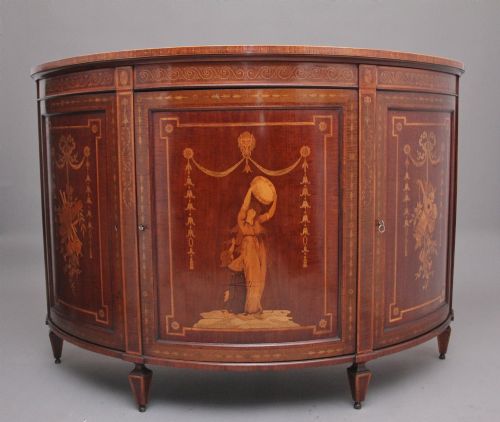
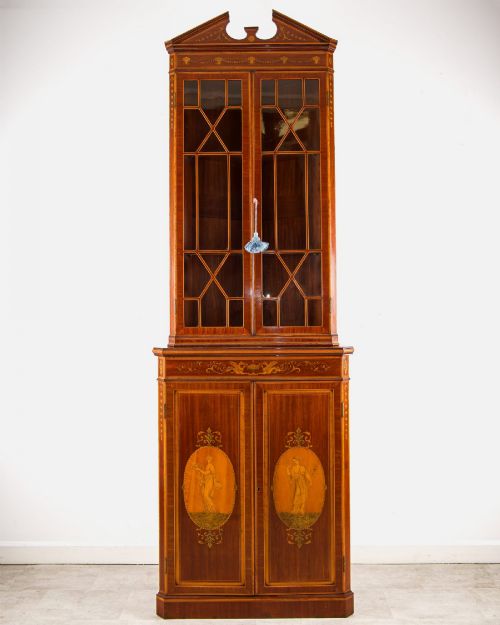
A classical marquetry cabinet is a storage piece defined by detailed wood veneers arranged to form pictorial or geometric patterns. When you search for this phrase, you encounter forms ranging from corner cabinets and side cabinets to display cabinets, bookcases, and compactum wardrobes. The versions most frequently met on this page belong to the Victorian and Edwardian eras, often channelling Sheraton Revival or Neoclassical tastes.
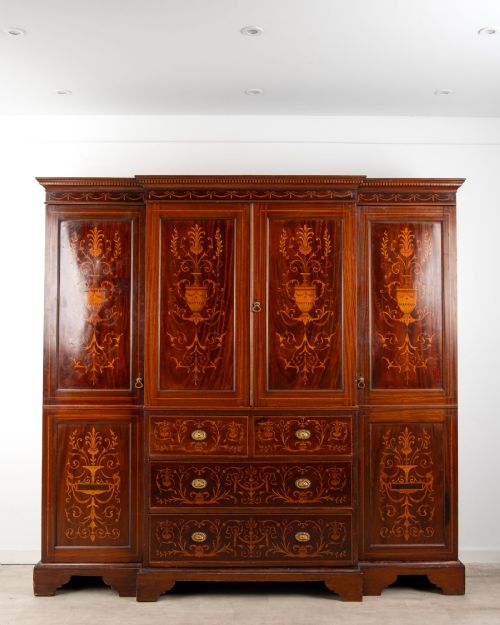
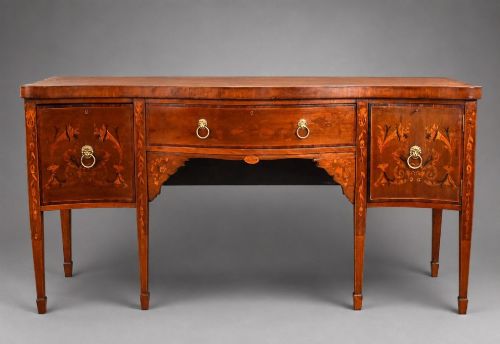
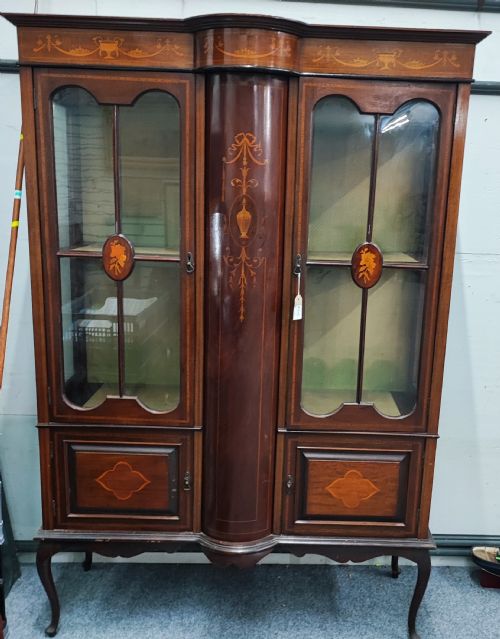
Beyond upright storage, the evidence shows these pieces appearing as sideboards, bureau bookcases, linen presses, and bedside cabinets. They utilise specific formats like bowfronts, demi-lune shapes, and serpentine fronts to shape the timber. These diverse functional types allow the intricate inlaid work to appear in settings from formal libraries to bedrooms.
Materials and construction
The makers of these cabinets relied on a foundation of solid timbers such as mahogany, walnut, and satinwood, frequently enhanced by contrasting veneers like boxwood. Marquetry and satinwood inlay create the characteristic surface patterns, whilst secondary woods support the internal structure. Brass fittings, glass panels, and occasionally marble tops or gilt bronze mounts complete the construction.
Cabinetmakers shaped these materials into specific silhouettes, incorporating astragal glazing bars on display doors and curved fronts on side cabinets. The detailed surface decoration relies on precise cutting and fitting of fine wood veneers into the primary carcase. This technique allowed workshops to produce elaborate neoclassical motifs and symmetrical floral designs across varied furniture forms.
Music side cabinets wait quietly to hold sheet music behind their inlaid doors, long after the parlour pianos have fallen silent.
What separates the finest examples
Quality in a classical marquetry cabinet rests on the precision of the veneer work and the choice of primary timbers. Finer pieces demonstrate seamless integration of contrasting woods like satinwood and boxwood, creating sharp definition within the floral or classical motifs. The ambition of the form, such as a complex serpentine or demi-lune shape rather than a flat front, elevates the standing of the piece.
The distinction between standard and superior pieces also lies in the hardware and secondary materials chosen by the maker. The inclusion of cast gilt bronze mounts, finely worked brass details, or heavy marble tops points to high-status workshop production. Furthermore, the integration of structural elements like astragal glazed doors shows a level of joinery that separates workshop output from mass production.
Edwards and Roberts·Pietro Ferrario·Jean-Henri Riesener·Keeble
The Classical Marquetry Cabinet Glossary
- Marquetry
- Decorative veneer work applied to a furniture carcase to form pictures or geometric patterns. Unlike simple inlay, marquetry covers the entire surface with assembled pieces of wood.
- Satinwood
- A durable tropical timber with a lustrous, yellow-gold sheen used extensively for cabinet veneers. It provides a bright background that contrasts sharply with darker woods.
- Astragal
- A small moulding used in glazing bars to hold individual panes of glass within a cabinet door. This delicate framework is typical of fine display cabinets.
- Serpentine
- A furniture front characterised by a wavy contour that curves inward centrally and outward at the ends. It demands advanced woodworking skill to execute properly.
- Compactum
- A multi-functional wardrobe designed to incorporate hanging space, drawers, and shelving within a single unit. These large pieces often feature elaborate upper cornices.
Classical Marquetry Cabinet: Frequently Asked Questions
What is a classical marquetry cabinet?
A classical marquetry cabinet is a wooden storage piece decorated with fitted veneers forming intricate patterns. These cabinets serve practical storage functions whilst displaying detailed craftsmanship through floral or architectural motifs.
They appear in various formats including side cabinets, corner units, and display cases. The decorative surfaces utilise contrasting timbers to create visual depth.
How do I date an inlaid cabinet?
Dating relies on examining the secondary timbers, construction methods, and prevailing stylistic influences. Pieces showing Sheraton Revival or Neoclassical characteristics often date from the Victorian or Edwardian periods.
Changes in handle styles, drawer linings, and hinge types also help pinpoint the era of manufacture. Examining the wear patterns on internal surfaces provides further chronological clues.
Where were these cabinets used?
These pieces were typically placed in principal reception rooms, drawing rooms, or formal dining spaces to display porcelain, silver, or books. Display cabinets with glass doors allowed owners to showcase prized collections while protecting them from dust.
Smaller versions like bedside cabinets and side tables functioned within private bedrooms and boudoirs. Their decorative surfaces ensured they acted as focal points within domestic interiors.
What woods are used in marquetry?
Cabinetmakers utilised a palette of native and exotic timbers to achieve tonal variation in the designs. Mahogany and walnut provided sturdy foundational carcases and dark background veneers.
Satinwood and boxwood offered pale, luminous tones for highlights and borders. The contrast between these diverse woods brings the decorative motifs into sharp relief.