




Classical Marble Garniture
These classical marble garniture sets unite carved stone and cast metal in balanced mantel displays.
Classical Marble Garniture
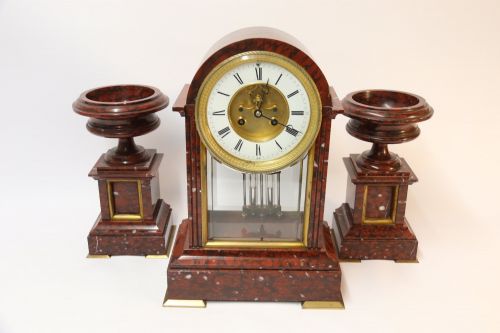
When you search for a classical marble garniture, you encounter matched sets designed for nineteenth-century mantelpieces, typically combining a central clock with flanking urns or candelabra. The selection relies heavily on French nineteenth-century production, drawing upon Louis XVI and Empire styles.
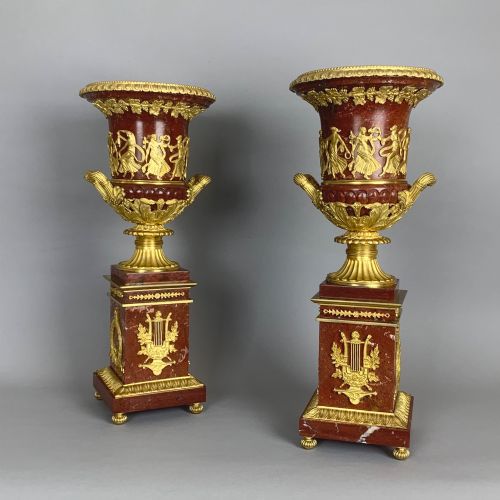
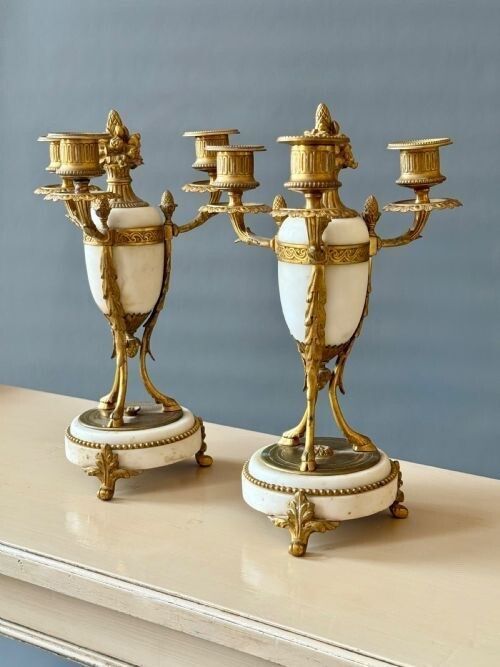
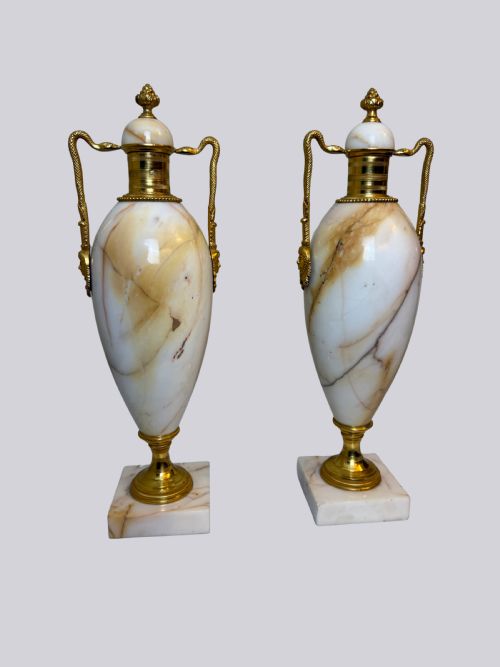
Most examples pair white or coloured marble with cast metal components, forming three-piece or multi-piece arrangements. Forms range from architectural portico clocks to decorative amphora vases and figural candelabra.
How They Were Made
Makers shaped natural stone bodies through turning and polishing, utilising white marble, green onyx, pink marble, and sienna marble alongside alabaster. Metal elements were cast in bronze or brass, then finished with mercury gilding or ormolu to create contrasting metallic highlights against the stone.
Movements within the clock components relied on eight-day striking mechanisms, while subsidiary pieces often incorporated enamel dials, glass covers, and parcel gilt patination applied by hand.
Some nineteenth-century French garniture sets include bronze bookends shaped as thoughtful semi-nude classical ladies pondering literature.
What Varies in Quality
The degree of chiselling in the ormolu mounts determines much of the visual merit, distinguishing sharp, hand-chased bronze castings from softer, mass-produced alternatives. Stone selection and turning precision also divide the range, with dense marbles and finely fitted joints marking superior production.
Complexity of form further separates standard sets from grander examples, where figural statuary, classical motifs, and multi-component candelabra demonstrate higher sculptural ambition from workshops such as those in Paris.
Samuel Marti·H Luppens Paris
The Classical Marble Garniture Glossary
- Garniture
- A matched set of ornamental objects designed to display together on a mantelpiece or sideboard, usually consisting of a central clock flanked by two urns or candelabra.
- Ormolu
- Finely ground high-carat gold mercury-gilded to a bronze object, creating a bright yellow metallic finish characteristic of French decorative metalwork.
- Cassolette
- A decorative vase or urn featuring a reversible lid that transforms the vessel between a solid top and an incense burner.
- Portico clock
- A mantel clock housed within a architectural frame supported by columns, often executed in marble and ormolu during the nineteenth century.
- Grand Tour
- Cultural travel undertaken by nineteenth-century Europeans seeking classical antiquities and souvenirs such as alabaster and bronze models.
Classical Marble Garniture: Frequently Asked Questions
How do you use a clock garniture?
Clock garnitures were placed centrally on fireplace mantels, flanked symmetrically by the accompanying sidepieces to anchor the room's decor. The central clock kept time while the side urns or candelabra served purely decorative or lighting purposes.
Living with these pieces involves managing mechanical clock movements requiring weekly winding. The flanking urns remain static display objects that complement the central timepiece.
How are Louis XVI and Empire styles told apart?
Louis XVI style garnitures display restrained classical proportions, floral garlands, and symmetrical architectural detailing. They lean towards lighter, more delicate ornamentation inspired by ancient Rome.
Empire style garnitures utilise heavier military, imperial, and Egyptian motifs with bolder bronze mounts and darker marbles. They project greater scale and formal authority.
What materials make up these garnitures?
The primary body materials consist of various marbles, alabaster, and onyxes, complemented by cast bronze and brass mounts. Gilt bronze, known as ormolu, provides the golden metallic contrast against the polished stone.
Additional materials include enamel clock dials, glass bezels, and occasional parcel gilt patination. Each component reflects nineteenth-century foundry and lapidary techniques.