



Classical Mahogany Pier Table
A classical mahogany pier table brings architectural presence and rich timber figure to an interior space.
Classical Mahogany Pier Table
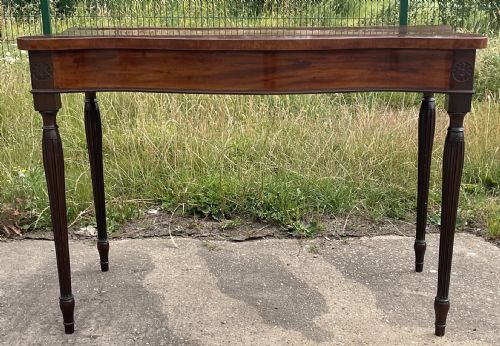
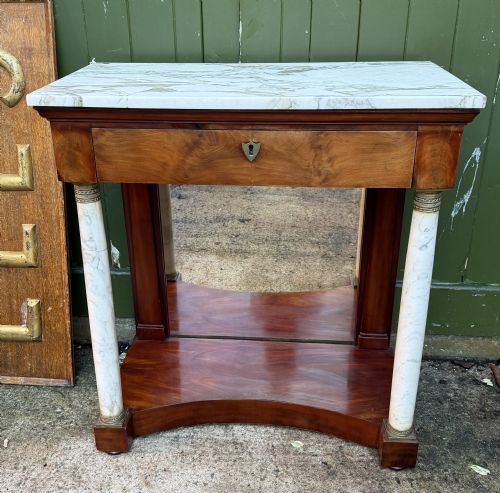
A classical mahogany pier table is a foundational console or side form designed to stand against a wall, frequently positioned beneath a mirror. These pieces span periods from the late eighteenth century through the nineteenth century, encompassing Georgian, Regency, William IV, and French Empire designs.
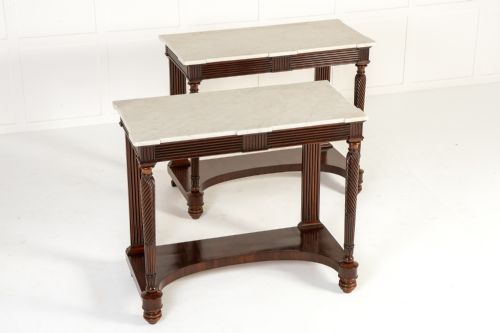
The selections available here include serpentine fronts, demi-lune shapes, and elliptical formats alongside two-tier constructions. Makers and workshops from England, France, and Italy contributed to this lineage, incorporating architectural lines and neoclassical ornamentation.
Buyers will encounter single tables and matched pairs, ranging from straightforward hall consoles to pieces displaying distinct architectural inspiration.
Distinguishing Quality Among Examples
Quality rests in the selection of timber figures, where striking flame mahogany veneer distinguishes superior cabinetwork from plainer stock. The crispness of carved details, parcel gilt application, and ormolu mounts reveals the competence of the workshop behind the piece.
Structural complexity also separates the tiers, seen in whether a table relies on simple classical lines or incorporates intricate architectural elements, demi-lune geometry, or matched pairs.
Classical Mahogany Pier Table Retail Price Guide 2026
Typical asking prices for classical mahogany pier table among the pieces listed under this phrase on Sellingantiques today, from the lower quarter to the upper quarter. They describe what is for sale here now, not the wider market.
The listings span multiple stylistic iterations, including French Empire, William IV, and Italian Neoclassical designs executed in solid mahogany and flame mahogany veneer.
The Classical Mahogany Pier Table Glossary
- Pier table
- A side table designed to stand against a wall, traditionally placed between two windows or beneath a pier glass mirror.
- Flame mahogany veneer
- A thinly sliced wood layer derived from the fork of the mahogany tree, prized for its swirling, flame-like grain pattern.
- Parcel gilt
- A decorative technique where specific carved elements or mouldings are partially covered in gold leaf while the surrounding wood remains exposed.
- Ormolu
- Gilt bronze ornamentation applied to furniture, popular in French Empire and Regency designs.
- Demi-lune
- A half-moon shape characteristic of late eighteenth-century console and side tables.
Classical Mahogany Pier Table: Frequently Asked Questions
Where should I place a pier table?
These tables suit entry halls, principal reception rooms, or dining spaces where wall space allows for a statement console.
They traditionally anchor a wall beneath a mirror or between architectural openings.
How do I identify a Regency table?
Regency pieces often display classical architectural restraint, bold mahogany veneers, and sometimes brass or ormolu mounts.
They reflect early nineteenth-century interpretations of ancient Greek and Roman design.
What is the difference between a console and a pier table?
The terms frequently overlap in antique furniture, though pier tables historically stood against the wall pier between windows.
Console tables share this wall-anchored form and often serve similar decorative and functional purposes in a room.
How do I care for mahogany and marble?
Maintain mahogany surfaces with appropriate wax polishes and protect them from direct sunlight and excessive heat.
Marble tops require gentle cleaning with neutral soap and water to avoid staining the stone.