







Classical Interior Artwork
Classical interior artwork captures domestic scenes and stately rooms in oil and watercolour, offering a direct window into historical domestic spaces.
Classical Interior Artwork
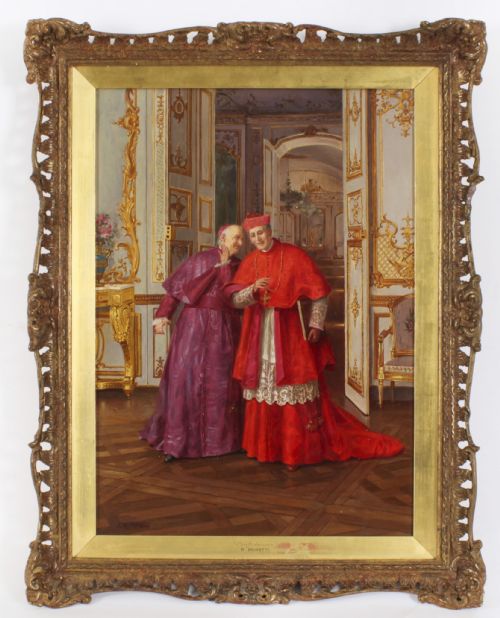
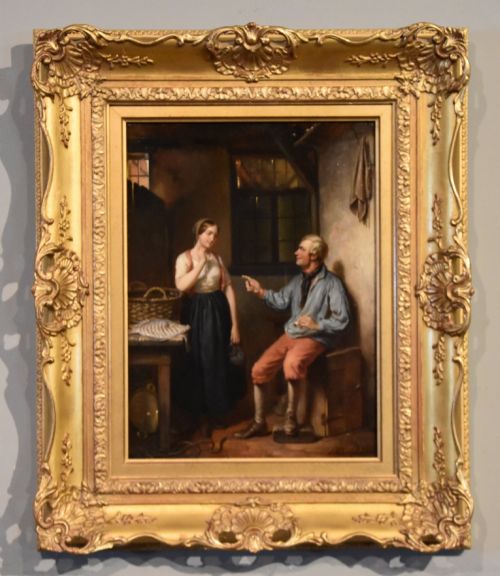
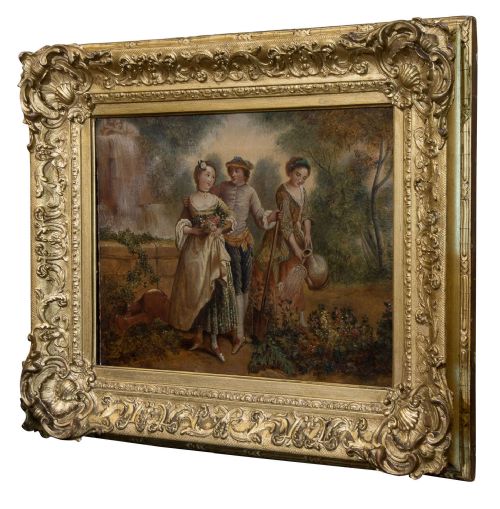
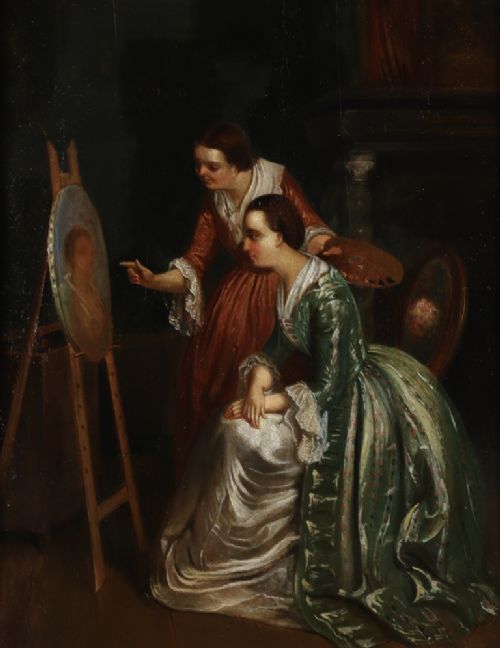
Classical interior artwork comprises oil paintings, oil on board, oil on panel, and watercolours depicting rooms, courtiers, musicians, and artists at work. These pieces span the eighteenth century, nineteenth century, and twentieth century, encompassing British, French, Dutch, and Scottish schools.
Buyers will most frequently encounter nineteenth-century oil paintings on canvas depicting genre scenes, such as tea parties, chess games, and musical performances within elaborate architectural settings.
The selection ranges from academic realism and French rococo revival to metaphysical art and surrealist interiors, reflecting diverse approaches to depicting inhabited spaces.
Measures of quality
Quality rests in the precision of figure rendering, the handling of light within architectural spaces, and the depth of perspective. Works attributed to known academic painters or established regional schools demonstrate superior draughtsmanship compared to anonymous school pieces.
The preservation of the original canvas, panel, or paper, alongside untouched surface pigments and period frames utilising gold leaf and gesso, distinguishes the finer examples in this category.
The inventory includes examples from British, French, Scottish, and Dutch regional painting traditions.
Renato Moretti·Jacob Akkersdijk·John Watkins Chapman·Joaquín Luque y Roselló·Robert Alexander Hillingford·Francesco Renaldi·Jan Steen·Pierre-Louis Bouchard
The Classical Interior Artwork Glossary
- Academic Realism
- A style of painting produced under the influence of European academies, characterised by strict adherence to classical rules of composition and accurate depiction of subjects.
- Genre Painting
- Pictorial representation of scenes from everyday life, typically depicting ordinary people in domestic interiors or social settings.
- Gesso
- A plaster-like mixture applied to wood or canvas as a base for painting or used on frames to create moulded decorative reliefs.
- Giltwood
- Wood that has been thinly coated with gold leaf or gold paint, frequently used for ornate nineteenth-century picture frames.
- Metaphysical Art
- An early twentieth-century Italian style depicting uncanny, dreamlike spaces with stark perspective and enigmatic objects.
Classical Interior Artwork: Frequently Asked Questions
What periods do these paintings cover?
The listings span from the eighteenth century through the nineteenth century and into the mid-twentieth century.
They reflect various historicist revivals and contemporary stylistic developments of their respective decades.
How were these artworks displayed?
Such paintings were traditionally hung in drawing rooms, stately homes, and parlours to display cultural refinement.
Many retain their original giltwood and gesso frames intended for prominent domestic placement.
What subjects appear most often?
Common subjects include musicians performing in stately rooms, courtiers taking tea, artists in studios, and domestic genre scenes.
Figures engaged in everyday social activities set against elaborate architectural panels recur frequently.
Are all pieces signed by artists?
Several works bear signatures or direct attributions to named painters, while others represent French, British, or Dutch school pieces.
Unsigned works often relate stylistically to specific regional traditions or circles of known masters.