


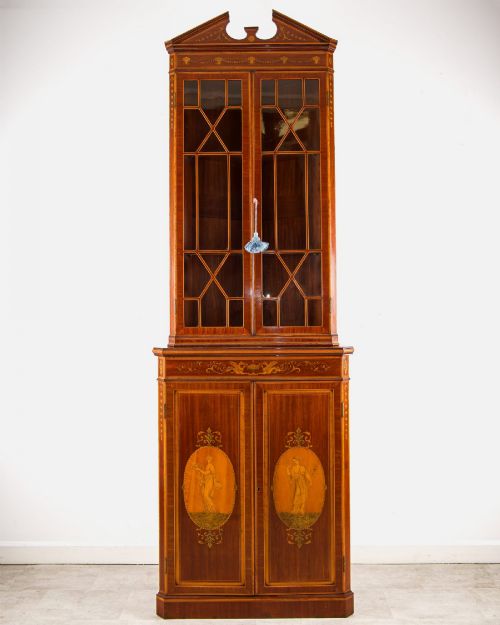

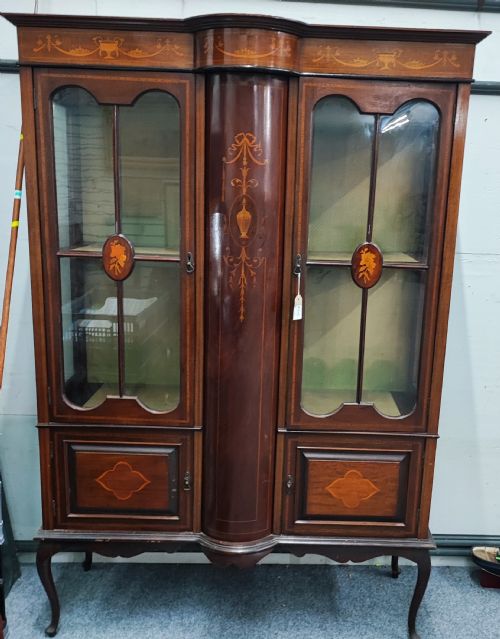


Classical Inlaid Display Cabinet
A classical inlaid display cabinet brings together fine timbers and delicate marquetry to showcase treasured objects with period elegance.
Classical Inlaid Display Cabinet
A classical inlaid display cabinet is a refined piece of furniture designed to exhibit ceramics, glassware, and small ornaments behind glass panels. These pieces typically take the form of corner cabinets, bowfronted bookcases, side cabinets, and credenzas.
The versions most frequently met on this page date from the Victorian and Edwardian eras, spanning the late nineteenth century to around nineteen ten. Many examples draw heavily on earlier design vocabularies, reflecting Sheraton Revival and Neoclassical tastes.
Makers and workshops of the period utilised sophisticated marquetry and contrasting stringing to elevate standard storage forms into ornamental centerpieces. Buyers will encounter both upright corner configurations and broader sideboard formats equipped with astragal glazing.
How they were made
Cabinet makers constructed these pieces using solid foundations of mahogany, satinwood, and rosewood, often enhanced with delicate wood veneer surfaces. Boxwood and various contrasting timbers provided the fine lines required for intricate inlay work and geometric banding.
Glazing typically took the form of astragal bars dividing the glass into precise geometric panes, while brass hardware secured doors and internal shelving. Selected examples also feature hand-painted floral motifs and marquetry panels set into the primary wood body.
Listings feature pieces spanning the Victorian and Edwardian eras, with a strong representation of Sheraton Revival styles.
What varies in quality
The distinction between standard commercial output and superior craftsmanship rests in the precision of the marquetry and the choice of timber figures. Rich satinwood grains and crisply cut boxwood stringing signal a higher grade of workshop production.
Structural refinement also determines overall merit, visible in the joinery of cornices, the weight of the brass fittings, and the symmetry of the glazing bars. Pieces associated with notable makers demonstrate a superior crispness in every carved and inlaid detail.
Edwards and Roberts
The Classical Inlaid Display Cabinet Glossary
- Astragal glazing
- The arrangement of wooden bars that divide a glass door into smaller panes. These delicate mouldings provide structural support while framing the contents within.
- Marquetry
- The art of applying decorative pieces of veneer to a structure to form ornamental designs. Craftsmen use varied timber colours to create floral or classical motifs.
- Stringing
- A narrow inlay of contrasting wood set into the surface of a cabinet. It creates clean border lines around panels, drawers, and tabletops.
- Breakfront
- A cabinet design where the central section projects forward from the flanking wings. This architectural arrangement adds depth and visual rhythm to large storage pieces.
- Satinwood
- A pale, lustrous timber native to the tropics, prized for its golden sheen. It served as a primary ground for high-status eighteenth and nineteenth-century decorative furniture.
Classical Inlaid Display Cabinet: Frequently Asked Questions
Where should I place a display cabinet?
These cabinets suit reception rooms and hallways where natural light can catch the glass panels and polished timber surfaces.
Corner configurations fit neatly into unused architectural angles, whereas breakfront and credenza formats require open wall space to anchor the room.
How do I care for inlaid wood?
Maintain a stable room temperature away from direct sunlight and radiators to prevent the delicate wood veneers and boxwood inlays from drying out.
Dust regularly with a dry, soft cloth and occasionally apply a quality natural wax to preserve the sheen of the mahogany or satinwood.
Can I adjust the internal shelves?
Many period cabinets feature fixed wooden shelving designed to support the structural rigidity of the glazed upper section.
Later Edwardian iterations occasionally incorporate adjustable brackets, though original layouts should be checked before altering the interior arrangement.
How do I distinguish Edwardian from Victorian pieces?
Victorian examples often employ heavier ebonised finishes, rosewood, or rich amboyna veneers alongside darker, more assertive proportions.
Edwardian interpretations tend toward lighter satinwood grounds and Sheraton Revival influences, favouring brighter tones and airier neoclassical motifs.