
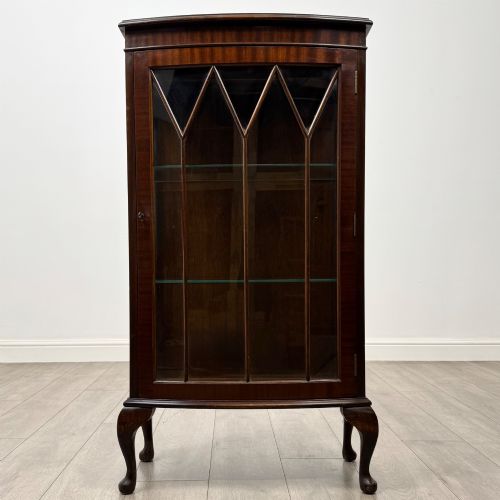
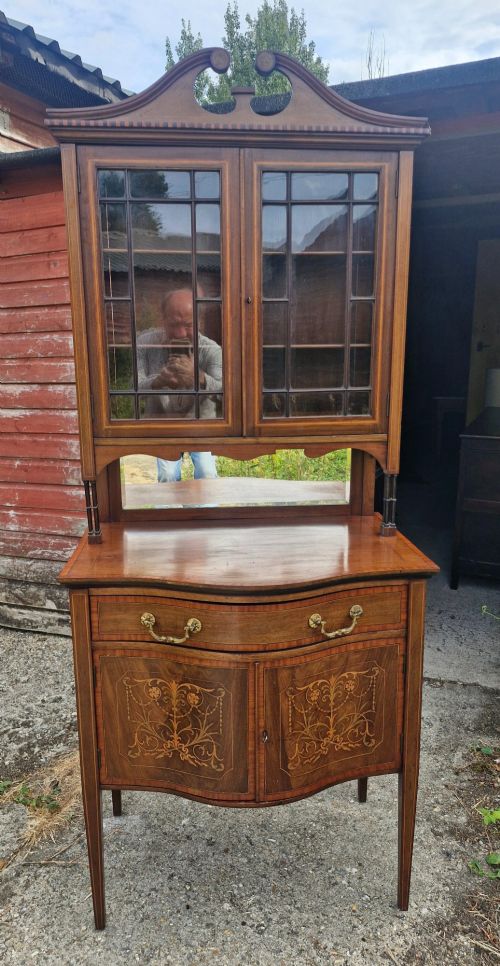
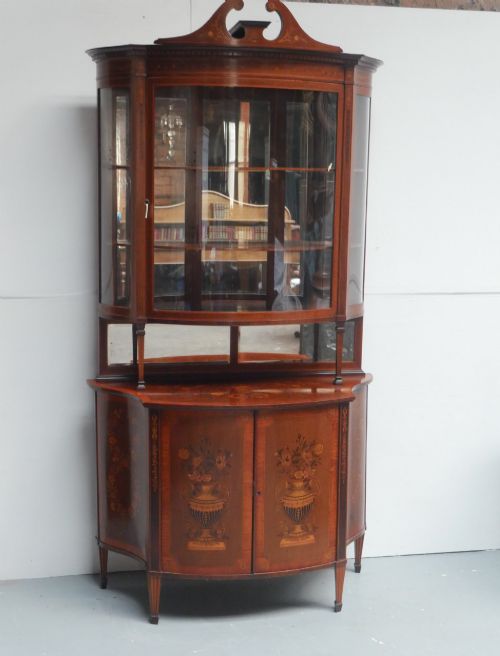
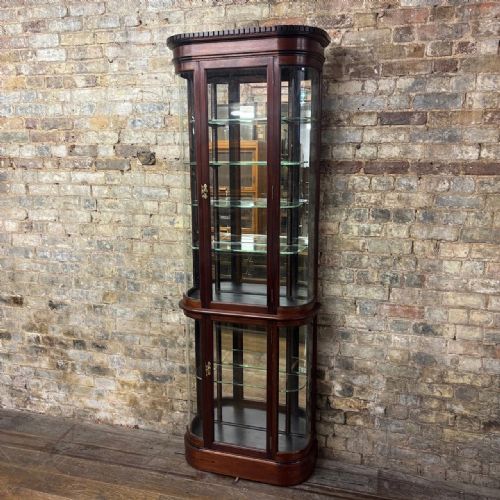


Bowfront Glazed Bookcase
A bowfront glazed bookcase brings curved glass and refined timber into a room, offering a gracious way to house a collection.
Bowfront Glazed Bookcase
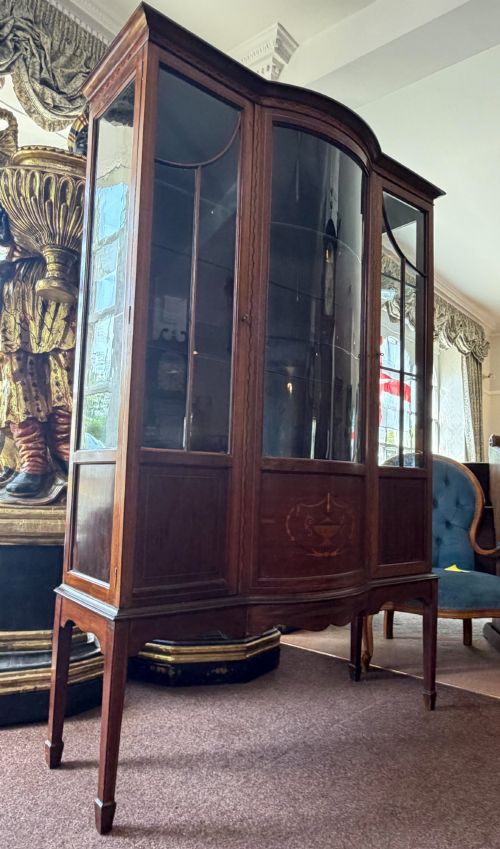
When you search for a bowfront glazed bookcase, you encounter pieces primarily from the Edwardian era and the nineteenth century, alongside later revivals. These cabinets combine curved glass doors with shelved interiors designed for the display and storage of volumes and cabinet ornaments.
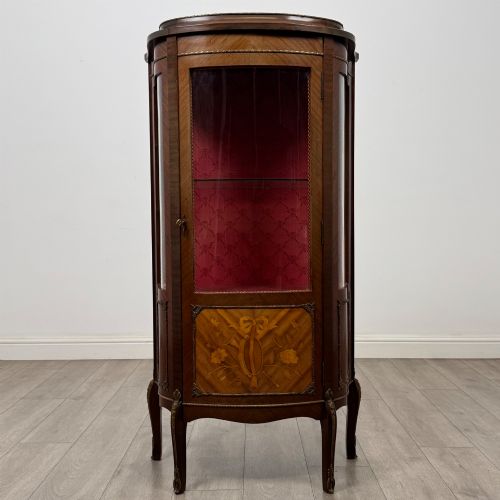
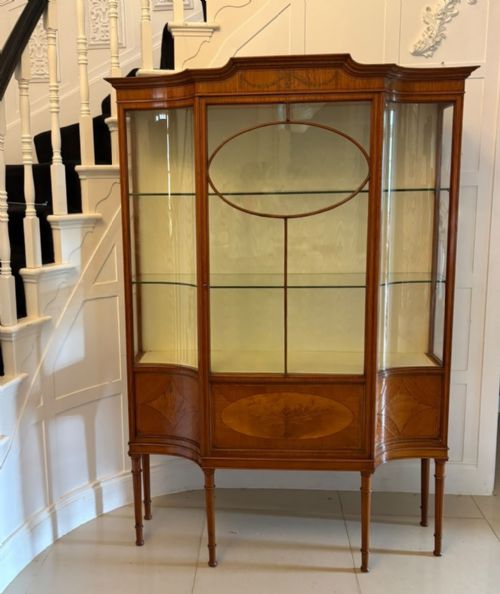
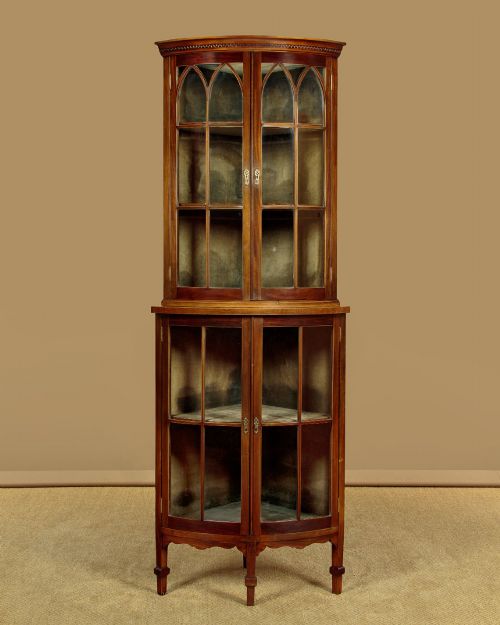
The forms span freestanding two-part display cabinets, corner units, and demi-lune shapes designed to fit against a wall or in a room's angle. Mahogany and satinwood predominate, frequently enriched with delicate inlay work that reflects Georgian and Sheraton design traditions.
Most examples date from the Edwardian period or the late Victorian years, though earlier nineteenth-century origins and twentieth-century interpretations also appear. Buyers select these items to introduce architectural curves and visible storage into domestic spaces.
Materials and Construction
Cabinet makers utilised solid and veneered timbers, predominantly mahogany and burr walnut, laid over supportive secondary woods to achieve smooth curved drawer fronts and door frames. Satinwood inlay and marquetry panels added decorative contrast along the cornices and lower registers.
Glazing bars divided the glass panels into geometric or arched patterns, while brass hardware such as hinges and escutcheons secured the doors. Fabric linings sometimes backed the interior shelving to provide a soft contrast against the displayed objects.
One cabinet includes floral painted panels alongside its marquetry, proving that Edwardian makers believed flowers improved everything.
Assessing Quality and Craftsmanship
The fineness of the marquetry and the precision of the satinwood stringing separate standard production from superior workshop output. Marquetry executed with varied natural woods shows greater depth than simpler painted decoration.
The integration of the curved glass within its frame demonstrates the maker's joinery skill, particularly in how evenly the bow meets the surrounding timber. Exhibition pieces exhibit denser burr walnut veneers and more intricate floral painted motifs.
Edwards and Roberts·Maurice Adams
The Bowfront Glazed Bookcase Glossary
- Bowfront
- A convex curved front contour that projects outward from the centre. This shape softens the rectangular geometry typical of standard furniture.
- Marquetry
- The art of applying decorative veneer pieces of different woods to a structure to form pictorial or geometric designs. It differs from inlay by covering the entire surface rather than fitting into recessed channels.
- Demi-lune
- Half-moon or semicircular in plan form. Cabinets with this shape fit flush against a flat wall while projecting a curved profile into the room.
- Satinwood
- A durable, lustrous yellow-brown timber imported from tropical regions. Cabinet makers utilised it extensively for contrasting banding and inlay work.
- Stringing
- Thin lines of contrasting wood inlay set into channels on drawer fronts and cornices. This linear decoration frames the primary timber panels.
Bowfront Glazed Bookcase: Frequently Asked Questions
Where should I place a bowfront glazed bookcase?
These cabinets suit drawing rooms, studies, and hallways where their curved glass fronts can catch the light without obstructing foot traffic. Corner variations make efficient use of unutilised room angles while displaying contents from multiple angles.
Ensure the floor is level so the doors swing evenly within their frames. Avoid placing them in direct sunlight to protect interior timber and any fabric linings from fading.
How do I care for the polished timber surfaces?
Maintain the polish by dusting regularly with a soft, dry cloth and applying natural beeswax periodically to nourish the wood grain. Avoid using silicone-based sprays which can build up and soften historical finishes over time.
Keep humidity levels in the room stable to prevent the timber and veneers from expanding or contracting excessively. Check the brass hinges occasionally to ensure the doors hang true.
Can these cabinets safely hold heavy books?
Most of these pieces were built to house leather-bound volumes and display collections, featuring fixed or adjustable wooden shelving. Distribute weight evenly across the shelves to prevent sagging over extended periods.
Heavier folios sit best on the lower, more robust shelves, leaving upper tiers for lighter octavos and decorative objects. Inspect the shelf supports to ensure they seat securely within the cabinet interior.
How do I distinguish Edwardian revivals from earlier pieces?
Edwardian and late Victorian revivals often display lighter mahogany stock, machine-cut interior components, and brighter satinwood contrast. Earlier nineteenth-century examples tend to feature denser timber weights and hand-cut joinery marks upon close inspection.
Examine the backboards and drawer linings for tool marks and timber shrinkage patterns consistent with age. Maker labels or stamps, when present, provide definitive attribution to specific workshops.