


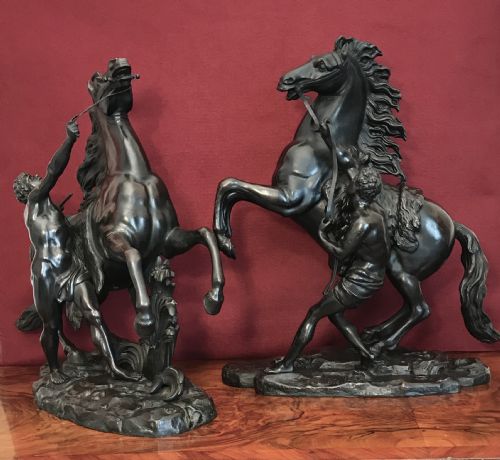


Classical Horse Statue
A classical horse statue captures the enduring power of equine form through bronze and marble.
Classical Horse Statue
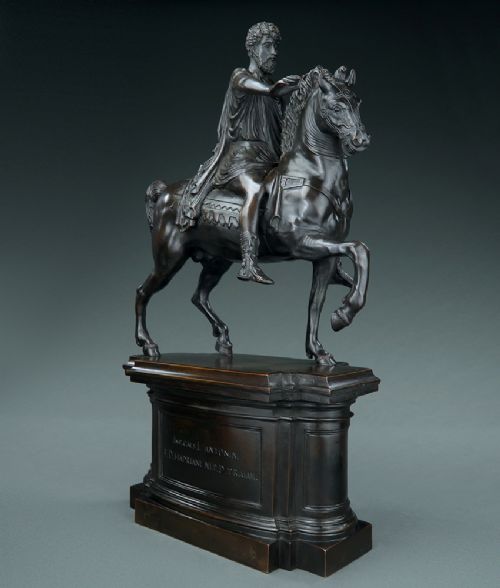
A classical horse statue brings neoclassical and academic restraint into a room, drawing on centuries of European sculpture. When you search for a classical horse statue, you encounter figures ranging from grand tour souvenirs to substantial nineteenth-century cabinet bronzes.
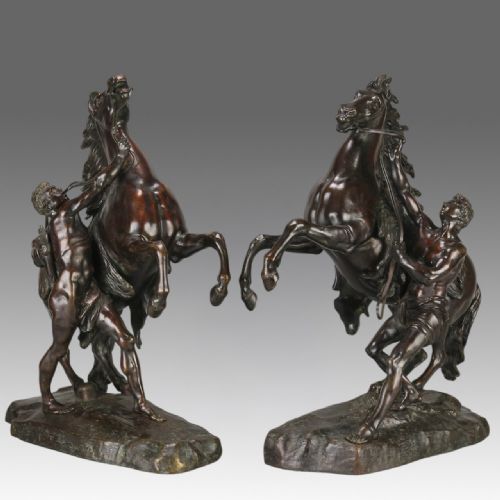
Most examples found here date from the Victorian period through to the mid-twentieth century, often cast after famous monuments like the Marly horses. These pieces take various forms, including sculptural pairs, mounted riders, mantel clock housings, and even isolated fragments.
Originating largely from French, Italian, and Austrian workshops, these works reflect the enduring appeal of classical antiquity and equestrian mastery. Collectors find them in formats varying from cabinet-sized souvenirs to large mantel ornaments.
Materials and casting methods
Foundry work relies heavily on cast bronze, often treated with dark patination or fire gilding to enhance the muscular contours of the animal. Some variations utilise bronzed metal over a base material, offering a similar visual weight at a different scale of production.
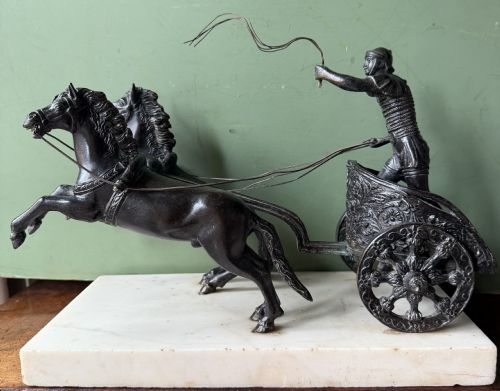
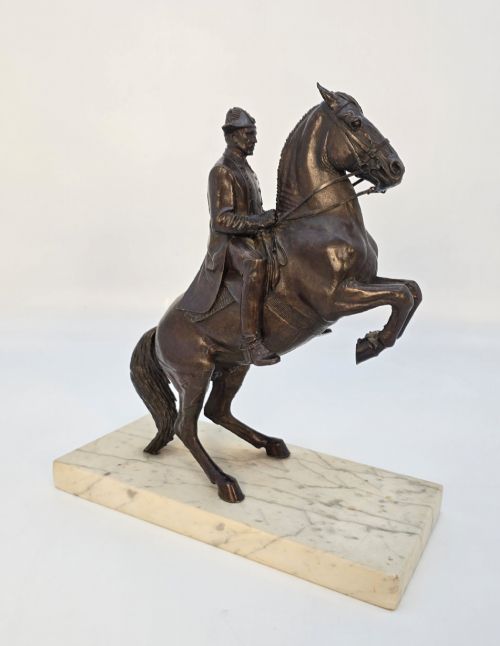
Plinths and bases frequently incorporate contrasting materials such as white marble or sienna marble, providing a stable architectural foundation for the metalwork. Wood also appears in the construction of certain mounting bases and clock housings.
Surface finish is achieved through careful chasing of the cast metal and the application of patinas ranging from deep brown to metallic gold. These techniques ensure the musculature and harness details remain sharp and defined.
Among the whole stable of whole horses, one solitary bronze nostril survives to remind us of monumental scale.
What distinguishes finer examples
The precision of the metal chase work and the crispness of the casting define the fidelity of the equine anatomy. Finer bronzes retain sharp muscular definition in the legs and flanks, whereas lesser castings lose detail in the softer areas.
The quality of the marble plinth and the integration between the metal figure and its base indicate the level of craftsmanship involved. Well-fitted mounts and substantial stone bases demonstrate a higher standard of workshop production.
Surface patination also contributes to the visual success of the piece, with stable, varied patinas outperforming flat or overly uniform finishes. The accuracy of the historical reference, whether following Coustou or Verrocchio, underpins the ambition of the casting.
Coustou·Charles Crozatier·Verrocchio
The Classical Horse Statue Glossary
- Grand Tour
- A nineteenth-century travel tradition where wealthy collectors acquired souvenir bronzes in Italy and France. These smaller sculptures frequently depicted famous classical monuments and statues.
- Marly Horses
- A pair of monumental marble sculptures commissioned by Louis XV for the Château de Marly, depicting restrained horses and their grooms. Numerous nineteenth-century bronze reductions follow this iconic design.
- Patinated Bronze
- Bronze metal treated with chemical solutions to produce a controlled surface colour, typically ranging from deep brown to near black. This finish protects the metal and accentuates sculptural detail.
- Sienna Marble
- A distinctive yellow-gold Italian marble featuring dark veining, frequently utilised for classical sculpture plinths and architectural mantel clocks. It provides a rich colour contrast against dark bronze.
- Chasing
- The manual finishing process where a metalsmith uses punches and hammers to refine the surface of a raw bronze casting. This removes casting flaws and sharpens hair and muscle lines.
Classical Horse Statue: Frequently Asked Questions
How do I date a bronze horse?
Dating relies on the style of the casting, the composition of the patination, and the characteristics of any accompanying marble base. Nineteenth-century pieces often display specific foundry marks or stylistic links to academic sculpture.
Examining the underside of the piece can reveal the casting method and wear patterns consistent with Victorian or later manufacture. Comparing the work to known models helps narrow the period of production.
Where were these statues made?
The majority of these pieces originate from European workshops in France, Italy, and Austria during the nineteenth and early twentieth centuries. French foundries specialised in animalier and neoclassical bronzes.
Italian workshops focused heavily on grand tour souvenirs for travellers visiting classical sites. Viennese schools produced distinct equestrian studies reflecting local academic traditions.
What is a Grand Tour bronze?
A Grand Tour bronze is a scaled-down reproduction of a famous public monument or classical sculpture purchased by travellers during their European tours. These objects allowed collectors to bring classical antiquity into their homes.
They were produced by skilled workshops in cities like Rome, Florence, and Paris. Their quality often matches or exceeds that of larger contemporary salon sculptures.