



Classical Grand Tour Lamps
Classical grand tour lamps bring the sculpture and archaeology of ancient Rome and Greece into nineteenth-century interiors as functional lighting and decorative objects.
Classical Grand Tour Lamps
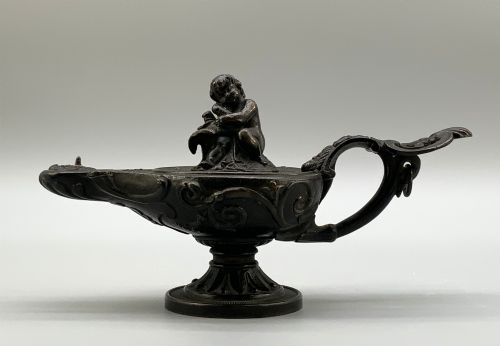
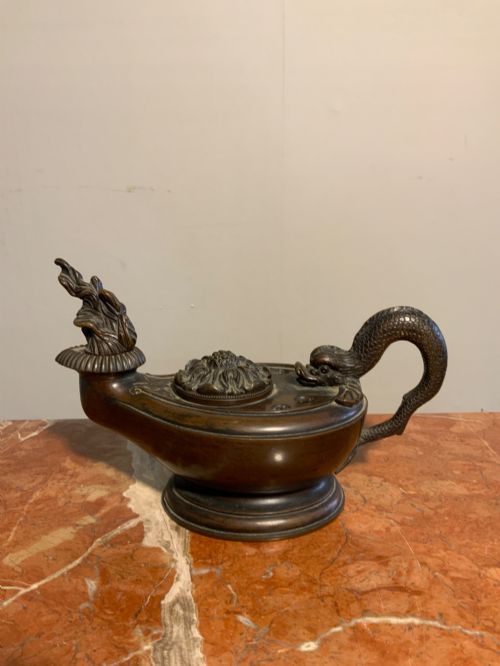
When you search for classical grand tour lamps, you are looking at nineteenth-century lighting and desk accessories shaped by the taste for ancient Mediterranean art. These pieces draw directly on antiquities discovered during excavations at Pompeii and Herculaneum, translated into domestic objects for travellers on the Grand Tour.
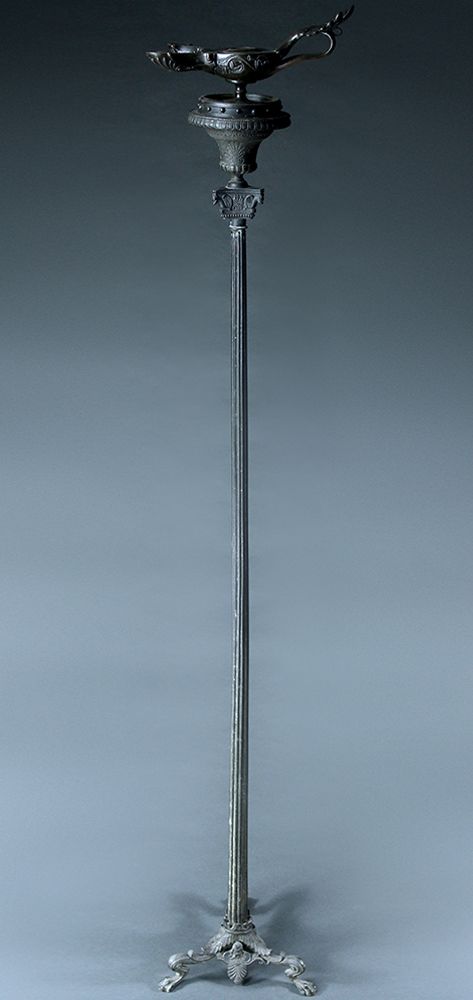
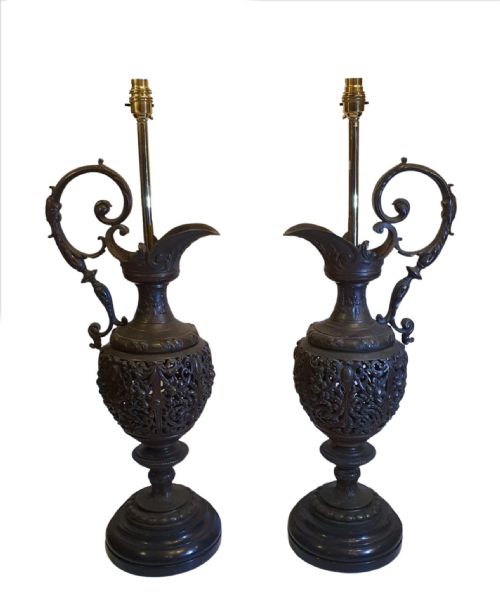
The selections available here range from figural oil lamps and patinated bronze table lamps to floor-standing designs and mounted marble pieces. You will also encounter related forms such as inkwells and ewers that have been converted to lamps, alongside neoclassical side tables.
Most examples date across the nineteenth century, particularly the earlier decades around eighteen hundred through to eighteen sixty. They reflect both Italian workshops and French ormolu production, capturing the enduring European fascination with classical antiquity.
How they were made
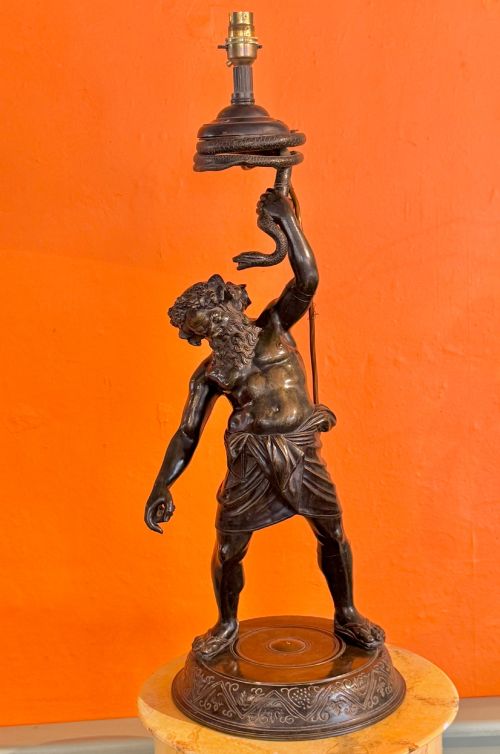
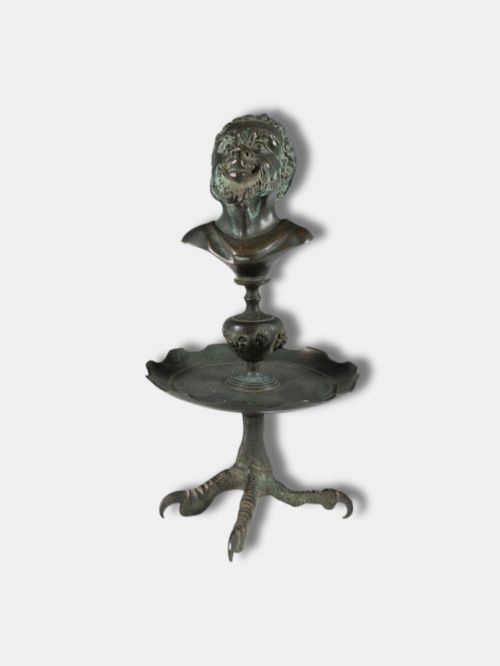
These pieces rely heavily on cast bronze, patinated bronze, and brass, often combined with polished marble plinths and bases. Metalwork components are cast and hand-finished, capturing fine details in figures like sileni, satyrs, and mythological busts.
Surface treatment defines the aesthetic, using dark patination, gilding, and ormolu highlights to imitate excavated ancient metalwork. Some pieces incorporate ebonised wood or fruitwood inlay, particularly in Sorrento ware constructions.
Satyr busts and eagle claws keep a careful watch over your desk.
What varies in quality
Quality in these objects rests primarily on the crispness of the casting and the depth of the metal patination. Finer pieces retain sharp facial expressions and clear anatomical details on figural elements such as satyrs and classical deities.
The choice and execution of secondary materials also set examples apart. Solid marble plinths, precise ormolu mounts, and signed foundry marks indicate a higher standard of nineteenth-century production compared to unmarked commercial output.
G. Amodio Naples
The Classical Grand Tour Lamps Glossary
- Grand Tour
- A traditional trip of Europe undertaken by upper-class European young men of sufficient means flourished during the 18th and 19th centuries. It shaped the acquisition of antiquities and souvenir works of art.
- Silenus
- A companion and tutor to the wine god Dionysus in Greek mythology, frequently depicted in classical sculpture. His rotund figure appears on several nineteenth-century lamps and inkwells.
- Ormolu
- Finely ground high-carat gold applied to an object of bronze through a mercury gilding process. This technique gives metalwork a rich golden lustre.
- Volute krater
- An ancient Greek type of vase characterised by scroll-shaped handles, which nineteenth-century makers adapted into lamp bodies.
- Sorrento ware
- Woodwork decorated with micro-mosaic marquetry and inlay from the town of Sorrento in southern Italy. It appears on occasional and side tables associated with this aesthetic.
Classical Grand Tour Lamps: Frequently Asked Questions
What is a grand tour lamp?
These are nineteenth-century lighting fixtures inspired by ancient Greek and Roman antiquities. Travellers collected them as souvenirs or commissioned them during tours of Italy.
They often take the form of oil lamps, figural bronzes, or classical vases converted for modern domestic use.
How old are these lamps?
The pieces listed here date predominantly from the nineteenth century, spanning from around eighteen hundred to the late eighteen hundreds. They reflect the Victorian and Regency enthusiasm for classical revival design.
Materials and mounting styles help distinguish between earlier Regency interpretations and later Victorian productions.
Were all these lamps originally lighting?
Many items were originally designed as oil lamps, inkwells, or decorative vases before being converted to electrical table lamps later in life. Some pieces such as ewers and volute krater vases served other ornamental functions originally.
This adaptation reflects how historic objects were continuously reused in nineteenth-century and subsequent interiors.
How do I identify Italian pieces?
Italian examples, particularly those from Naples or Sorrento, often utilise local materials like carved marble and specific regional motifs. Foundry signatures or inscriptions on the bronze indicate their origin.
French makers also produced similar neoclassical designs, frequently employing ormolu bronze and strict French mounting standards.