



Classical Gilt Table Clock
A classical gilt table clock brings the commanding presence of nineteenth-century reception rooms onto a mantelpiece through polished metal and precise mechanical craft.
Classical Gilt Table Clock
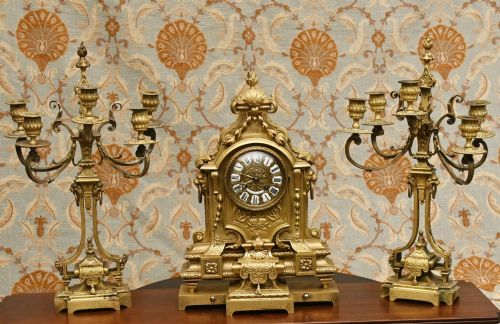
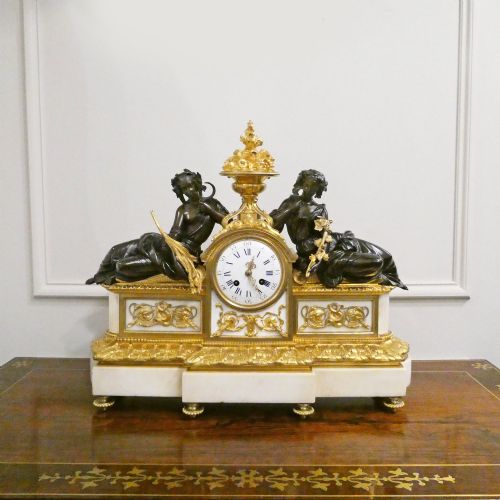
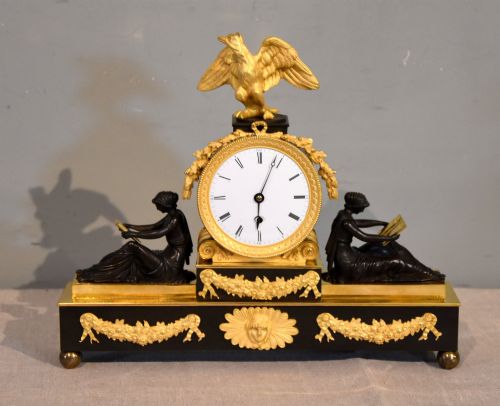
A classical gilt table clock brings together architectural presence and horizontal stability, designed for placement upon mantelpieces, consoles, and side tables in grand interiors. When searching for a classical gilt table clock, buyers encounter predominantly nineteenth-century French and English pieces spanning the Regency, Victorian, and Napoleon III periods.
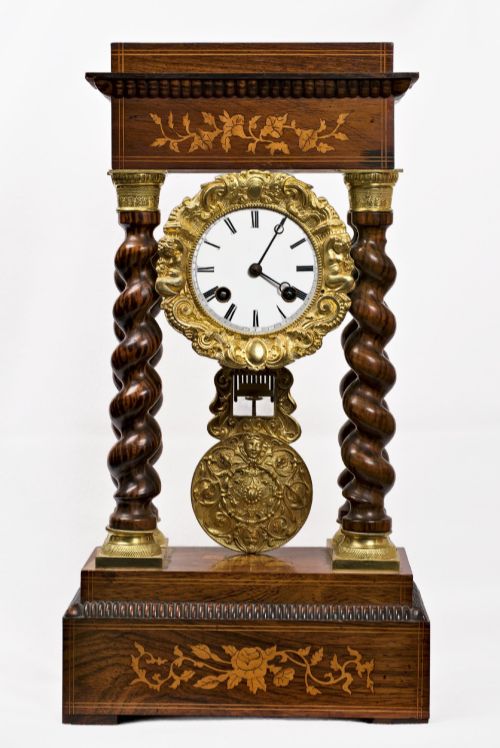
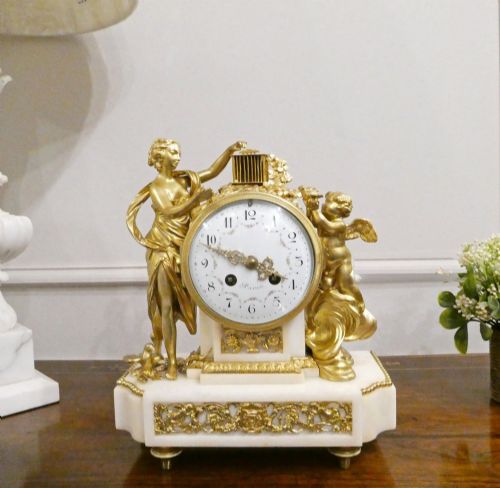
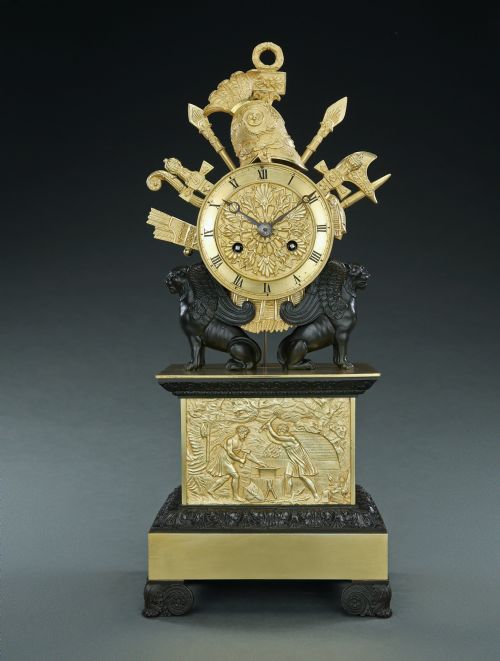
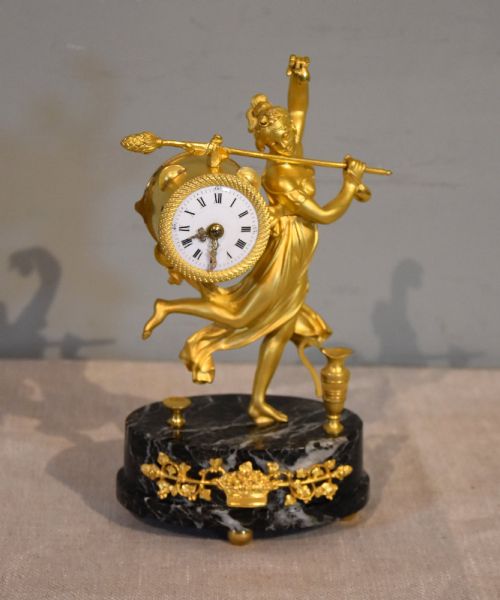
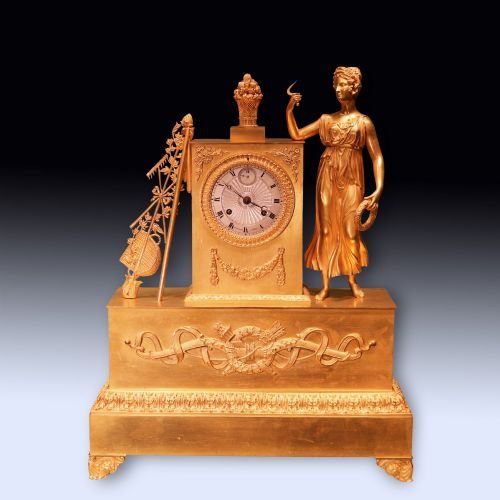
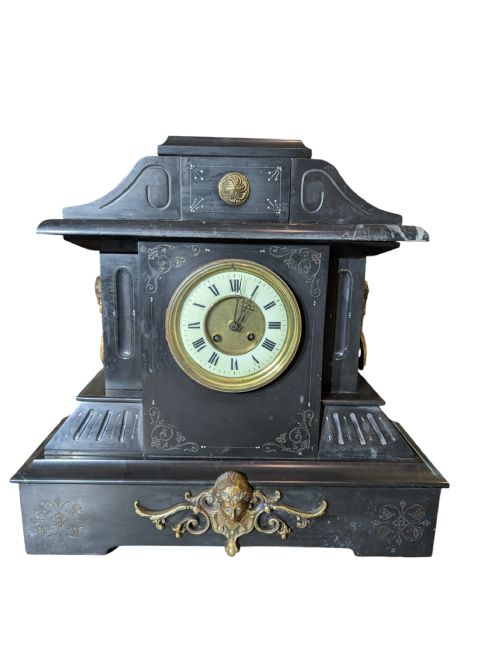
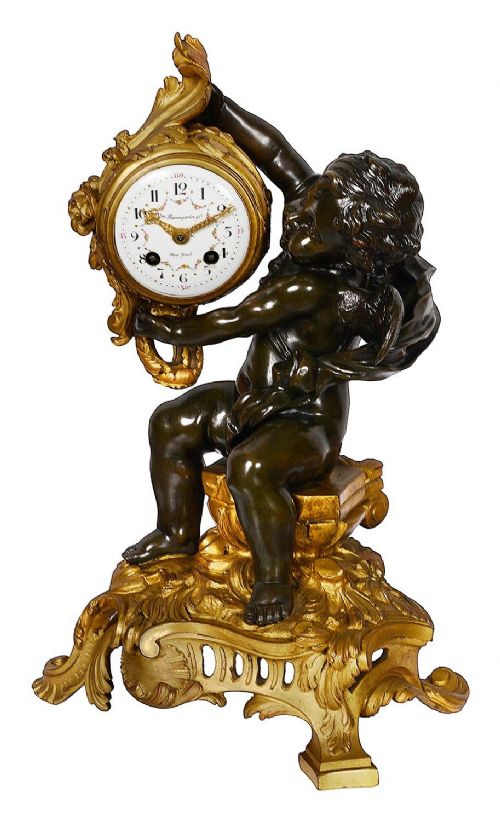
The objects take several distinct physical forms, ranging from single mantel clocks and drum head clocks to complex clock garniture sets accompanied by candelabras or side urns. Architectural portico clocks and figural designs featuring cherubs, astronomy motifs, or war trophies also appear frequently among the listings.
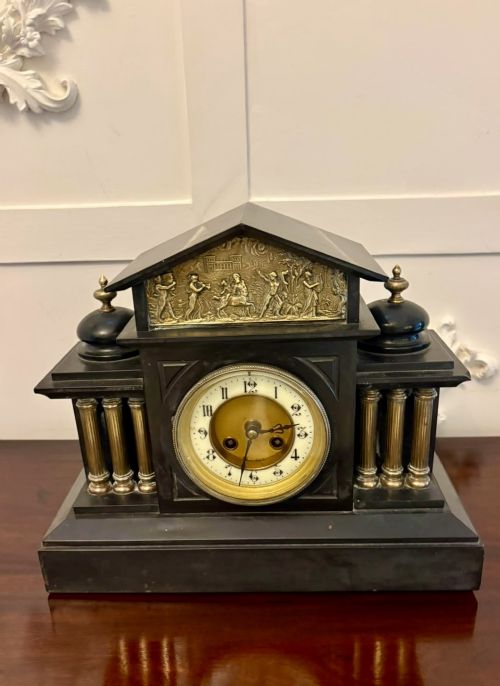
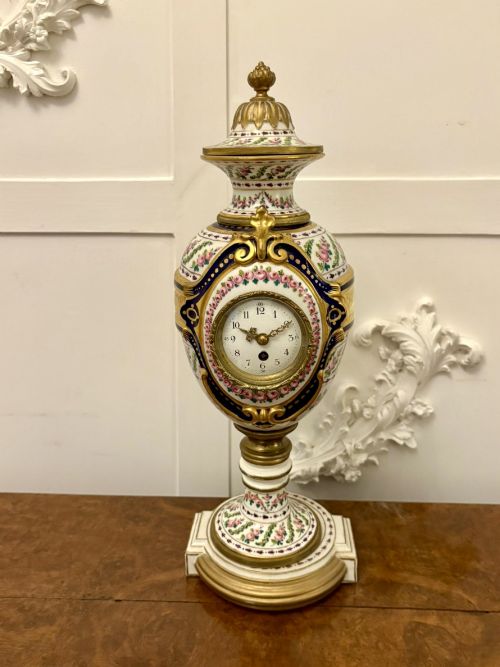
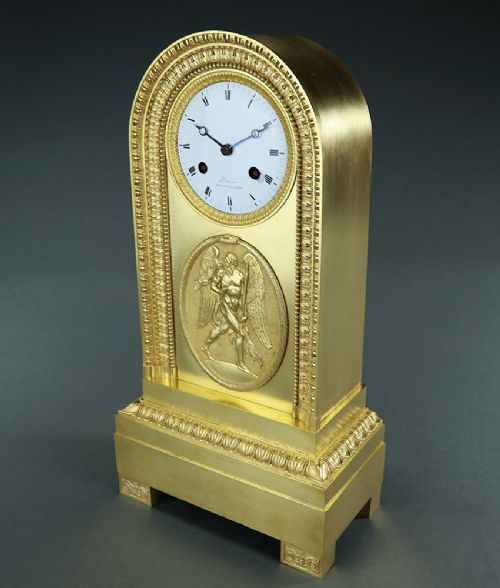
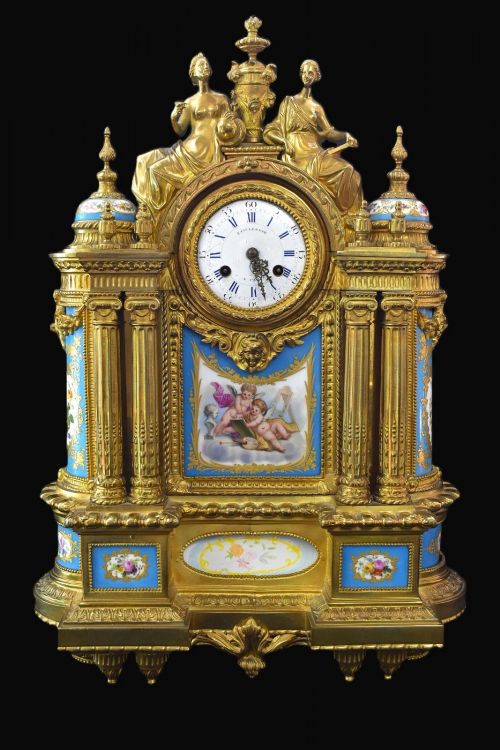
Materials span boldly across metals and minerals, pairing gilded bronze and ormolu with contrasting black, green, and white marbles or polished wood bodies. Enamel dials and hand-painted porcelain panels frequently punctuate the metallic surfaces, adding colour and intricate detail to the composition.
How They Were Made
The structural bodies rely upon the combination of cast metals and dense natural materials, utilising fire-gilded ormolu, gilt brass, and patinated bronze mounted upon solid marble or rosewood bases. These metal mounts are cast and chased to achieve crisp architectural detailing and sculptural figures before receiving their golden surface treatments.
Internal timekeeping relies upon robust eight-day mechanical movements, frequently incorporating spring-driven or chain fusee systems produced by established continental and English clockmakers. Dials are constructed from convex glass, white enamel, or hand-painted porcelain segments, often protected behind glazed bezels.
Classical Gilt Table Clock Retail Price Guide 2026
Typical asking prices for classical gilt table clock among the pieces listed under this phrase on Sellingantiques today, from the lower quarter to the upper quarter. They describe what is for sale here now, not the wider market.
Materials appearing across the inventory include gilt bronze, ormolu, marble, enamel, and porcelain.
What Varies in Quality
Quality separates through the crispness of the bronze chasing and the depth of the mercury gilding, where superior examples exhibit sharp relief and a rich, warm lustre. Lesser pieces show softer casting lines and thinner metallic coatings that wear down to the underlying brass.
The integration of materials dictates the overall standing of a piece, separating integrated sculptural compositions from heavier, purely utilitarian housings. Heavy marble bases, original matching garniture sets, and named movement makers elevate the status of the clock significantly.
Vincenti·Etienne Lenoir·Japy Freres·Philippes Paris·A.D Mougin·Samuel Marti
The Classical Gilt Table Clock Glossary
- Ormolu
- Finely chopped gold amalgamated with mercury and applied to bronze through a high-heat firing process that leaves a durable, rich golden finish.
- Garniture set
- A decorative centrepiece clock accompanied by matching side pieces such as candelabras, vases, or urns designed to sit together on a mantel.
- Portico clock
- A distinct architectural clock form featuring four supporting pillars framing a central hanging pendulum movement.
- Fusee movement
- A conical pulley mechanism connected to a chain that ensures even power delivery to the gear train as the mainspring unwinds.
- Crystal regulator
- A nineteenth-century clock style enclosed entirely by bevelled glass panels, allowing a clear view of the mercury pendulum and gear train from all angles.
Classical Gilt Table Clock: Frequently Asked Questions
What is a classical gilt table clock?
These pieces are nineteenth-century mechanical timekeepers housed in decorative cases of gilded bronze, brass, or ormolu, often paired with marble or porcelain.
They were designed to command attention on household mantelpieces and tables as both functional timepieces and sculptural works of art.
How do I wind an eight day movement?
Eight day movements require a dedicated winding key inserted into the dial holes to tension the internal springs once a week.
Care must be taken not to over-wind the mechanism, stopping gently when resistance is met to protect the internal brass teeth.
What is a clock garniture set?
A garniture set includes a central mantel clock flanked by matching side ornaments, traditionally designed as candelabras, urns, or vases.
These sets were arranged symmetrically across a mantelpiece or sideboard to create a balanced decorative display in formal rooms.
How do I distinguish Regency from Victorian styles?
Regency pieces lean towards classical restraint, drawing on ancient Greek and Roman architectural motifs with clean lines and restrained ormolu mounts.
Victorian and later nineteenth-century pieces often embrace revivalist exuberance, featuring heavier proportions, ornate rococo scrolls, and complex figural scenes.