

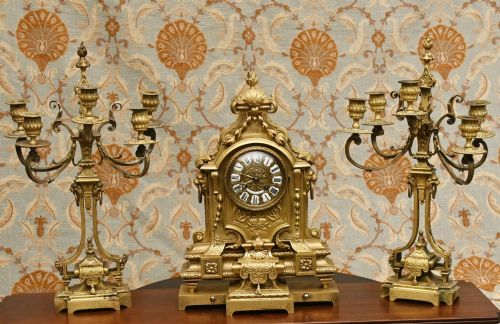


Antique Brass Mantle Garniture
These antique brass mantle garniture sets combine a central timepiece with matching decorative side pieces to anchor a traditional fireplace.
Antique Brass Mantle Garniture
An antique brass mantle garniture set provides a matching decorative arrangement for a fireplace, typically pairing a central mantel clock with companion pieces like candelabras, urns, or table lustres.
Buyers searching for an antique brass mantle garniture find complete three-piece sets that combine brass work with materials such as marble, glass, enamel, and patinated spelter.
The pieces appearing on this page span the Victorian and Edwardian eras, alongside French Second Empire, Louis XVI, Neo-Classical, and Art Deco styles from the late nineteenth and early twentieth centuries.
How these sets were constructed
Maker workshops utilised cast brass and gilt bronze alongside natural stone bases of marble and onyx to build the substantial weight required for stable mantel display.
Decorative detailing incorporates applied enamel work, cloisonné, and crystal drop lustres suspended from metal frames to catch the light around a fireplace.
Antique Brass Mantle Garniture Retail Price Guide 2026
Typical asking prices for brass mantle garniture among the pieces listed under this phrase on Sellingantiques today, from the lower quarter to the upper quarter. They describe what is for sale here now, not the wider market.
Listings incorporate brass, marble, glass, enamel, and gilt bronze across Victorian, Edwardian, and Art Deco periods.
What separates the best examples
Quality rests in the crispness of the brass casting and the harmony between the central clock and its matching side pieces, where secondary elements share the decorative vocabulary of the main timepiece.
The choice of secondary materials, from fine veined marble to delicate crystal drops and intricate cloisonne enamel, defines the ambition and expense of the original workshop production.
Finnigan Manchester
The Antique Brass Mantle Garniture Glossary
- Garniture
- A set of matching decorative objects designed for display together on a mantelpiece or sideboard. It typically consists of a central clock flanked by two matching candelabras or urns.
- Candelabra
- A branched candlestick used as a side piece in a garniture set. These match the architectural style and metalwork of the central clock.
- Cloisonne
- An ancient technique for decorating metalwork objects with coloured material held in place by thin metal strips. In these listings, it appears on clock garniture sets.
- Spelter
- An alloy of zinc and lead used as a cheaper alternative to bronze. It is frequently patinated to resemble heavier metals in Victorian decorative pieces.
- Table lustre
- A decorative glass or crystal stand hung with cut pendants. Pairs of these often accompany clock sets.
Antique Brass Mantle Garniture: Frequently Asked Questions
What pieces make up a complete set?
A standard garniture set includes a central mantel clock accompanied by two matching side objects. These companion pieces take the form of candelabras, urns, or crystal drop lustres.
The matching items share identical materials, such as brass and marble, to create a unified display across a mantelpiece.
Where were these clock sets made?
Many surviving sets originate from French workshops adhering to Louis XVI, Neo-Classical, and Second Empire design traditions. British retailers often imported these pieces or retailed them through domestic department stores.
Production spans the Victorian and Edwardian periods, extending into the Art Deco era with geometric marble and metal designs.
How do I care for the metalwork?
Brass and gilt surfaces require gentle dusting with a soft cloth to prevent the accumulation of grime in recessed decorative details. Avoid using harsh chemical polishes that can strip original gilding or patination.
Marble and onyx bases respond well to a dry wipe, keeping moisture away from exposed clock movements and stone joints.
Do all sets include working clocks?
The listings feature eight-day movement clocks designed to keep time alongside their decorative side pieces. Mechanical condition varies across historical pieces depending on past maintenance.
Buyers should examine specific listing details regarding the working order of the clock movement and any included keys or pendulums.