
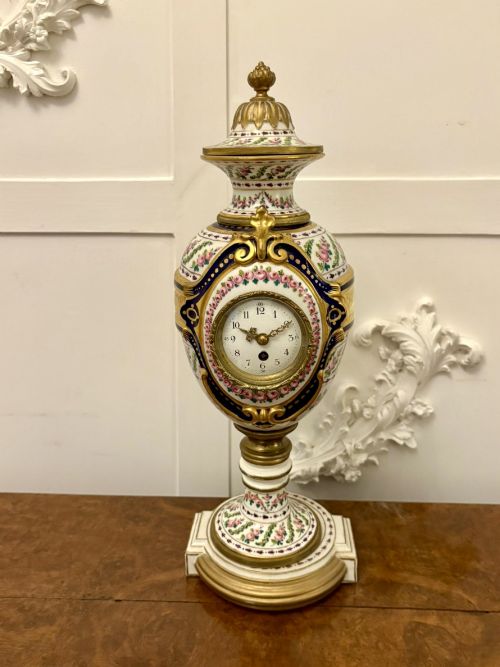
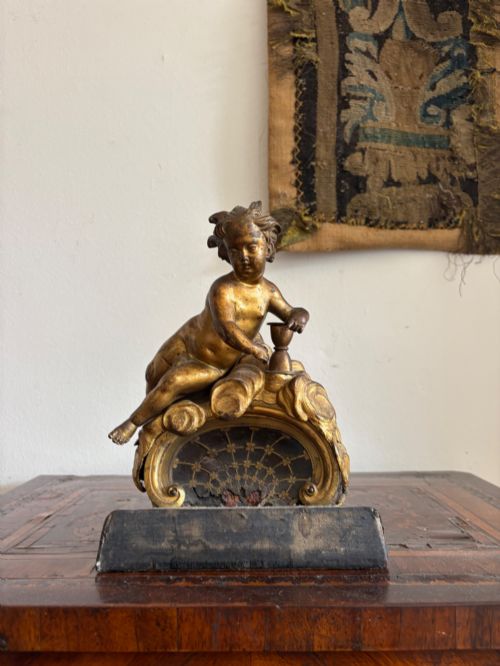
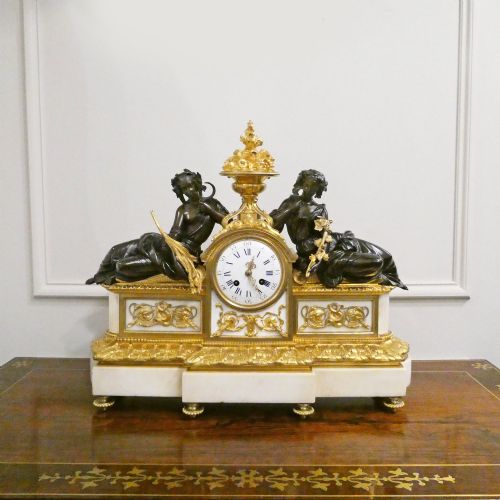
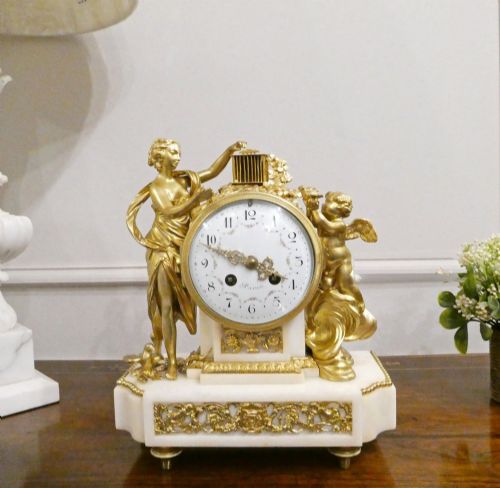
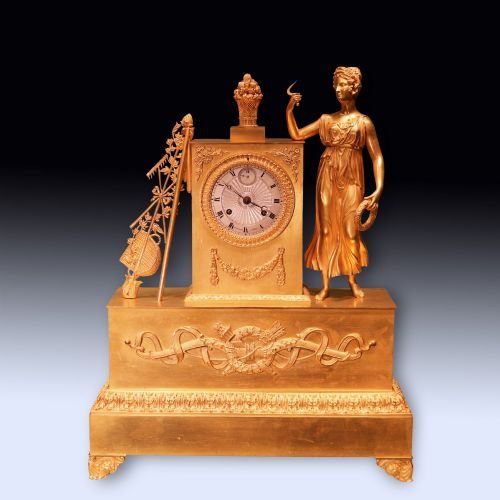
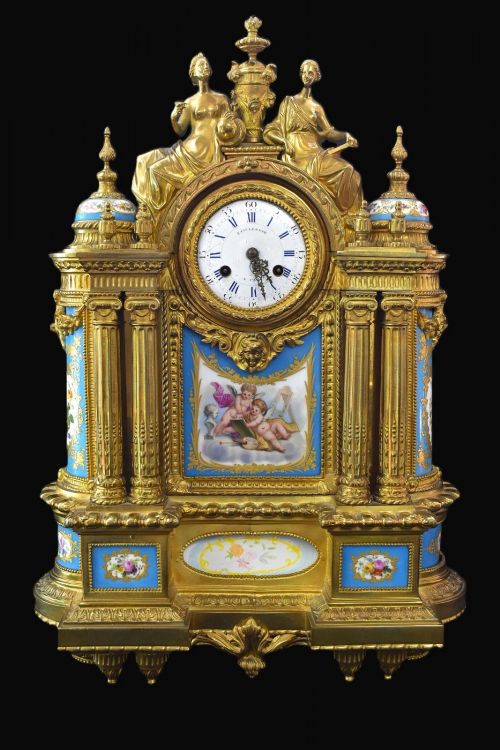


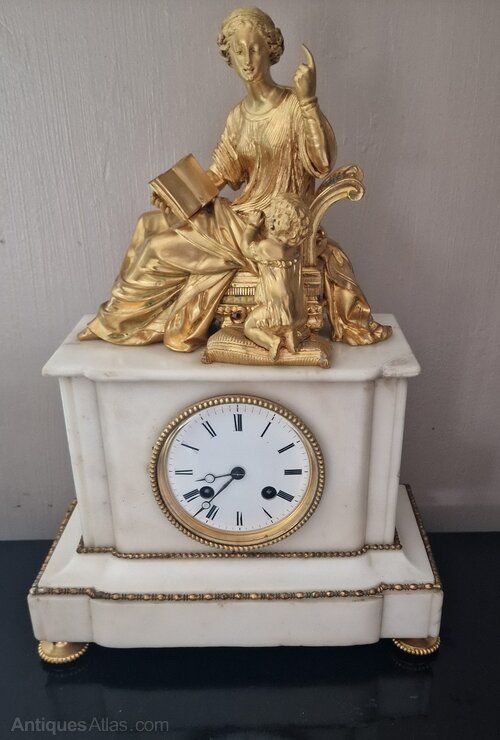


Classical French Ormolu Clock
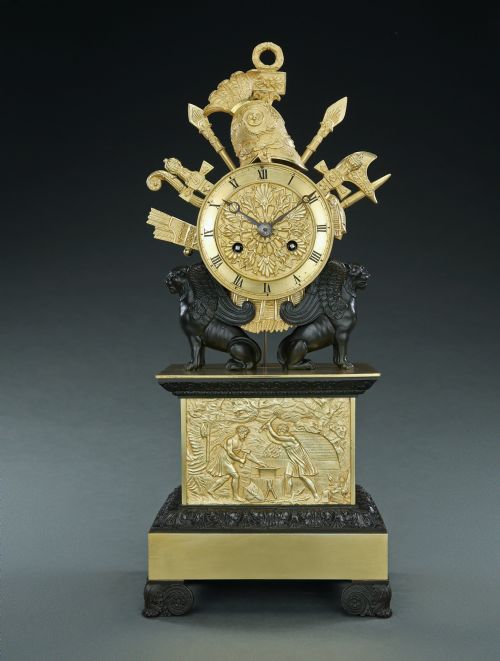
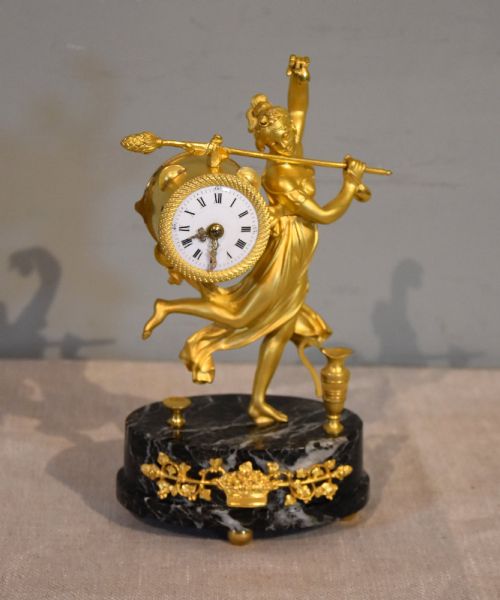
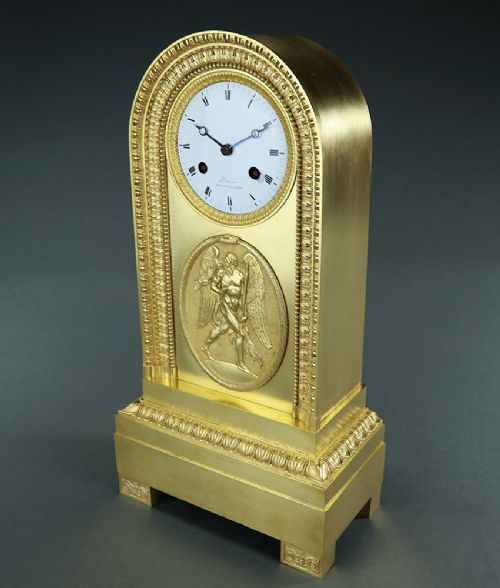
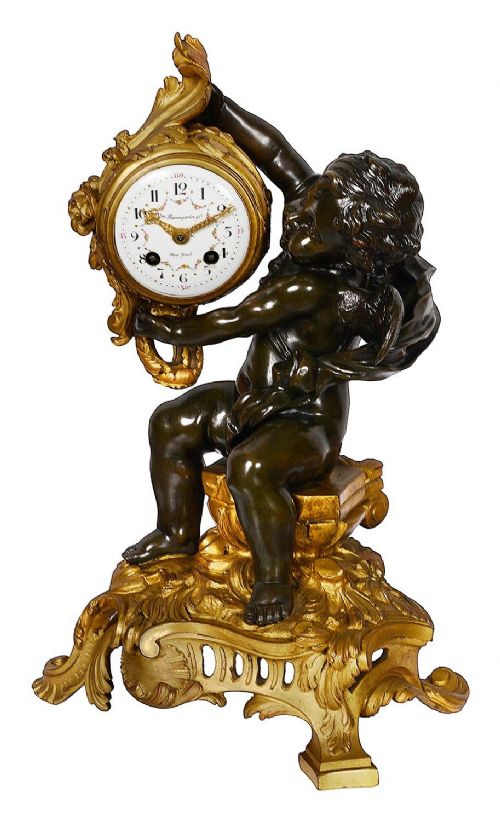
These pieces are a classical french ormolu clock, bringing gilt bronze elegance and precise nineteenth-century mechanics into a room.
Classical French Ormolu Clock
A classical french ormolu clock is a timepiece defined by gilt bronze casting, marble bases, and enamel dials. When searching this phrase, a buyer encounters mantel clocks, portico clocks, and garniture sets originating from the nineteenth century.
The prevailing styles on this page draw from the French Empire, Louis XVI Revival, and Napoleon III periods. These range from substantial urn-shaped mantel pieces and figural globe clocks to wall-hanging cartel clocks.
Many examples are accompanied by matching side pieces such as urns or candelabra to form complete clock sets. The structural forms utilise combinations of white, green, and black marble alongside cut crystal and porcelain.
Materials and Technique
Cases combine cast bronze that received a mercury gilt or ormolu surface treatment, paired with patinated bronze elements. This is frequently integrated with polished marble plinths, brass bezels, and hand-painted enamel chapter rings.
Internal movements rely on brass wheel trains and escapements driven by springs or weights, often housing eight-day striking mechanisms by notable makers. Dial faces incorporate delicate hand-painted porcelain panels or individual enamel cartouches for numerals.
Listings feature nineteenth-century pieces spanning the Regency, Victorian, and Napoleon III eras, constructed from gilt bronze, marble, and porcelain.
Assessing Workmanship
The distinction between tiers rests upon the crispness of the bronze chasing and the depth of the gilding. Superior examples display sharply rendered figural details and foliage, whereas lesser ones show softer, shallower casting lines.
Movement sophistication also dictates standing, where quality is evident in the finishing of the gear train and the inclusion of named maker signatures on the backplate. The harmonious integration of bronze work with fine marble or porcelain elements completes the higher grade.
Vincenti·Canaillor of Paris·Etienne Lenoir·Japy Freres·Berger·Pons de Paul·A.D Mougin·H Luppens Paris
The Classical French Ormolu Clock Glossary
- Ormolu
- A technique of applying finely ground high-carat gold to a bronze object using a mercury amalgamation process. This produces a rich, durable golden surface.
- Garniture
- A set consisting of a central clock flanked by matching decorative objects such as vases, urns, or candelabra designed to sit together on a mantelpiece.
- Portico
- A clock case architecture featuring four columns supporting a classical pediment enclosing the suspended pendulum.
- Cartel
- A wall-mounted clock featuring an ornate frame typically cast in bronze or carved in wood, following asymmetrical or classical symmetry.
- Lyre clock
- A timepiece shaped in the musical instrument outline, often constructed from porcelain or wood with gilt bronze mounts and a visible pendulum.
Classical French Ormolu Clock: Frequently Asked Questions
How do I wind the clock?
Most of these movements require a specific key inserted into the winding squares on the enamel dial. Turning the key clockwise tensions the spring until resistance is felt.
Care should be taken not to overwind the mechanism to preserve the vintage spring steel inside.
Where should I place a garniture set?
These sets are traditionally designed for the centre of a mantelpiece, sideboard, or pier table. The central clock anchors the arrangement, flanked symmetrically by the matching side ornaments.
Ensure the surface is level and stable due to the heavy marble and bronze weight of the pieces.
How do I identify the period?
Dating relies on stylistic clues like neoclassical motifs, columns, and urn finials pointing to Empire or Louis XVI revival periods. Movement stamps and backplate signatures often confirm the exact nineteenth-century decade of production.
Case materials such as bleu de roi porcelain or green marble further align the piece with specific Victorian or Napoleon III aesthetics.
Are the movements original?
Many retain their period brass mechanism, though individual gears and suspensions may have received historical repairs or adjustments over the decades. Checking the stamp on the backplate reveals whether the movement matches the era of the bronze case.