


Classical French Decorative Urns
Classical French decorative urns bring architectural proportion and patinated metalwork into a room, drawing the eye with their classical silhouettes.
Classical French Decorative Urns
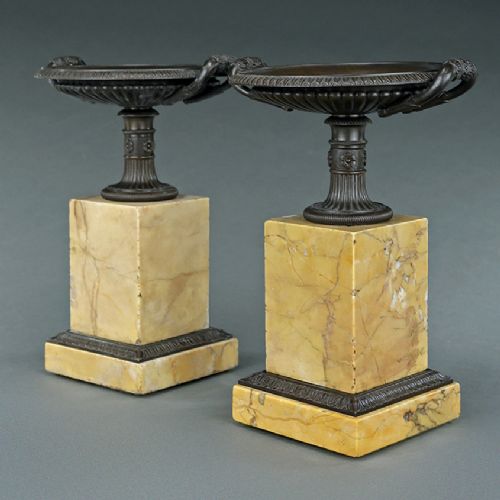
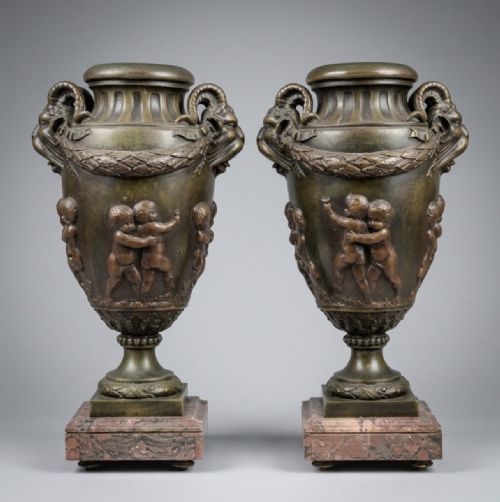
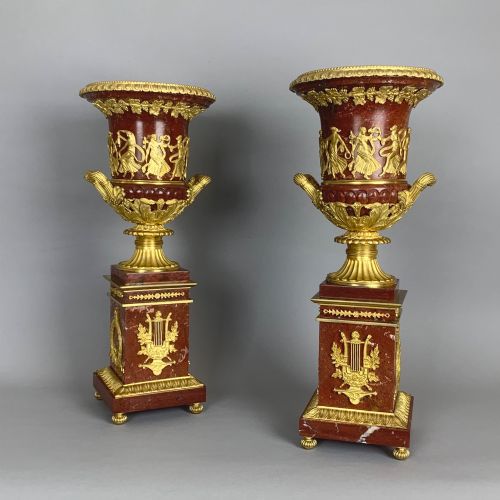
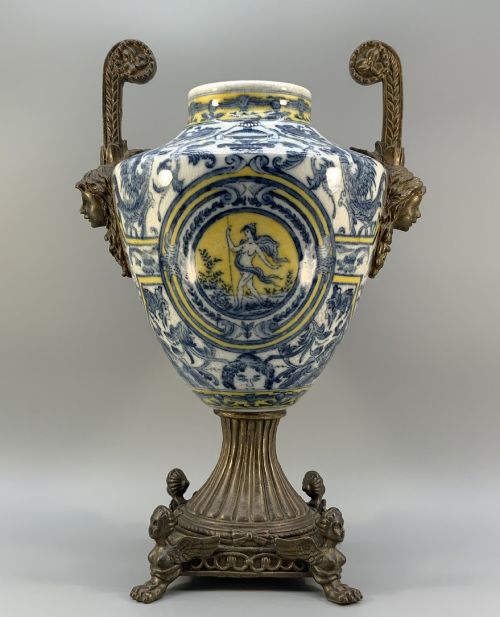
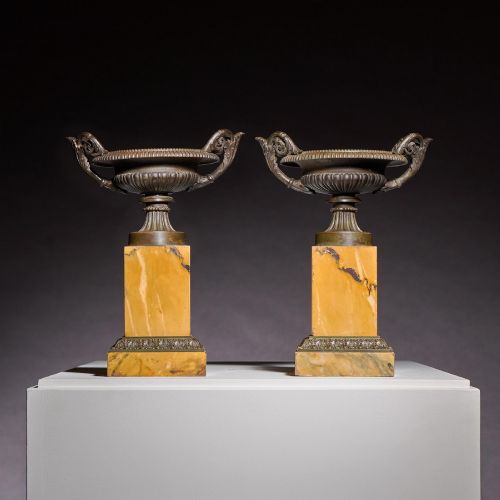
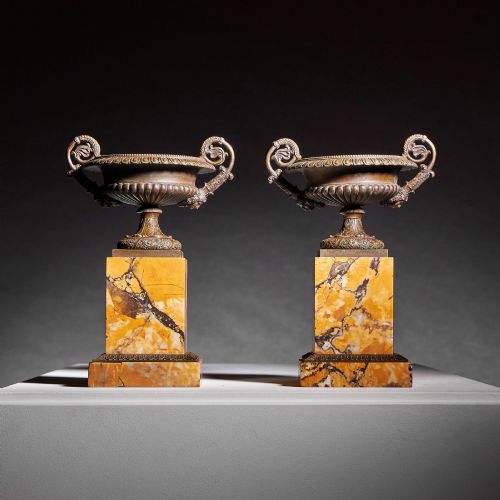
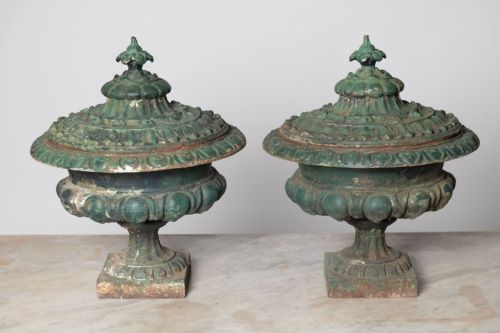
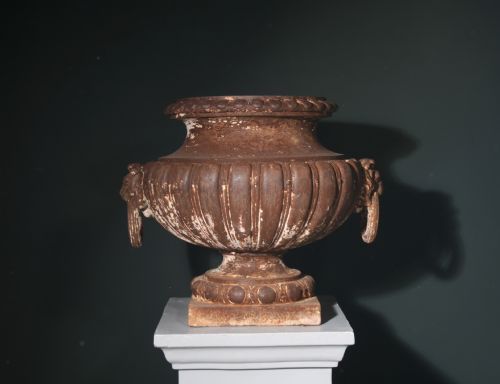
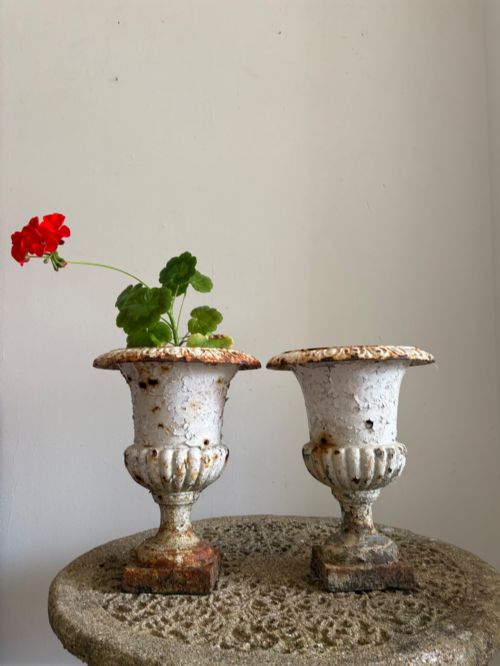
Classical french decorative urns encompass heavy metal vessels, porcelain vases, and marble objects produced across the nineteenth century in styles such as French Empire, Neoclassical, and Rococo Revival. Buyers seeking these pieces encounter campana-shaped urns, tazzas, cassolettes, and monumental lidded vessels derived from antiquity and the Grand Tour tradition.
Most examples found on this page date from the eighteen-fifties through to nineteen-hundred, reflecting Victorian tastes for formal decorative pieces. Makers and foundries utilised durable materials like cast iron, bronze, and spelter, frequently mounting them upon stepped marble or onyx plinths.
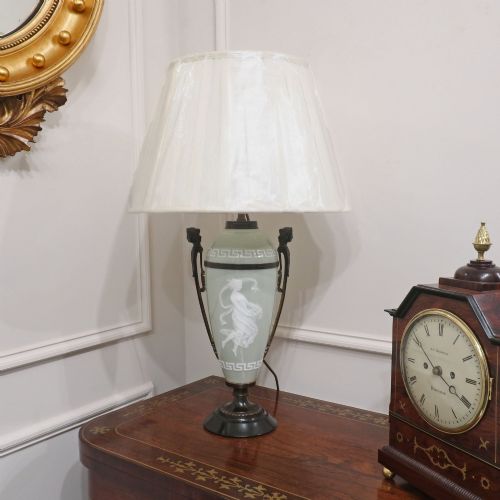
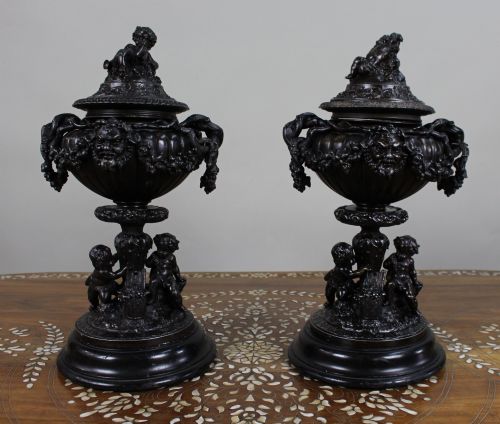
Beyond traditional mantel ornaments, many survivors function as table lamps, wall sconces, or clock garniture sets while retaining their classical handles, putti, and bacchic mask reliefs.
How they were made
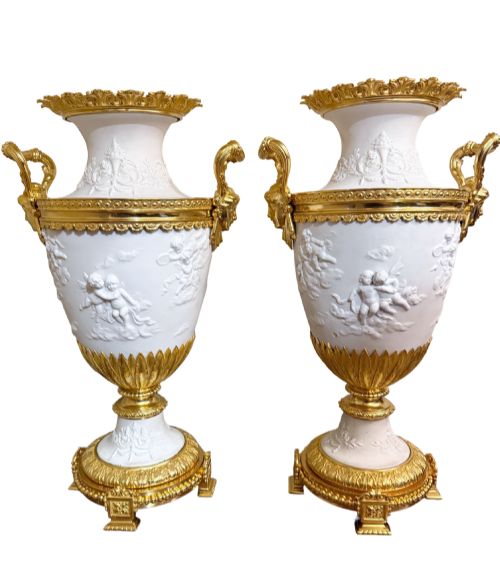
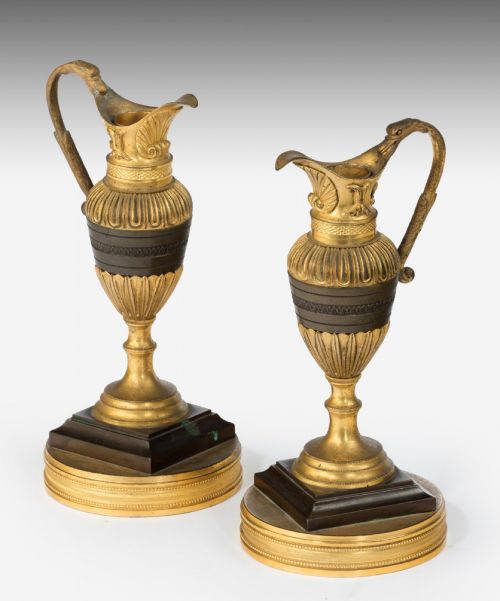
Foundries cast these vessels in bronze, brass, iron, or spelter, employing lost-wax or sand-casting methods to achieve crisp foliate details, animal masks, and figural mounts. Ormolu, or gilded bronze, received a mercury-gilding treatment or chemical finish to yield a bright golden surface alongside patinated dark bronze elements.
Stonemasons shaped white marble, Siena marble, and white onyx into cylindrical or stepped plinths, cassolette bodies, and basin rims, attaching metal collars and finials with threaded rods or pins. Porcelain bodies, including Sevres and faience pieces, underwent high-temperature firing before receiving hand-painted scenes, pate-sur-pate relief work, and gilt highlights.
Listings feature nineteenth-century French pieces combining bronze, ormolu, marble, cast iron, and porcelain within Neoclassical, Empire, and Rococo Revival styles.
What varies in quality
The precision of the metal chasing separates standard production pieces from exceptional works, visible in the sharpness of acanthus leaves, hair on mask mounts, and feather details on cast figures. Heavy grade materials like thick-cut Siena marble and substantial bronze command greater presence than hollow-cast spelter or light painted iron.
Original components dictate the integrity of an object, meaning pieces retaining matched lids, untouched mercury or gilt bronze surfaces, and authentic stone bases hold stronger material honesty than heavily restored or later converted items.
VAL D'OSNE FOUNDRY·Sevres
The Classical French Decorative Urns Glossary
- Ormolu
- Gilded bronze produced by applying a gold amalgam to a bronze base and heating it, or through modern electroplating methods. This finish protects the metal underneath while giving a warm metallic lustre.
- Cassolette
- A dual-purpose decorative vase or urn with a reversible lid that transforms the vessel into an incense burner or a solid vase. These objects often incorporate marble bodies with gilt bronze mounts.
- Spelter
- An alloy of zinc and lead used as a cheaper alternative to bronze for sculptural castings. It takes patination well but possesses a lighter weight and softer structure.
- Tazza
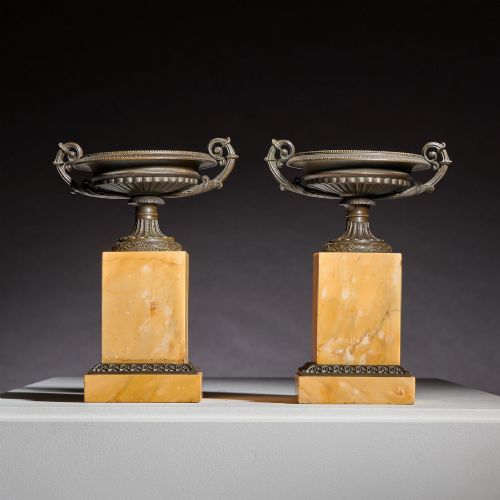
- A shallow saucer-like ornamental cup mounted on a stem and foot. Nineteenth-century examples often utilise cast bronze and marble.
- Pate-sur-pate
- A ceramic decoration technique where liquid clay is applied layer by layer onto a contrasting body to build up a translucent cameo relief. This method requires steady skill to prevent cracking during firing.
Classical French Decorative Urns: Frequently Asked Questions
How were cassolettes used?
Cassolettes functioned as ornamental lidded vessels that could double as burners for scented resins or loose incense. The removable lid often featured a solid side on one face and a pierced grill on the other.
Victorian drawing rooms displayed them on mantelpieces and tables to add classical symmetry and fragrance to formal spaces.
What is a Grand Tour object?
Grand Tour objects are souvenirs purchased by wealthy travellers touring the cultural sites of Italy, France, and Greece during the eighteenth and nineteenth centuries. These miniature bronzes, marble tazzas, and architectural models commemorated classic antiquities.
They represent skilled European foundry work aimed at educated collectors who valued historical scholarship and classical design.
How do you distinguish bronze from spelter?
Bronze is a heavy, durable copper alloy that takes a deep, stable patination and withstands tapping without denting easily. Spelter is a softer zinc-based metal that feels lighter and often reveals a greyish white colour beneath worn spots.
Examination of the underside or interior surfaces usually clarifies whether a casting is solid bronze or base metal.