
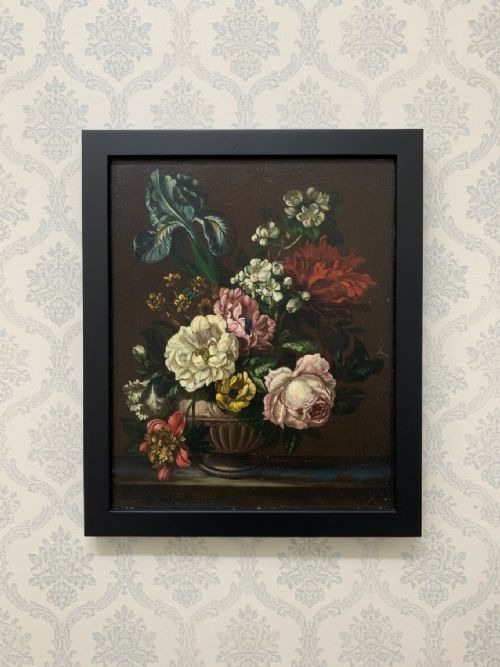
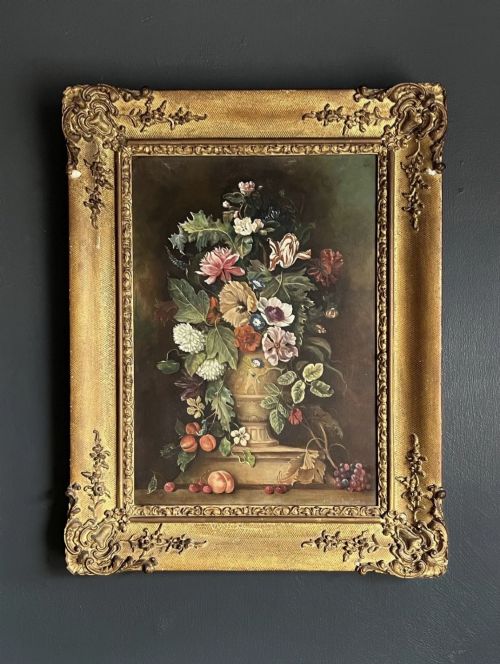
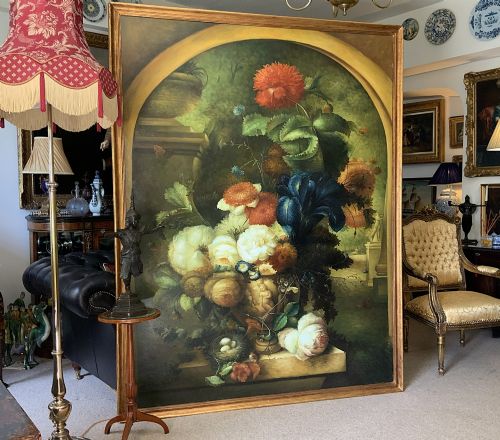
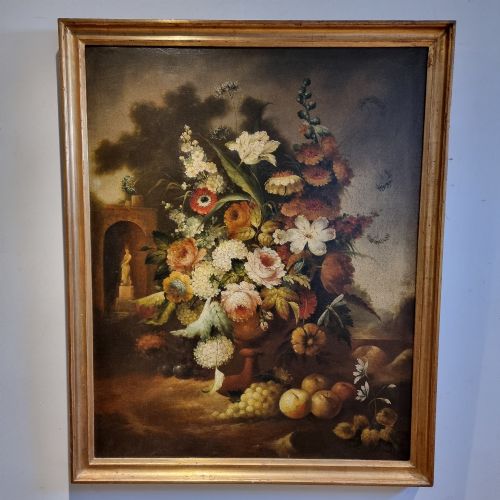

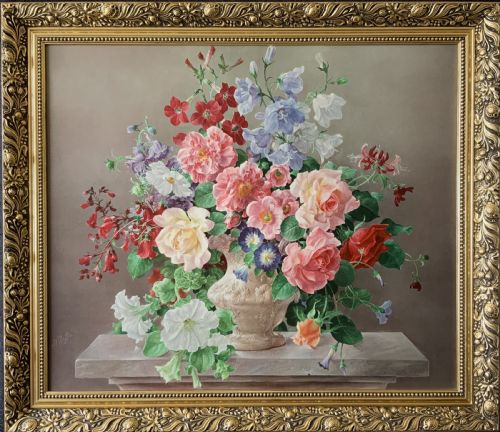
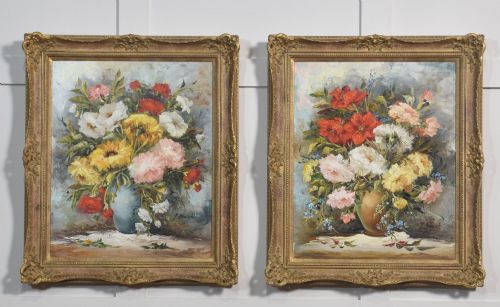
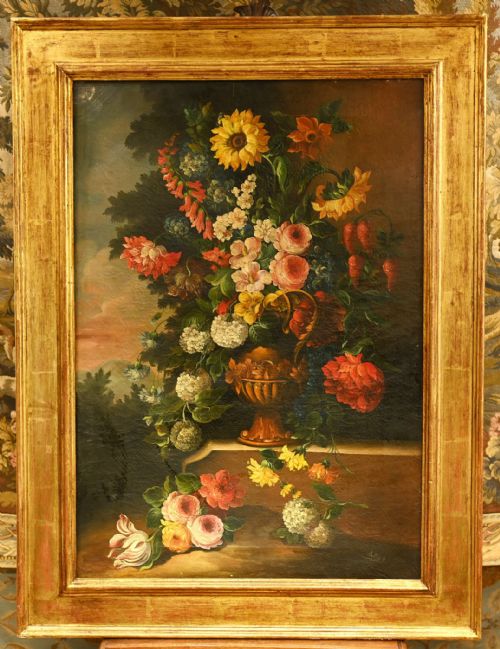


Classical Flower Painting
A classical flower painting brings domestic botanical arrangements to your walls, spanning centuries of oil and canvas artistry.
Classical Flower Painting
A classical flower painting presents detailed floral still lifes and botanical studies that draw heavily on historical European traditions. When you browse this selection, you encounter works ranging from intimate panel studies to monumental floral canvases.
The pieces on this page heavily reflect Dutch Golden Age influences and later revivals from the eighteenth and nineteenth centuries. You find compositions featuring abundant vases of blooms, sometimes accompanied by fruit or birds, executed across various decades.
Originating from British, Dutch, Flemish and Italian hands, these artworks utilise traditional mediums to capture botanical forms. The selection includes both signed original paintings by named artists and anonymous works from established periods.
Materials and methods
Painters of these works utilised oil paint applied to canvas, wooden panel or board, building up rich layers to render petals and leaves with realistic depth. Watercolour and ink also appear in specific botanical studies on paper.
Many of these canvases sit within period frames constructed from wood and finished with gesso and gold leaf or giltwood. These ornate gilded surrounds complement the rich palette of the floral subjects within.
Listings feature works spanning from the eighteenth century through to the mid-twentieth century, utilising oil paint, canvas, panel, and giltwood frames.
Assessing quality and execution
The distinction between pieces rests upon the precision of the brushwork and the naturalism of the floral arrangement. Masterful handling of light and shadow defines the more compelling compositions.
The quality of the surrounding frame matters greatly, particularly where period gilt gesso or carved wooden frames are original to the artwork. Scale and ambition also separate monumental decorative panels from smaller study pieces.
Robert Byng·Harold Clayton·Manuela Bonati·Jabez Bligh·Henry Schouten·L. Wilford·Charles Augustus Henry Lutyens·Kershaw Schofield·William Edward Frost
The Classical Flower Painting Glossary
- Oil on canvas
- Pigment mixed with drying oil applied to a stretched woven fabric support. This traditional medium allows for subtle blending and rich texture.
- Giltwood
- Wood that has been carved and covered with a thin layer of gold leaf. It is frequently seen on traditional frames enclosing these paintings.
- Gesso
- A paint mixture consisting of a binder mixed with chalk, gypsum, or pigment. It provides a smooth base for gilding on wooden frames.
- Still life
- A work of art depicting mostly inanimate subject matter, typically commonplace objects which may be either natural or man-made. Floral studies form a major subset of this genre.
- Trompe l'oeil
- An art technique that uses realistic imagery to create the optical illusion that the depicted objects exist in three dimensions.
Classical Flower Painting: Frequently Asked Questions
How do I date an antique floral painting?
Dating relies heavily on the stretcher construction, canvas type, and the style of the gilt frame. Pigment analysis and artist signatures also provide reliable chronological markers.
Comparing the handling of the paint to established periods like the nineteenth century or the Dutch Baroque revival helps narrow down the decade of creation.
Are these paintings original works?
The selection includes a mix of signed original oil paintings, period watercolours, and occasional vintage print studies. Each listing specifies the exact medium used by the artist.
Original works feature visible brush texture and layers of oil paint unique to the creator's hand.
How should I frame and display them?
Many pieces come housed in their original gilt gesso or carved wood frames, which complement the classical aesthetic. Hanging them away from direct sunlight preserves the oil pigments and gold leaf.
Allowing adequate wall space for larger monumental canvases ensures the piece commands the room properly.
What is the difference between Dutch style and original Dutch Golden Age works?
Original works date from the historical Dutch Golden Age, whilst Dutch style pieces are later revivals inspired by those seventeenth-century compositions. Both share a dark background and abundant floral arrangement.
Revival pieces often date from the nineteenth or early twentieth centuries while mimicking earlier techniques.