
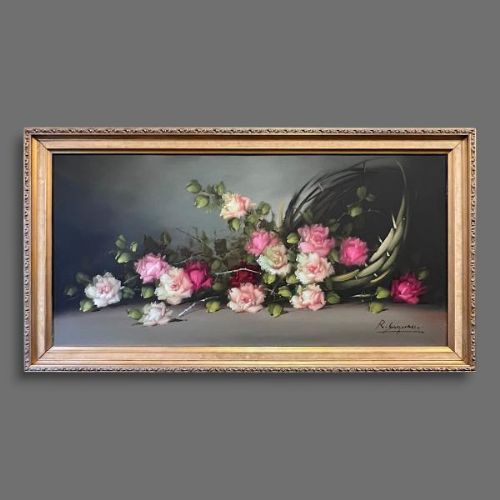


Large Floral Artwork
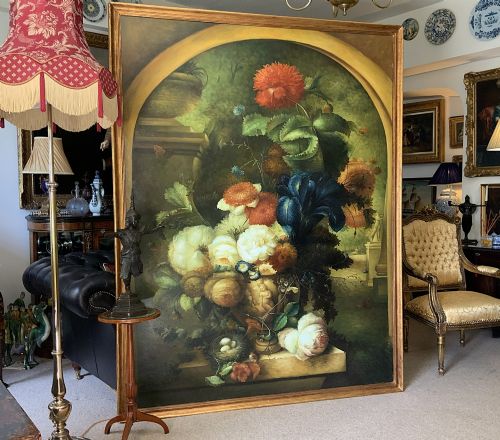
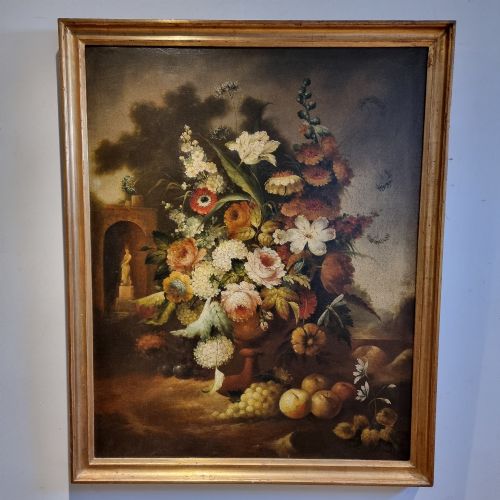
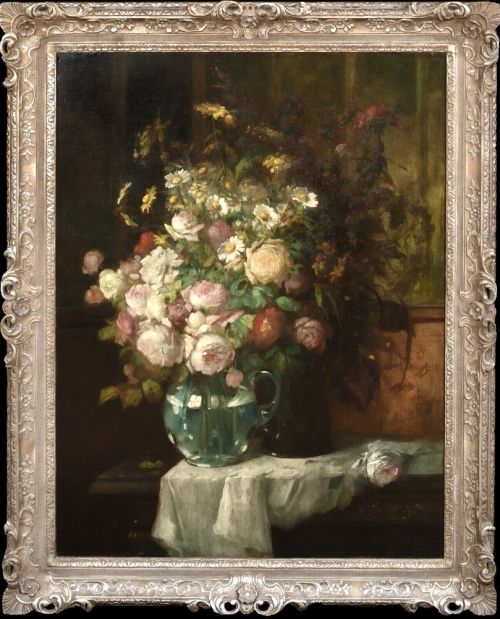
These large floral artwork pieces bring dramatic botanical scale to a room, captured primarily in oil on canvas across Victorian, Edwardian and mid-century periods.
Large Floral Artwork
A large floral artwork serves as a dominant focal point in a room, typically taking the form of oil paintings on canvas or wood panels. Buyers seeking this style encounter compositions ranging from Dutch Baroque revival still lifes to mid-century impressionist floral displays.
The selection includes pieces spanning the nineteenth century through to the 1960s, featuring works by named European painters alongside anonymous studies. Floral subjects appear alone in baskets and vases or integrated into broader landscape and interior settings.
Victorian and Edwardian examples sit alongside French modernist and Belgian impressionist interpretations. Canvas remains the primary support, housed within period gilded wood frames or simpler wooden borders.
Materials and construction
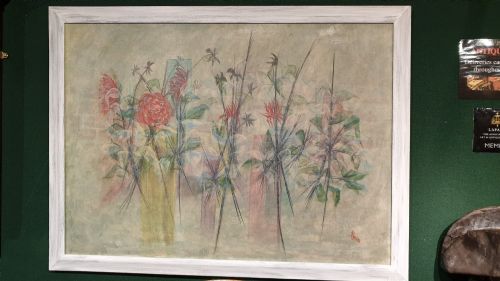
These works rely on oil paint applied to stretched canvas or wooden panels, building up texture and depth through layered brushwork. Gouache on paper also appears in specific botanical studies from the mid-century period.
Frames utilise wood and gold leaf, often built specifically to house the scale of the canvas. Gilded wood mouldings provide structural support while enhancing the visual weight of the painting.
Roses occasionally spill from wicker baskets while cockscomb flowers demand attention in red.
Assessing quality and execution
The handling of paint and the depth of the floral composition separate finer pieces from simpler decorative works. Masterful handling of light, shadow, and petal texture distinguishes professional academic or impressionist execution from standard studio output.
The preservation of the original canvas and the integrity of the period frame contribute significantly to the standing of a piece. Signed works by documented artists carry distinct weight compared to anonymous workshop productions.
Mark Ingram·Konstantin Stoitzner·Thomas Bromley Blacklock·Amile Coppieters·Bela Balogh·Jane Utley·Julien Stappers·Fred Merriman
The Large Floral Artwork Glossary
- Still life
- An artwork depicting inanimate subject matter, typically featuring floral arrangements, baskets of fruit, or household objects. This genre allows artists to focus heavily on light, colour, and composition.
- Impressionism
- A style of painting characterised by relatively small, thin, yet visible brush strokes and an emphasis on accurate depiction of light. Mid-century and nineteenth-century examples of this style appear frequently in floral subjects.
- Gilded wood
- Wood treated with a thin layer of gold leaf or gold paint, commonly used for period picture frames. This finish adds a reflective border that isolates and elevates the artwork within it.
- Dutch Baroque Revival
- An artistic style drawing inspiration from seventeenth-century Dutch masters, known for dark backgrounds and overflowing floral arrangements. Works in this manner often feature monumental scale.
- Gouache
- A water-based paint method consisting of pigment and other inert materials designed to be opaque. It appears on paper supports in detailed botanical studies.
Large Floral Artwork: Frequently Asked Questions
How do I hang a heavy oil painting safely?
Large canvases mounted in wooden frames require secure wall fixings into studs or solid masonry rather than standard plasterboard hooks. Professional picture wire and rated D-rings distribute the weight evenly across the wall.
Ensure the frame rests level and check the stability of the canvas wedges at the back before hanging.
What periods do these floral paintings cover?
The selection spans from Victorian and Edwardian periods through to mid-century modern and impressionist works from the 1950s and 1960s. Earlier pieces often reflect Dutch Baroque revival styles.
Each era brings distinct framing choices and painting techniques to the floral subject matter.
Are these artworks painted on canvas or wood?
Canvas is the most common support, stretched over wooden frames and secured with oil paint. Selected works utilise wood panels or paper supports for gouache studies.
The backing material typically aligns with the period and the scale of the artwork.
How should I clean a vintage oil painting?
Dust accumulated on the surface should be removed gently with a soft, dry brush without applying pressure to the paint layer. Avoid using water, household cleaners, or chemical solvents on the canvas.
Professional conservators should handle deeper cleaning or removal of aged varnish.