
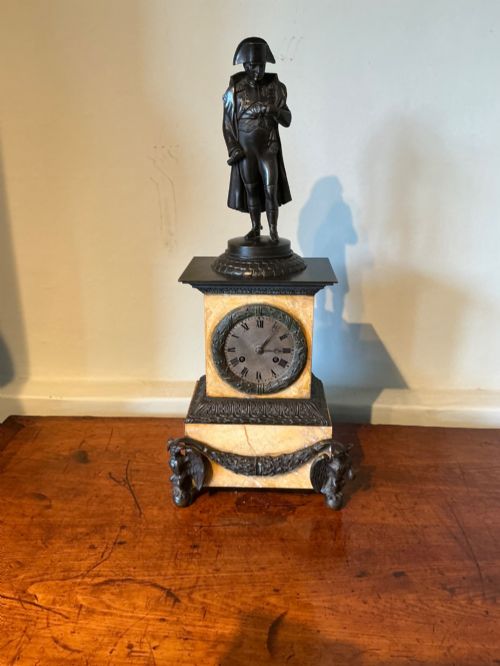
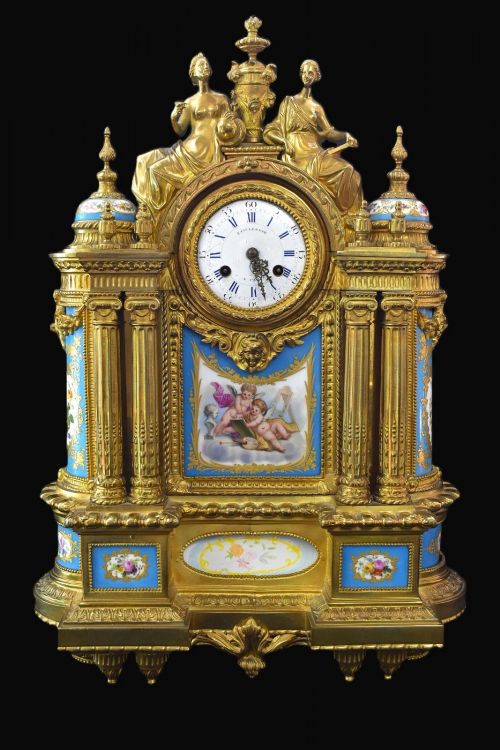

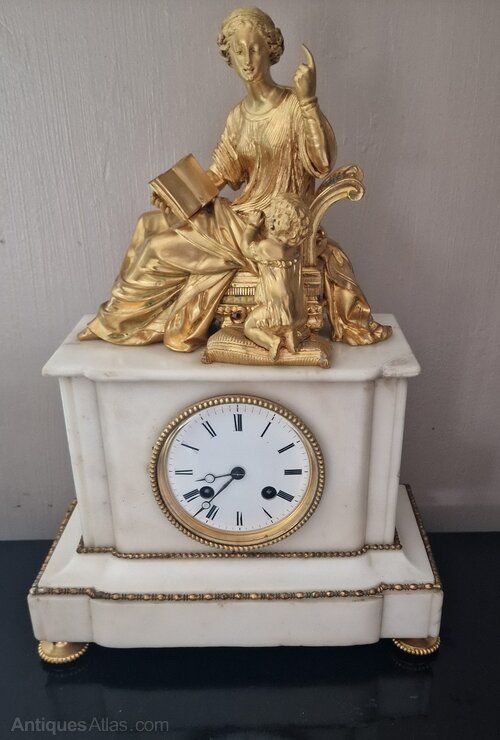


Classical Figure Table Clock
A classical figure table clock brings sculptural bronze and gleaming ormolu into a room, anchoring a mantel with nineteenth-century French weight and presence.
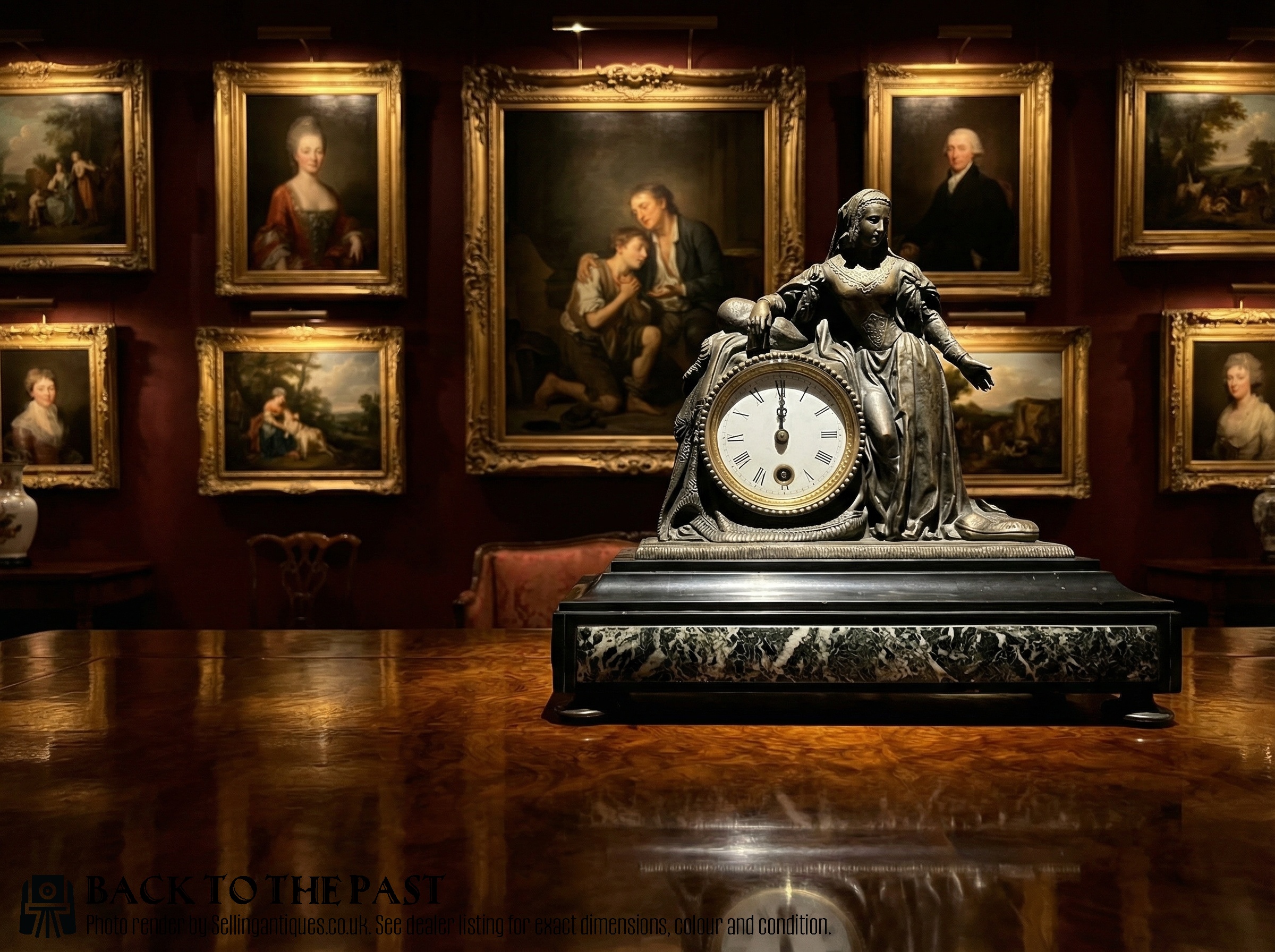
Classical Figure Table Clock
When you search for a classical figure table clock, you find heavy mantel timepieces that combine a functional clock movement with cast sculptural figures. These domestic objects emerged primarily from French workshops during the nineteenth century, spanning periods from the Regency era through the late Victorian decades.
The most common examples on this page are French mantel clocks styled in the French Empire, Napoleon III, and Louis XVI manners. They pair patinated bronze and gilt ormolu figures with marble plinths, combining classical mythology or historical subjects with mechanical timekeeping.
You will also encounter garniture sets and clocks housed beneath glass domes, sometimes incorporating Sevres porcelain panels or carved alabaster. These pieces served as centrepieces for formal rooms, displaying elaborate allegorical scenes alongside reliable eight-day striking movements.
Materials and construction
Makers built these clocks using contrasting metalwork, casting figures in bronze and finishing mounts in bright ormolu through mercury gilding or electroplating. The bronze figures often received a dark patinated finish to stand out against the polished gilding of the surrounding frames and bezels.
Heavy bases were carved from various marbles, including rouge marble, to provide stability for the substantial metal sculptures above. Enamel dial plates with delicate numeric markers were fitted behind protective glass doors, while mechanical eight-day French movements drove the striking mechanisms inside.
Materials recorded across current items include patinated bronze, gilt ormolu, rouge marble, enamel dials, and carved alabaster protected by glass domes.
Distinctions in quality
The finest examples on the market display exceptional crispness in the bronze chasing, where individual locks of hair, drapery folds, and facial expressions remain sharp and defined. Lesser pieces exhibit softer casting details and shallower chiselling that blur the definition of the figures.
Quality also rests in the integration of materials, seen in the solidity of the marble plinths and the preservation of the original mercury gilding. Signed movements by notable makers add mechanical reliability and historical weight to the piece.
Etienne Lenoir·Lemerle Charpentier·Deniere Et Fils·Deniere·Japy Freres
The Classical Figure Table Clock Glossary
- Ormolu
- Gilt bronze created by applying a mixture of gold and mercury to a bronze base and heating it. This technique produced a durable, brilliant yellow-gold surface seen on nineteenth-century clock mounts.
- Garniture clock
- A mantel clock accompanied by matching side pieces such as urns or candelabra. These sets created a balanced decorative arrangement on nineteenth-century mantelpieces.
- Fusee
- A conical pulley used in clock movements to maintain an even pull on the gear train as the mainspring unwinds. It ensures more accurate timekeeping across the duration of the wind.
- Patinated bronze
- Bronze that has been chemically treated to alter its surface colour, usually to a dark brown or green tone. This contrast highlights the brighter gilt ormolu elements beside it.
- Rouge marble
- A deep red, variegated limestone often quarried in France and used for clock bases. Its heavy, polished mass anchors the lighter metal sculptures above.
Classical Figure Table Clock: Frequently Asked Questions
How do I wind a classical figure table clock?
Most of these clocks utilise an eight-day mechanical movement wound by inserting a key into designated winding holes on the enamel dial. Turn the key gently until you feel firm resistance, avoiding over-winding to protect the mainspring.
After winding, set the time by moving the minute hand clockwise. If the clock has a strike train, allow it to complete its sequence on each hour rather than forcing the hands backward.
Where should I place a heavy marble clock?
Choose a deep, level mantelpiece or sturdy piece of furniture capable of supporting considerable weight. Marble and bronze clocks are exceptionally heavy and require a stable surface to prevent tipping.
Keep the clock away from direct sunlight, heating vents, and damp areas, as temperature fluctuations can affect the delicate balance of the mechanical movement and damage the enamel dial.
How do I identify a Louis XVI style clock?
Louis XVI style pieces draw on classical symmetry, featuring straight architectural lines, urns, floral garlands, and geometric mounts. The bronze figures often depict classical deities or historical statesmen dressed in antique robes.
Examine the cast ormolu details for symmetry and restraint, as this style avoids the heavy asymmetry found in later Revival periods.
What is a glass dome used for?
Glass domes protect delicate ormolu surfaces, exposed escapements, and carved alabaster from household dust and atmospheric moisture. They were frequently paired with nineteenth-century clocks to preserve fragile gilding.
Lift the dome only with extreme care using both hands under the base, as the glass is heavy and easily chipped against the wooden or marble plinth.