

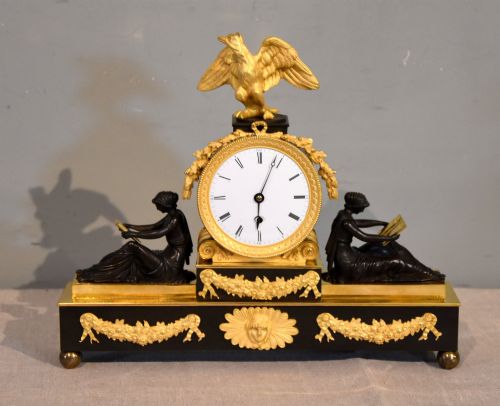
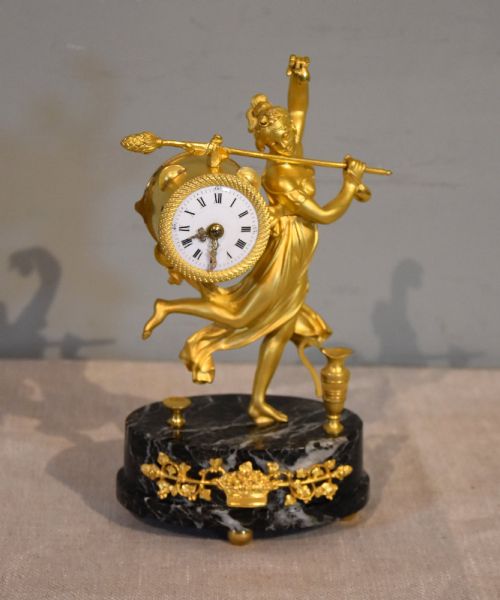


Classical Figural Timepiece
A classical figural timepiece brings together sculptural bronze figures and mechanical precision, offering a striking centrepiece for any mantel.
Classical Figural Timepiece
When you search for a classical figural timepiece, you are looking at mantel clocks and clock garnitures that pair functional dial movements with sculptural figures, predominantly originating from French and English workshops. These pieces span periods from the Regency era through to the late nineteenth century, reflecting enduring neoclassical tastes.
You are most likely to meet French examples rendered in ormolu, gilt bronze, marble, and patinated bronze, often drawing on French Empire or Victorian styles. Alongside these, English Regency brass and gilt designs appear, frequently featuring enamel dials and housed beneath protective glass domes.
How they were made
Makers utilised cast bronze, brass, and gilt metal for the sculptural elements, applying fire-gilding or ormolu techniques to create rich golden surfaces that contrast with patinated dark bronze figures. Bases and bodies were carved from green marble, white marble, or alabaster to add substantial weight and classical architectural proportion.
Clock movements were fitted behind enamel dials, driving the timekeeping mechanism while supporting intricate external globe or figural compositions. Completed works were occasionally paired with side garnitures to form a matching decorative set for the mantel.
Classical Figural Timepiece Retail Price Guide 2026
Typical asking prices for classical figural timepiece among the pieces listed under this phrase on Sellingantiques today, from the lower quarter to the upper quarter. They describe what is for sale here now, not the wider market.
Several clocks here feature miniature globes held aloft by classical figures, turning the simple act of telling time into an astronomical journey.
What varies in quality
Material selection also dictates quality, with dense carved marble and heavy cast ormolu commanding greater presence than lighter gilt metal alternatives. The integration of signed movements by notable makers elevates an individual clock above standard production pieces.
Baetens London·Lemerle Charpentier·Deniere Et Fils
The Classical Figural Timepiece Glossary
- Ormolu
- Gilt bronze produced by applying a mercury and gold amalgam to a bronze casting and firing it. This technique yields a durable, luminous golden finish characteristic of fine nineteenth-century French clocks.
- Garniture
- A set of decorative objects designed to be displayed together, typically comprising a central mantel clock flanked by matching vases or candelabra. Such sets unified the decorative scheme of a room.
- Patinated bronze
- Bronze that has been chemically treated to produce a dark, weathered surface colour. This finish contrasts sharply against bright ormolu mountings.
- Enamel dial
- A clock face formed by fusing powdered glass onto a metal substrate at high heat. These dials provide a smooth, bright white background for painted numerals.
- Alabaster
- A fine-grained, translucent stone used for carving clock cases and ornamental objects. Its soft texture allows for delicate sculptural detailing.
Classical Figural Timepiece: Frequently Asked Questions
What is a classical figural timepiece?
A classical figural timepiece is a mantel clock incorporating human or mythological figures cast in bronze, brass, or gilt metal. These objects combine timekeeping with sculptural art.
They emerged from nineteenth-century European workshops, drawing heavily on French Empire and Victorian aesthetic traditions.
How do I style a clock garniture?
A clock garniture is placed centrally on a mantelpiece or sideboard, often flanked by its matching side pieces to create a balanced display. The architectural materials like marble and ormolu anchor the visual weight of the arrangement.
Ensure the surface is level and sturdy enough to support the heavy stone and bronze construction.
Were glass domes original to these clocks?
Glass domes were frequently utilised in the nineteenth century to protect delicate ormolu surfaces and delicate enamel dials from dust and atmospheric grime. They sat upon matching wooden or alabaster bases.
Many clocks retain their original blown or drawn glass covers, which add height and presence to the ensemble.
How do I tell French and English clocks apart?
French clocks from this period often lean towards elaborate ormolu, figurative globe designs, and heavy marble integration in Empire or Second Empire styles. English Regency examples tend to favour refined brass and gilt framing with understated classical proportions.
Signatures on the movement plates or dials also point directly to the origin of the workshop.