





Classical Figural Table Lighting
Classical figural table lighting brings human and mythological forms into domestic interiors, casting a warm glow through sculpted figures of bronze, brass and spelter.
Classical Figural Table Lighting
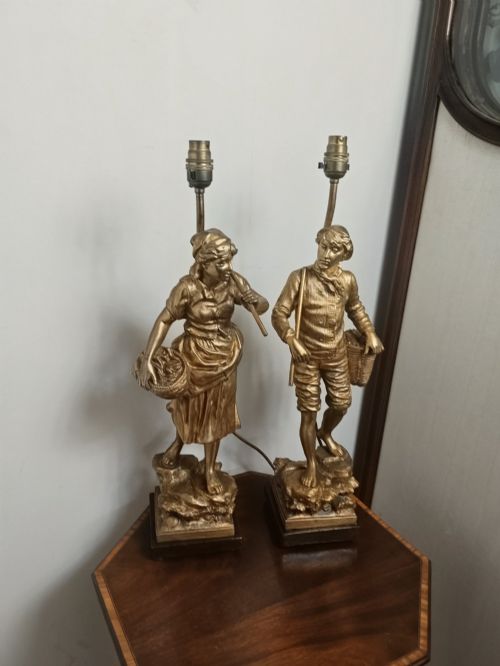
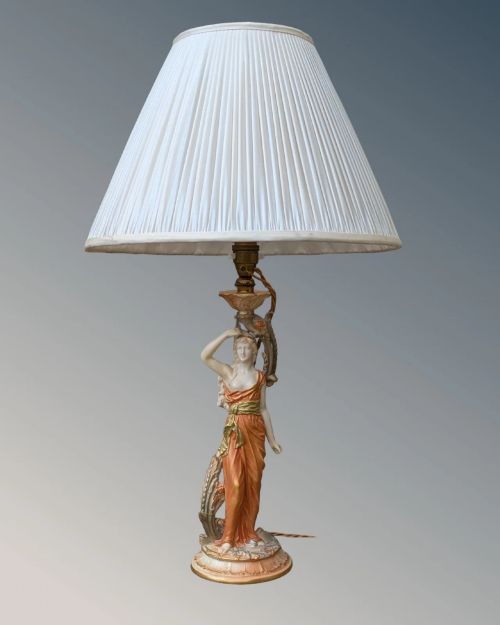
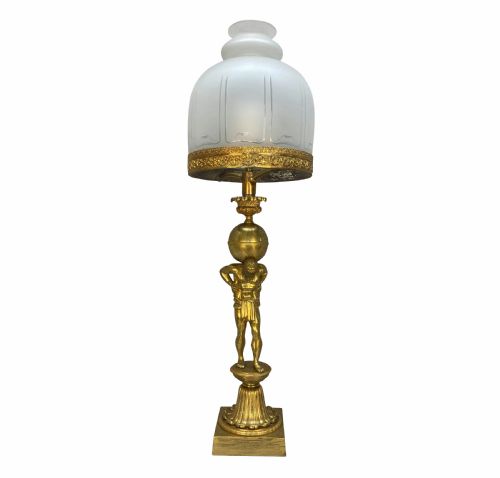
Classical figural table lighting combines functional illumination with sculptural art, depicting human figures, cherubs and classical deities in cast metal or porcelain. These pieces serve as both decorative objects and practical light sources, frequently taking the form of table lamps, converted candelabra or fitted candlesticks.
The selections encountered here lean heavily toward nineteenth-century French and English manufacture, alongside early twentieth-century examples. Neoclassical and Art Nouveau styles dominate the grouping, often mounting human figures upon heavy marble plinths or ceramic bases.
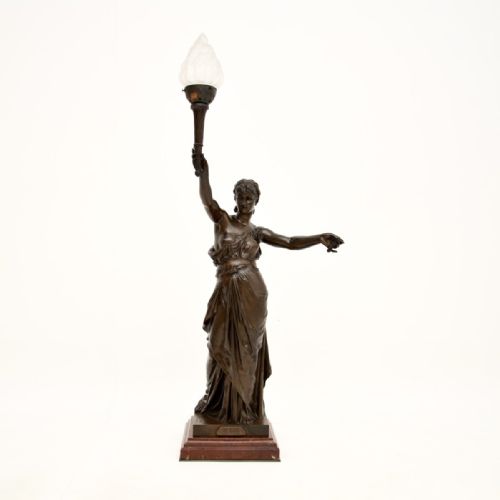
Makers utilised allegorical subjects and mythological motifs, ranging from maiden statues to winged puttis and torchère bearers. The resulting items transform functional surfaces by introducing architectural presence and narrative depth into a room.
Materials and construction methods
Foundry work relies heavily on cast bronze, brass, and spelter for the sculptural bodies, while marble provides stable weighting for plinths and bases. Metal components frequently receive gilt, silvered, or cold-painted surface treatments to enhance decorative detail.
Lighting adaptation is common across these objects, with many pieces originally cast as candelabra, candle holders or decorative vases before conversion into table lamps. Frosted glass, fabric shades and specialised lamp bases complete the wiring integration.
Materials documented across the inventory include bronze, spelter, brass, marble, porcelain, sterling silver, glass, and fabric.
Distinctions in quality and execution
The refinement of the casting defines the upper tier of these pieces, where facial expressions, drapery folds and anatomical details remain sharp and distinct. Weaker examples in spelter or lesser metal show softened contours and coarser surface finishing.
Signatures from established sculptors and foundries elevate the standing of a piece, distinguishing mass-produced commercial castings from signed artistic works. The choice of base material, such as fine statuary marble versus simpler ceramics, also indicates the original investment in manufacture.
E Rousseau·L & F Moreau·Royal Worcester·Emile Picault·Baccarat·Jean-Jules Cambos·H Moreau·Henri Honore Ple·Auguste Moreau
The Classical Figural Table Lighting Glossary
- Spelter
- A zinc alloy commonly utilised as a less expensive alternative to bronze for sculptural figures in nineteenth and twentieth-century lighting. It accepts patination and paint readily to imitate heavier metals.
- Torchère
- A stand or decorative support designed to hold a light source, often depicted in the hands of classical figures within these lighting designs. The term derives from the French word for torch.
- Ormolu
- Gilded bronze produced by applying a mercury and gold amalgam to a bronze base, creating a rich golden surface finish. This technique appears frequently in French neoclassical metalwork.
- Putto
- A plump, naked male child figure frequently incorporated into classical and baroque art. They appear often in these pieces as cherubs supporting light fittings or holding torches.
- Patina
- The surface sheen and coloration developed naturally over time or applied artificially to metals through chemical treatment. It highlights the depth and texture of cast figural details.
Classical Figural Table Lighting: Frequently Asked Questions
How are antique figural lamps wired?
Most antique lamps are retrofitted with modern electrical wiring to meet current safety standards while preserving the original metal or ceramic body. Rewiring is typically routed carefully through existing channels to avoid altering the historic structure.
Buyers should have a qualified electrician inspect older wiring configurations before daily use to ensure proper earthing and insulation.
What is spelter and how does it differ from bronze?
Spelter is a zinc-based alloy that was widely used as a cost-effective substitute for bronze in nineteenth and twentieth-century decorative figures. It is lighter than bronze and softer to the touch, often finished with painted or bronze-effect patination.
Bronze offers greater weight, durability and sharper casting definition, making signed bronze works more desirable to collectors.
Can converted candelabra be returned to original use?
Many table lamps in this category began life as candelabra, candle holders or vases before being adapted for electricity. Reversible conversion methods mean that some fittings can be unscrewed, though most owners choose to retain the electrical setup for practical lighting.
Checking the underside or interior threaded mounts reveals whether permanent drilling altered the original metalwork during conversion.
How do I care for antique bronze and marble?
Dust bronze figures regularly with a soft, dry cloth to prevent the accumulation of airborne grime that can dull the patina. Avoid abrasive polishes or chemical cleaners that strip away historic surface finishes.
Marble bases benefit from gentle wiping with a damp cloth followed by immediate drying, keeping acidic substances away from polished stone surfaces.