








Classical Display Cabinet
A classical display cabinet brings symmetry and proportion to a room, framing collections behind glass with refined architectural dignity.
Classical Display Cabinet
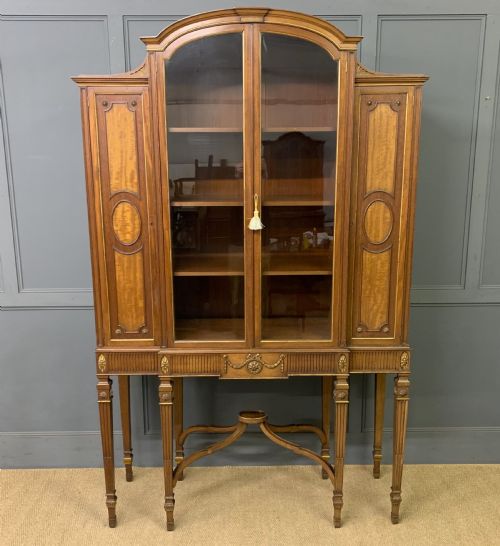
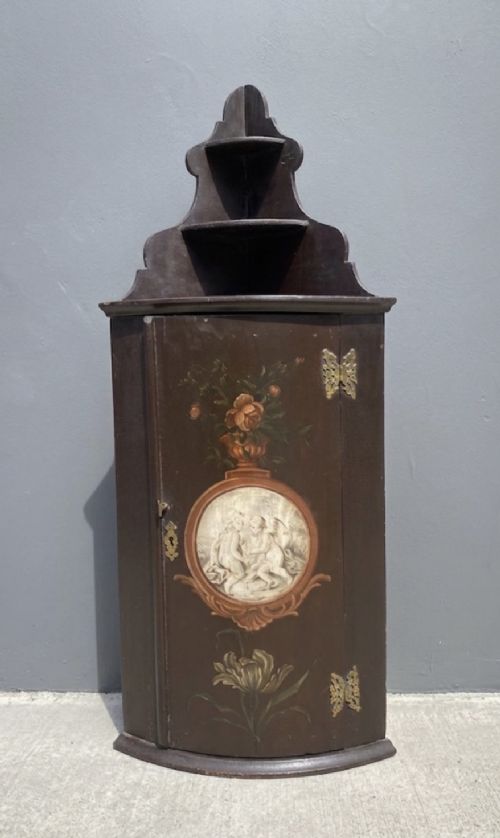
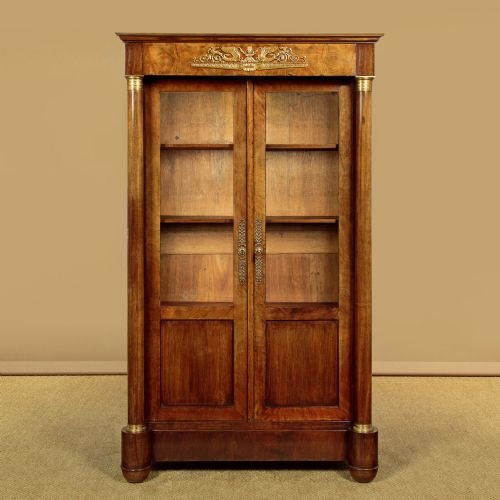
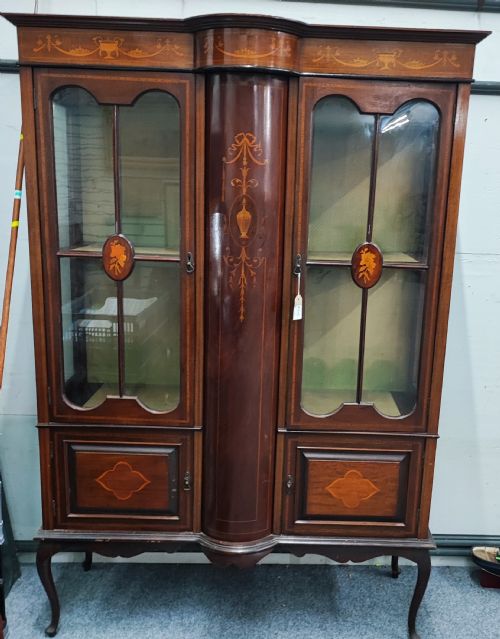
A classical display cabinet combines timber construction with generous glass panels designed to showcase porcelain, books, and decorative objects. These pieces draw on historical design idioms such as Regency, Neoclassical, and Sheraton Revival, translating antique architectural motifs into domestic furniture.
The most common examples encountered here date from the nineteenth and early twentieth centuries, spanning Victorian, Edwardian, and later revival periods. Forms range from corner cupboards and breakfront bookcases to side cabinets and dedicated display pedestals.
Originating in grand European drawing rooms, these cabinets served to display prized acquisitions while protecting delicate items from dust. Today, they function similarly in residential interiors, providing structured display space with distinct historical character.
Materials and Construction Techniques
Makers utilised dense cabinet timbers such as mahogany, satinwood, walnut, and rosewood, often selecting figured veneers to create decorative grain patterns on large surfaces. Inlays of contrasting woods, painted panels, and marquetry added intricate linear or floral detail to the exterior carcase.
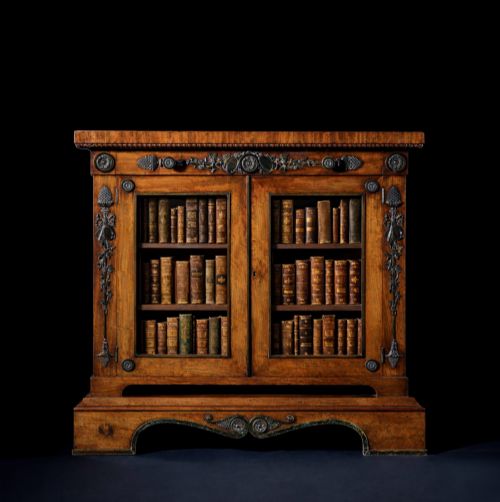
Metal mounts in ormolu, bronze, and brass highlight key architectural elements like columns, friezes, and corners, contrasting sharply with the dark or polished wood beneath. Glass panes are fitted securely into timber frame doors, allowing unobstructed light to reach the interior shelves.
Classical Display Cabinet Retail Price Guide 2026
Typical asking prices for classical display cabinet among the pieces listed under this phrase on Sellingantiques today, from the lower quarter to the upper quarter. They describe what is for sale here now, not the wider market.
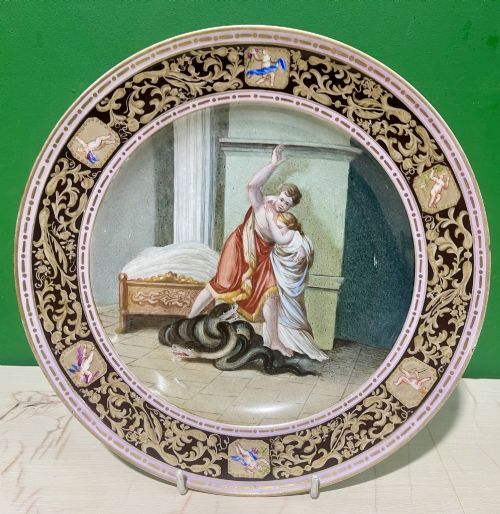
Several porcelain plates preserve centuries-old depictions of ancient myths, botanical scenes, and wise virgins painted by named Victorian artisans.
Distinguishing Quality and Execution
The standard of a classical display cabinet is determined by the precision of its timber selection and the integration of its decorative elements. Superior pieces display seamless veneer matching, crisp hand-carved or cast ormolu mounts, and finely executed marquetry rather than stamped or stencilled imitation.
Structural integrity separates functional furniture from finer cabinet-making, evident in the tight fit of glazed doors, smooth drawer actions, and substantial internal shelving. Workshop execution by recognised makers or documented cabinet-makers elevates both the complexity of the design and the refinement of the finishing.
Waring and Gillow·Edwards and Roberts·Lamb of Manchester
The Classical Display Cabinet Glossary
- Ormolu
- Gilt-bronze ornamentation applied to furniture mounts and architectural details. It provides a bright metallic contrast against dark timbers like mahogany and rosewood.
- Marquetry
- The art of applying decorative pieces of veneer to a structure to form intricate patterns or pictures. Craftsmen use contrasting woods to achieve tonal depth.
- Breakfront
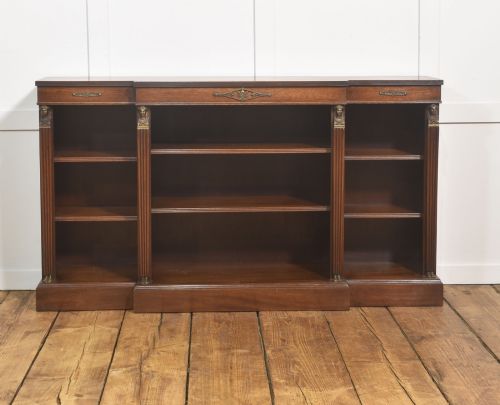
- A cabinet design where the central section projects forward from the flanking wings. This creates a staggered facade that breaks up long expanses of timber.
- Satinwood
- A pale, lustrous timber native to India and Ceylon, frequently utilised during the Sheraton Revival period for stringing, banding, and complete veneer surfaces.
- Pate sur Pate
- A ceramic decoration technique where layers of liquid white porcelain slip are built up on a coloured clay body to create a low-relief cameo effect.
Classical Display Cabinet: Frequently Asked Questions
What periods do these cabinets originate from?
The pieces span the nineteenth and early twentieth centuries, incorporating Regency, Victorian, and Edwardian eras alongside revivals of earlier classical styles.
Craftsmen during these periods drew heavily on eighteenth-century proportions, resulting in furniture that bridges historical design with later manufacturing techniques.
How were these cabinets used originally?
They were built to store and exhibit valuable books, porcelain chargers, and curated collections of curiosities in formal drawing rooms.
The inclusion of glazed doors and mirrored backs allowed owners to display their possessions safely while reflecting light into dimly lit Victorian and Edwardian interiors.
How do I care for antique timber cabinets?
Maintain stable indoor humidity levels and keep wooden surfaces away from direct sunlight to prevent veneer cracking and timber warping.
Dust regularly with a soft, dry cloth and apply a quality beeswax sparingly to preserve the natural lustre of the polished wood.
How can I distinguish revival styles from original pieces?
Examine the secondary woods used inside drawers and carcase backs, as well as the construction methods of the joints and screw types.
Revival pieces from the Edwardian era often employ machine-cut elements and distinct timber ageing characteristics that differentiate them from early nineteenth-century work.