


Classical Column Floor Lamp
A classical column floor lamp brings upright architectural presence to a room, using brass, marble, and giltwood to cast light from a stately height.
Classical Column Floor Lamp
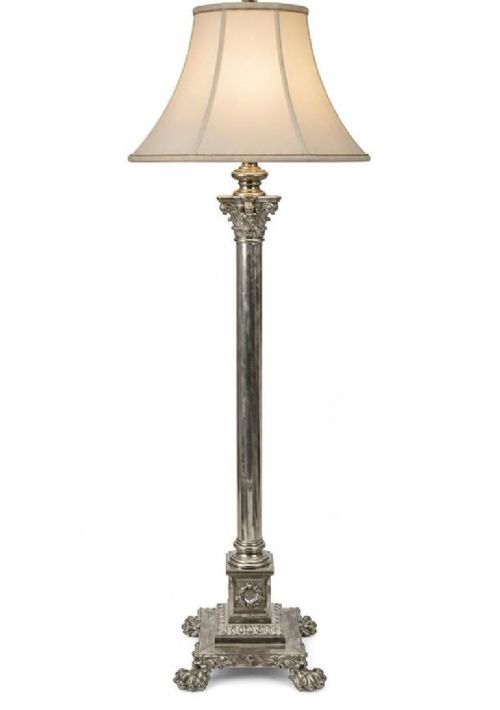
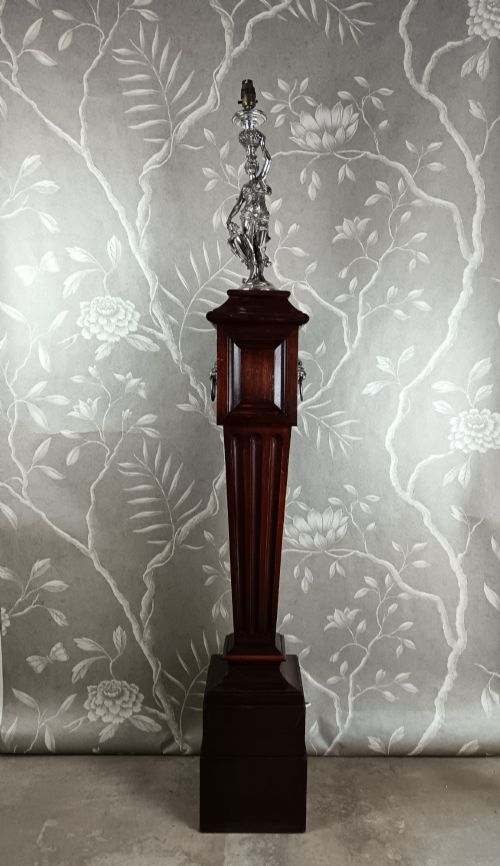
A classical column floor lamp stands as an architectural column transformed into a practical lighting standard, drawing on ancient forms for its upright authority. These pieces take the shape of floor lamps, standard lamps, and torcheres, echoing the proportions of ancient buildings.
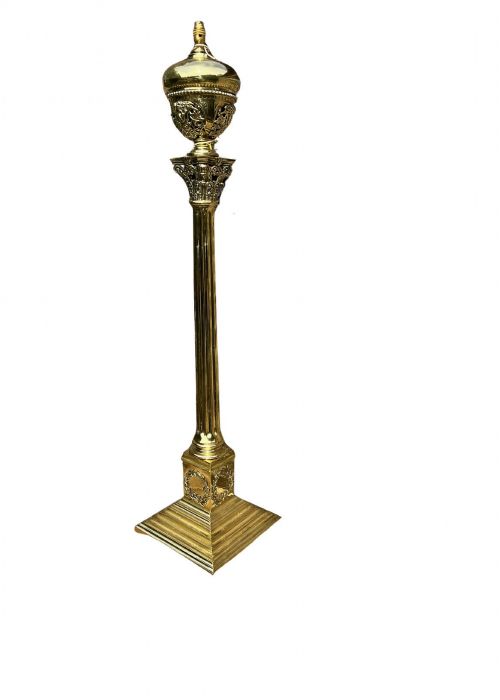
The versions most commonly met on this page span the Victorian and Edwardian eras, alongside the 1920s and 1930s, reflecting revivals of Neoclassical and Regency design. Makers utilised brass, marble, and giltwood to build these vertical structures, frequently incorporating Corinthian capitals at the top of the shaft.
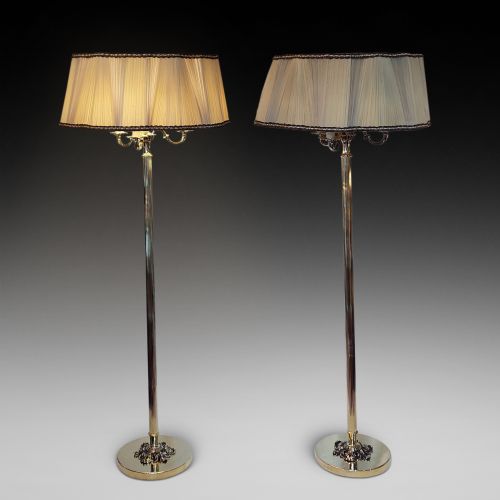
Makers also produced standard lamp uplighters and twin arm variants, offering different ways to disperse light within a domestic interior. These objects combine the decorative vocabulary of antiquity with the functional demands of modern illumination.
Materials and construction methods
Brass forms the structural backbone for many pieces, shaped into fluted columns and heavy bases to ensure stability at height. Silver plate and giltwood also appear as surface treatments, adding reflective sheen or gilded warmth to the core metal or timber.
Marble provides solid foundations and column sections, paired with metal components in specific examples to contrast weight against slender shafts. Telescopic mechanisms permit height adjustment, allowing the upper section to rise from the main column body.
Listings feature brass as the most common material, alongside marble, giltwood, and silver plate across periods spanning the nineteenth century to the 1930s.
Distinctions in quality
The refinement of the cast detailing on the capital sets individual examples apart, particularly in the crispness of acanthus leaves on Corinthian columns. Heavier gauge brass and solid marble bases offer better physical stability and presence than lighter, thinner assemblies.
Proportion and execution of the stepped plinth dictate the visual balance of the standard lamp, distinguishing carefully designed pieces from simpler utilitarian versions. Signed or marked examples, such as those bearing marks from makers like WMF, carry evidence of documented workshop origin.
Humphrey Hopper·WMF
The Classical Column Floor Lamp Glossary
- Corinthian column
- A pillar style defined by an ornate capital decorated with rows of carved acanthus leaves. This motif appears frequently on the upper shaft of standard lamps from the Victorian and Edwardian periods.
- Torchere
- A tall stand or floor lamp designed originally to carry a torch, adapted here to hold an electric light source. They often feature slender shafts rising from stepped or tripod bases.
- Standard lamp
- A British term for a tall floor-standing lamp designed to illuminate a room from a raised height. These pieces utilise heavy weighted bases to support long vertical columns.
- Telescopic
- Describing a standard lamp shaft that extends vertically via inner sliding sections. This mechanical feature allows the total height of the lamp to be adjusted.
- Giltwood
- Timber treated with a thin layer of gold leaf or gilt gesso to simulate solid gold. This material appears on decorative standard lamps from the 1930s and earlier periods.
Classical Column Floor Lamp: Frequently Asked Questions
What is a classical column floor lamp?
A classical column floor lamp is a tall lighting standard shaped like an ancient architectural pillar, often featuring a fluted shaft and a decorative capital. These pieces lift the light source well above eye level to illuminate a room.
Originating in forms like torcheres and standard lamps, they draw heavily on Neoclassical and Regency design principles, using materials such as brass, marble, and giltwood.
How do I use a standard lamp in a room?
Standard lamps serve as prominent vertical accents that provide ambient or task lighting in living spaces and studies. Their height allows them to cast light down over seating areas without taking up tabletop space.
Many examples feature telescopic columns, enabling you to adjust the height of the light source to suit different ceiling clearances and furniture layouts.
How can I tell Victorian lamps from 1920s ones?
Victorian and Edwardian standard lamps often display heavier brass castings, deep patination, and intricate Corinthian capitals. Telescopic mechanisms are frequently found on these nineteenth and early twentieth century pieces.
Pieces from the 1920s and 1930s sometimes introduce simpler column profiles, giltwood finishes, or varied metal alloys alongside traditional neoclassical styling.
What materials were used to make them?
Makers relied heavily on brass for the primary columns and weighted bases, ensuring the tall structures remained stable. Silver plate, giltwood, and glass also appear across various periods.
Marble is utilised for solid bases and column segments, adding considerable weight and a contrasting texture to the metalwork.