
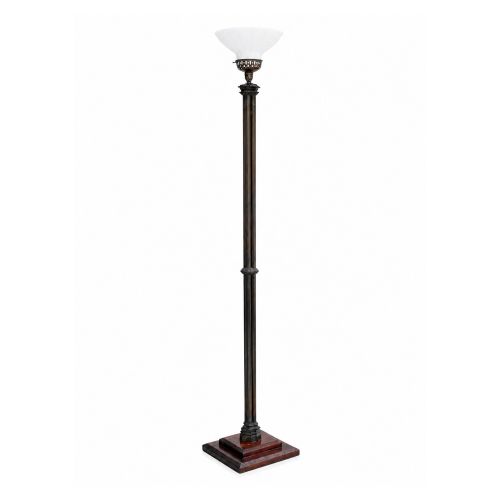
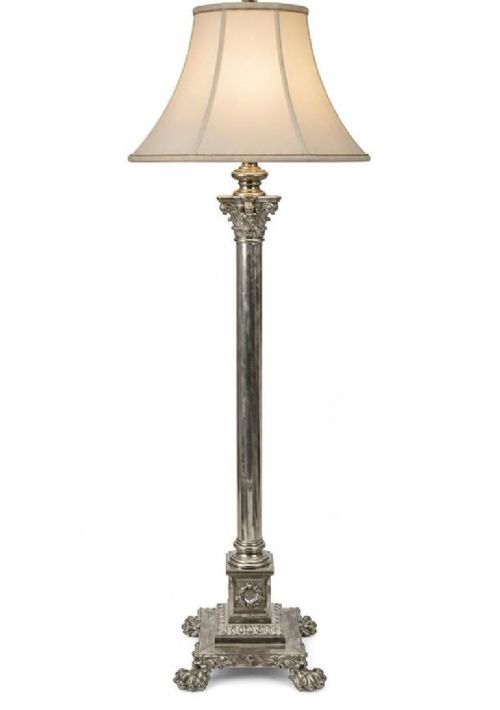
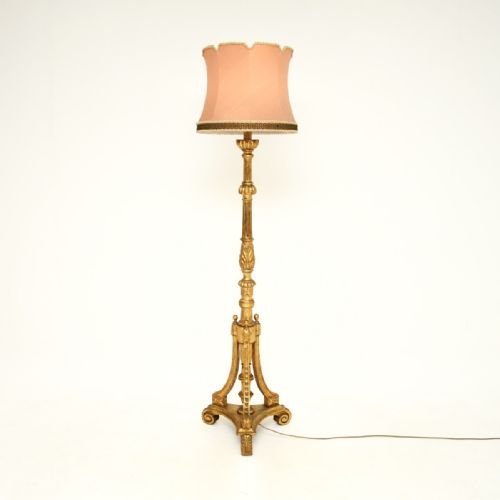
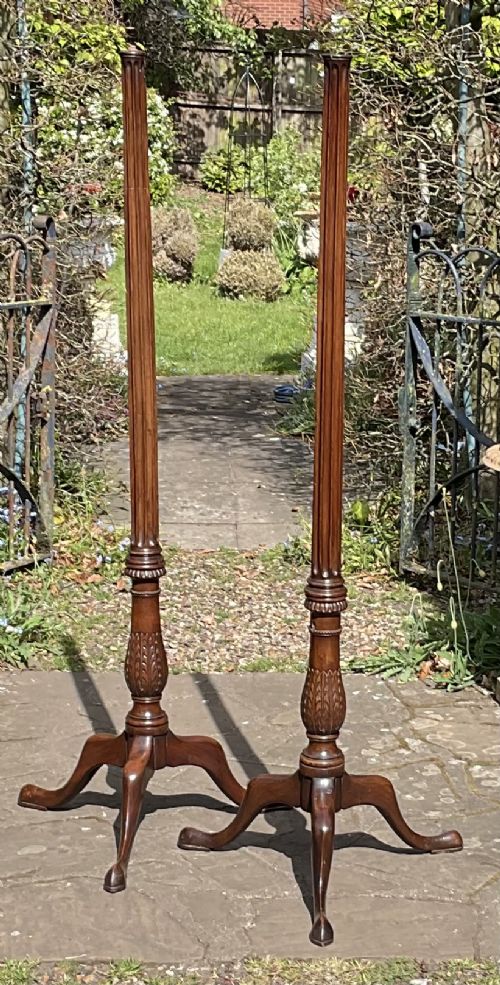


Column Style Floor Lamp
These column style floor lamp options combine vertical presence with period detail, offering substantial illumination.
Column Style Floor Lamp
A column style floor lamp brings architectural form and height to interior lighting through upright shafts and classical proportions. When searching for a column style floor lamp, buyers encounter pieces spanning the nineteenth century, Edwardian era, and early twentieth century.
The selections on this page range from standard lamps in brass and silver plate to carved timber shafts and glass stems. Common iterations include Georgian mahogany designs, Gothic Revival interpretations, and neoclassical brass orders.
Makers drew on historical vocabularies, producing everything from French boudoir pieces to lacquered Chinoiserie standards. These floor lamps function primarily as functional height-giving light sources in large reception rooms and studies.
Materials and construction methods
Makers utilised dense timbers such as mahogany and oak, turning them on lathes to create classical columns and fluted shafts. Gilt wood and gilt bronze examples received applied metallic leaf or patinated finishes to imitate solid precious metals.
Brass and silver plate components were cast and assembled, often incorporating Corinthian capitals at the top of the column. Fabric shades completed the construction, paired with internal wiring adaptations made during subsequent decades.
Materials across these listings include solid mahogany, oak, brass, silver plate, and blown glass.
Assessing quality in column style floor lamps
Quality rests upon the crispness of the carving or casting detail along the capital and fluting of the column. Heavy timber or solid brass bases provide necessary stability, whereas lighter constructions require wider footprints to remain upright.
Original surface patination distinguishes superior examples from those with over-cleaned or heavily restored finishes. The integration of the electrical fittings into the historical shaft without compromising the timber or metal structure dictates structural integrity.
The Column Style Floor Lamp Glossary
- Standard lamp
- A tall floor-standing lamp designed to illuminate a room from a raised bulb position. This term appears interchangeably with floor lamp in older inventories.
- Corinthian capital
- The decorative top section of a column featuring carved acanthus leaves and scrolls. It is frequently seen on brass and gilt standards of the late nineteenth and early twentieth centuries.
- Giltwood
- Wood that has been coated with a thin layer of gold leaf or gilt paint. This finish creates a bright reflective surface popular in formal period drawing rooms.
- Chinoiserie
- A decorative style reflecting European interpretations of Chinese artistic traditions. Edwardian examples often feature lacquered surfaces and painted motifs.
- Fluting
- Vertical grooves cut into the surface of a column shaft. This classical architectural detail adds texture and visual lightness to timber and metal standards.
Column Style Floor Lamp: Frequently Asked Questions
Where should I place a floor lamp?
These tall standards suit corners of reception rooms or beside reading armchairs where vertical light distribution helps balance low furniture.
Ensure the heavy base rests on a stable surface away from major foot traffic corridors.
How do I date an old floor lamp?
Dating relies on combining the stylistic period of the timber turning or metal casting with the construction methods of the base.
Earlier nineteenth-century pieces often display heavier hand-turned proportions, whereas twentieth-century items incorporate standardised electrical components.
Are these lamps safe for modern use?
Most antique standards require rewiring to meet contemporary electrical safety standards before regular daily use in a home.
Any competent electrician can update the internal flex and bulb holder while preserving the outer antique shaft.
What shade fits a column lamp?
Traditional fabric shades with adequate drop balance the height of a heavy brass or mahogany column shaft.
Proportion is key, ensuring the diameter of the shade matches the visual weight of the base without tipping the balance.