
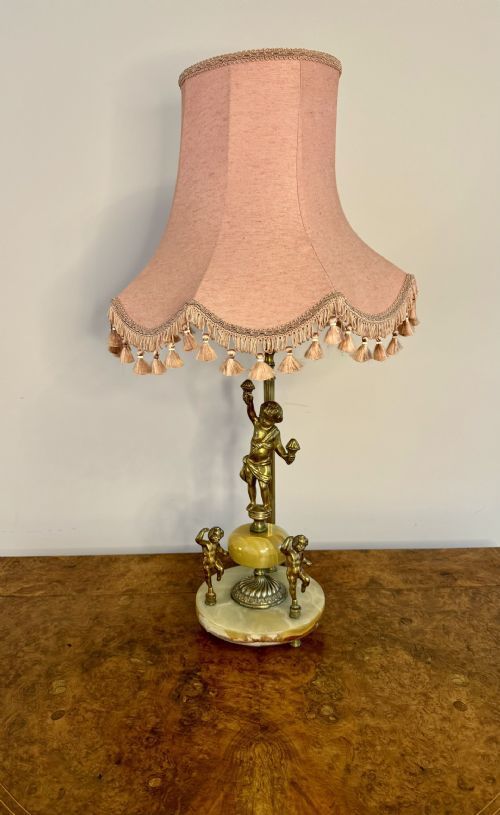


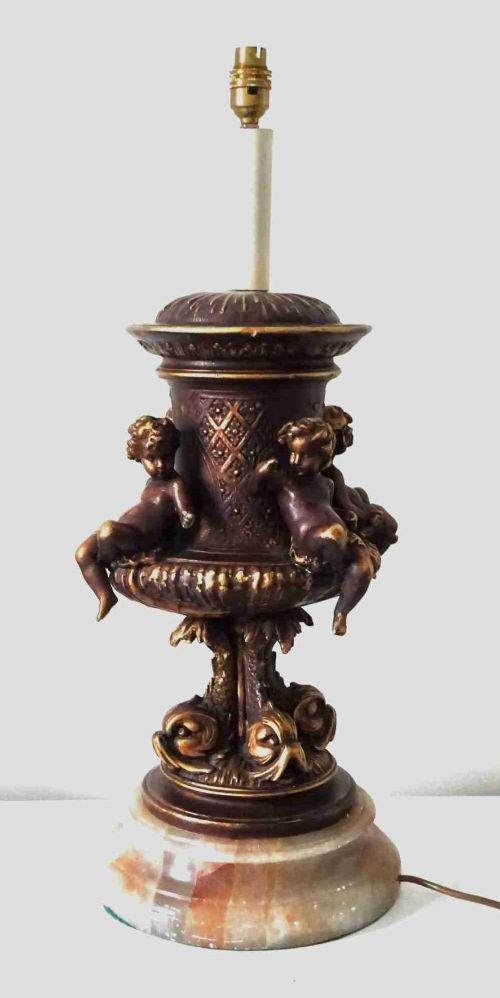
Classical Cherub Desk Lamp
A classical cherub desk lamp brings sculptural presence and warm illumination to a room, drawing on centuries of figurative metalwork.
Classical Cherub Desk Lamp
A classical cherub desk lamp is an illuminating fixture modelled with winged figures derived from classical sculpture and mythology. These pieces function both as desk lighting and as decorative sculptural objects for a study or drawing room.
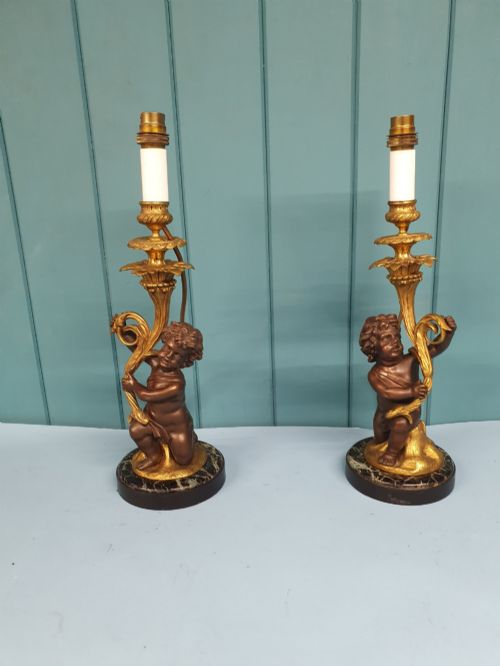
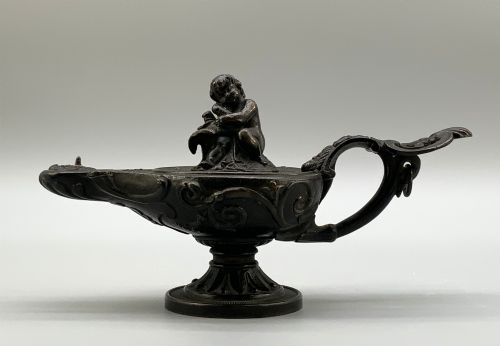
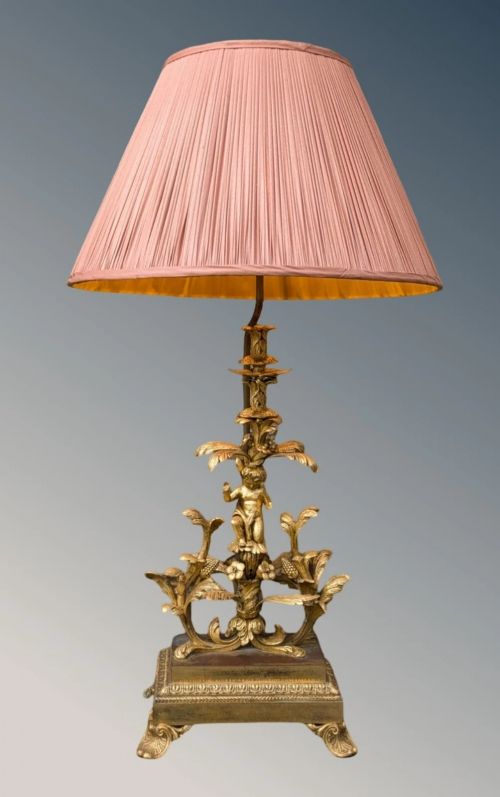
The form often incorporates figural oil lamps adapted for electricity alongside dedicated table lamps featuring fabric shades. Bases frequently pair cast metal figures with plinths of natural stone or carved wood.
How they were made
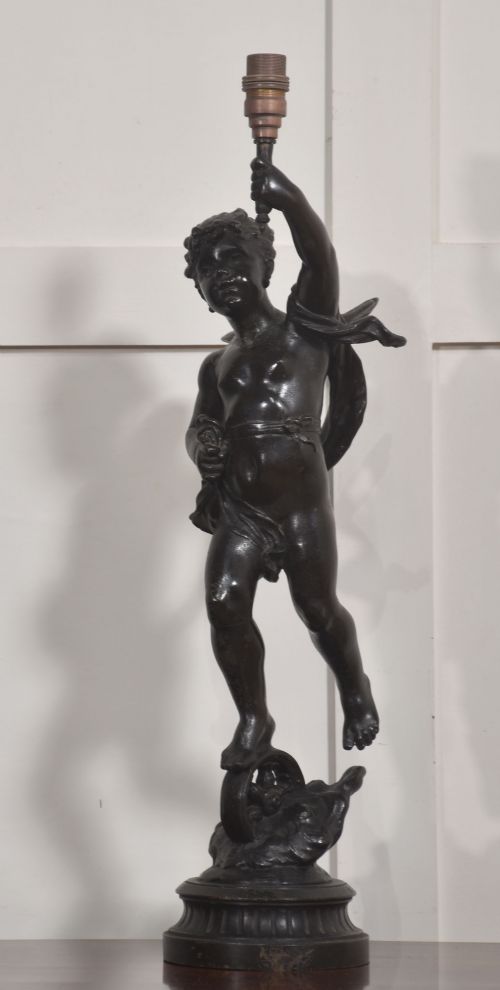
Foundry workers utilised traditional lost-wax or sand casting methods to shape bronze, brass, and ormolu components. Artisans then chased and finished the metal surfaces by hand to define the hair, wings, and drapery of each cherub figure.
Many bases combine cast metalwork with turned marble, onyx, or carved oak components. Ormolu and gilt bronze elements received applied gold leaf or mercury gilding to achieve a durable metallic lustre.
Wiring and electrical components represent later adaptations, as these lamps originated as oil-burning fixtures or gas lamps before conversion for modern desk use.
Object forms recorded on this page include both standard table lamps and converted nineteenth-century figural oil lamps.
What varies in quality
Material selection also defines the tier of the object, with heavy patinated bronze, fire-gilt ormolu, and solid marble bases sitting at the upper end of the range. Lighter brass or moulded plaster constructions represent alternative manufacturing tiers.
Proportion and the integration of the figure with the lighting mount govern the aesthetic success of the design. A balanced composition ensures the figural element remains the focal point while supporting the functional lamp hardware.
The Classical Cherub Desk Lamp Glossary
- Ormolu
- Finely chased gilded bronze produced by applying a mercury and gold amalgam to a bronze base. This technique was widely employed by French metalworkers during the nineteenth century.
- Patinated bronze
- Bronze that has been treated with chemical solutions to produce a darkened or coloured surface finish. This treatment protects the metal and accentuates sculptural contours.
- Grand Tour
- A cultural journey undertaken by wealthy young Europeans to view classical antiquities. Figures and lamps collected on these travels often influenced later nineteenth-century domestic designs.
- Neoclassical
- A style inspired by the art and architecture of classical Greece and Rome. It emphasises symmetry, proportion, and restrained ornamentation in lighting and decorative arts.
- Tole peinte
- Painted tinware used for lamp shades and canisters during the Victorian era. The painted decoration often mimics natural flora or tortoiseshell.
Classical Cherub Desk Lamp: Frequently Asked Questions
What is a classical cherub desk lamp?
A classical cherub desk lamp is a decorative lighting fixture featuring a sculptural winged figure cast in metal or carved from other materials. These pieces draw upon historical design vocabularies such as the French Empire and Neoclassical styles.
Originally produced as oil lamps or candlesticks, many have been converted for modern electrical use while retaining their sculptural bases.
How do I date a cherub lamp?
Dating relies on examining the materials, casting quality, and stylistic markers such as patination and base construction. Nineteenth-century examples often employ heavy cast bronze, fire-gilt ormolu, or natural stone plinths.
Later reproductions and adaptations from the early twentieth century utilise different assembly methods and lighter alloys, helping collectors distinguish period pieces from subsequent variations.
Were these lamps originally electric?
Most nineteenth-century examples started life as oil lamps or figural candlesticks before being wired for electricity at a later date. The conversion process often involved drilling through the original metal or stone base to run internal flex.
Original oil burners and reservoirs are occasionally retained on antique models, demonstrating their transition from combustion lighting to modern desk lamps.