





Classical Centre Table
A classical centre table commands the middle of a room, anchoring the space with architectural presence and fine timber or marble.
Classical Centre Table
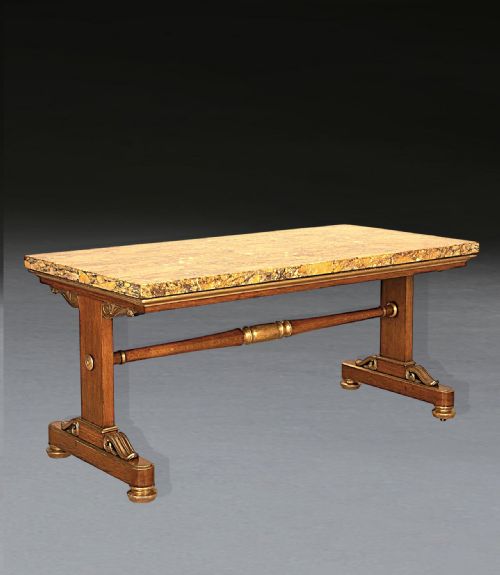
A classical centre table stands free in a room rather than against a wall, designed to be viewed from all sides. These pieces range from nineteenth-century mahogany and Regency designs to twentieth-century revivals.
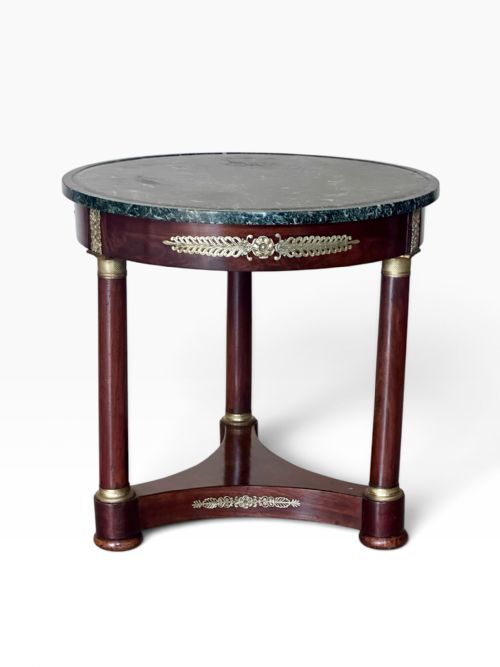
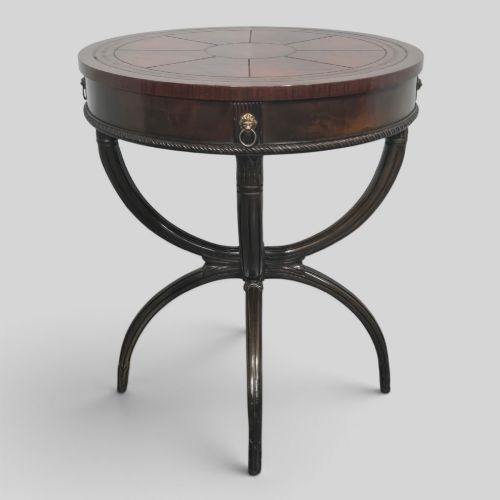
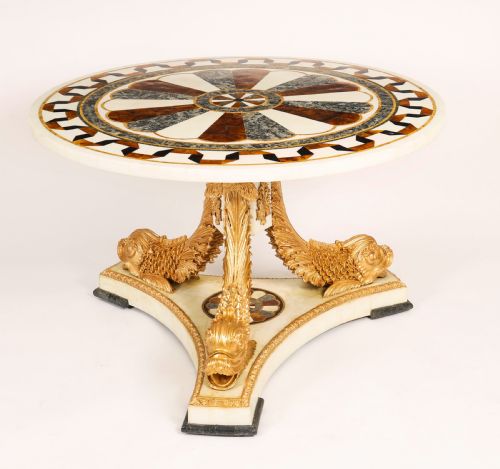
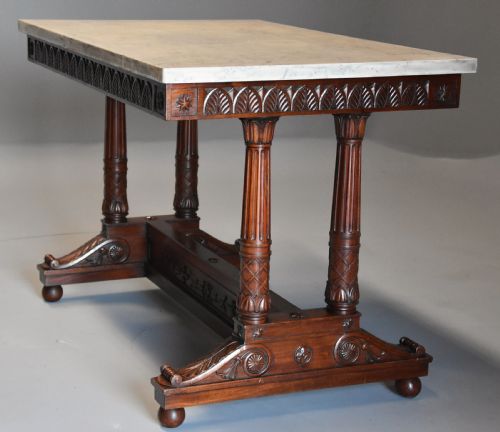
The form encompasses round gueridons, monumental breakfast tables, and smaller occasional pieces. Marble tops and marquetry surfaces appear frequently across the selection.
Origins span English Regency workshops and French Empire cabinets, alongside later neoclassical revivals. Buyers often encounter pieces featuring gilt bronze, brass mounts, or carved dolphins.
Materials and construction
Cabinetmakers utilised dense timbers including mahogany, walnut, satinwood, and amboyna for the primary structures. Marquetry inlay and floral painted details decorate many of the tops.
Metal ornamentation includes cast brass, ormolu, and gilt metal mounts. Bronze ornaments and parcel-gilt details accent the structural woodwork.
Classical Centre Table Retail Price Guide 2026
Typical asking prices for classical centre table among the pieces listed under this phrase on Sellingantiques today, from the lower quarter to the upper quarter. They describe what is for sale here now, not the wider market.
Dolphins swim through the nineteenth century, surfacing repeatedly as carved wooden and metal table supports.
Assessing craftsmanship
The selection of timber grain and the precision of marquetry inlay separate standard workshop output from exceptional examples. Cabinetmakers who matched veneers symmetrically achieved a more unified visual balance.
The weight and finish of the stone top indicate quality, particularly where heavy marble or scagliola is fitted flush to the frame. Castings for ormolu and bronze mounts show greater sharpness in superior pieces.
JACOB·Holland and Son
The Classical Centre Table Glossary
- Gueridon
- A small circular table supported by a central column or multiple legs. Originating in seventeenth-century France, the form persisted into the nineteenth-century Empire period.
- Scagliola
- A composite material made from selenite, glue, and pigments, applied to mimic inlaid marble. Artisans polished the surface to achieve a smooth stone finish.
- Marquetry
- The art of applying decorative pieces of veneer to a structural structure to form pictorial designs. Cabinetmakers used various woods to create contrasting patterns.
- Ormolu
- Gilt bronze ornaments applied to furniture and decorative objects. The technique involves coating bronze with a mercury and gold amalgam before heating.
- Tazza
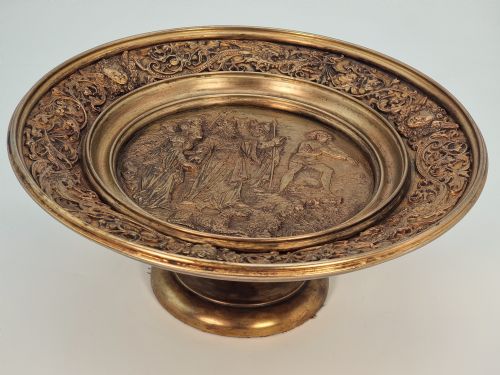
- A shallow saucer-shaped vessel or plateau raised on a stem and foot. In classical table arrangements, these served as centrepieces for display.
Classical Centre Table: Frequently Asked Questions
Where should a classical centre table go?
These tables stand in the middle of a principal room, such as a hall, library, or drawing room. Because the design is finished on all sides, the piece allows for circulation around it.
Position the table away from walls so the timber, marble, or bronze mounts remain fully visible from every angle.
How do I care for a marble top?
Marble surfaces require regular dusting with a soft cloth and immediate blotting of liquid spills to prevent staining. Avoid acidic cleaners that etch the polished stone.
Applying a specialist wax or stone sealer protects the finish over years of daily use.
What is the difference between Regency and Empire styles?
Regency design draws heavily on British interpretations of Greek and Roman antiquities, favouring dark mahogany and restrained brass inlay. French Empire pieces lean towards heavier gilt bronze mounts and militaristic or classical motifs.
Both styles share a monumental scale, though Empire examples frequently employ circular gueridon forms with distinct pillar supports.