


Classical Bronze Mantel Ornament
A classical bronze mantel ornament brings mythological figures, soldiers and classical motifs into domestic spaces with lasting sculptural presence.
Classical Bronze Mantel Ornament
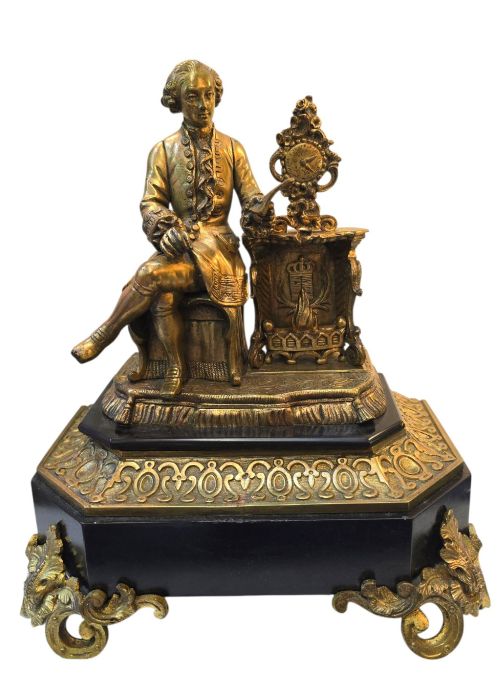
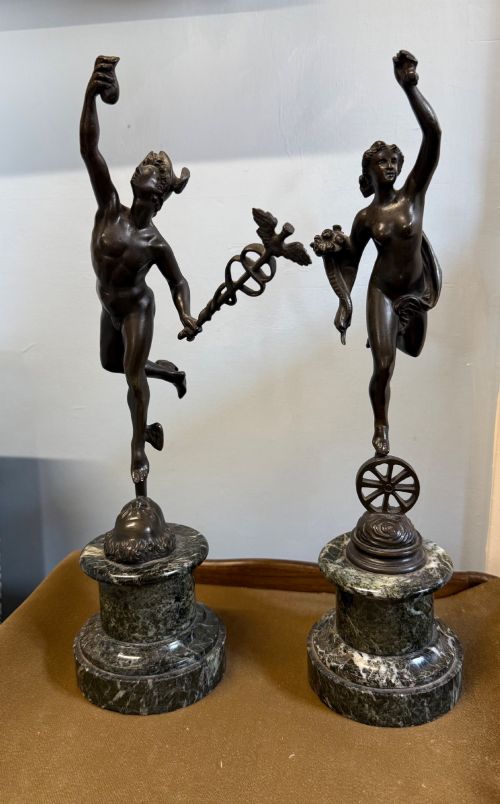
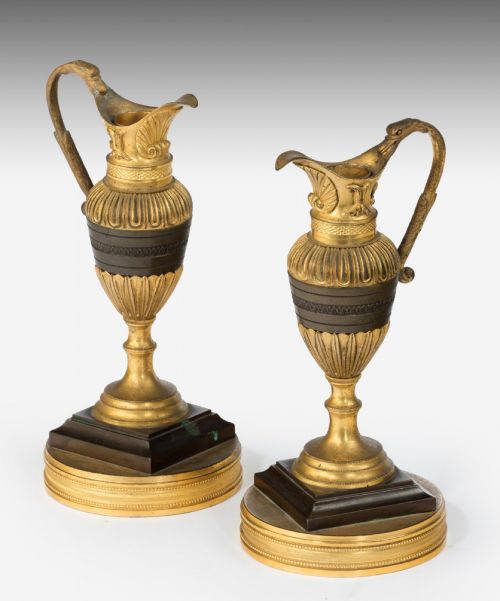
A classical bronze mantel ornament comprises figural sculptures, pairs of ewers, urns and cassolettes designed to sit upon fireplace ledges. Buyers search for these pieces to anchor a room with antique metalwork drawn from mythology, antiquity and neoclassical design.
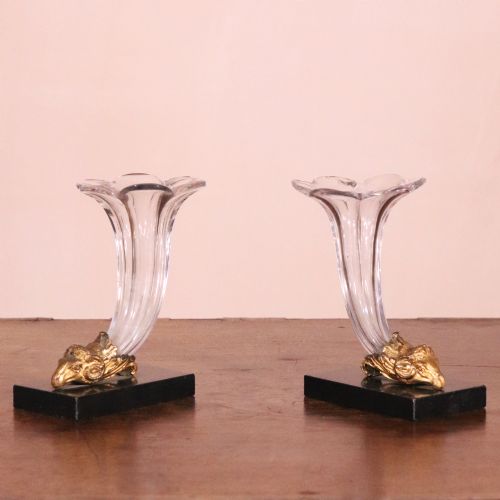
The selections available here lean heavily into nineteenth-century French and Regency production, alongside occasional twentieth-century interpretations. Formats range from single cast figures on marble plinths to matched pairs of decorative vessels and cornucopias.
Materials and construction
Foundry work relies on bronze, often combined with contrasting ormolu, gilt bronze and patinated finishes to highlight sculptural detail. Bases frequently incorporate marble, such as green marble and Sienna marble, providing substantial weight to support the metal figures above.
Alternative alloys like spelter and cast metal appear alongside true bronze, while glass elements occasionally complement metal cornucopias. Artisans chased and finished the cast components by hand, securing mounts and figures to stone plinths with threaded pins.
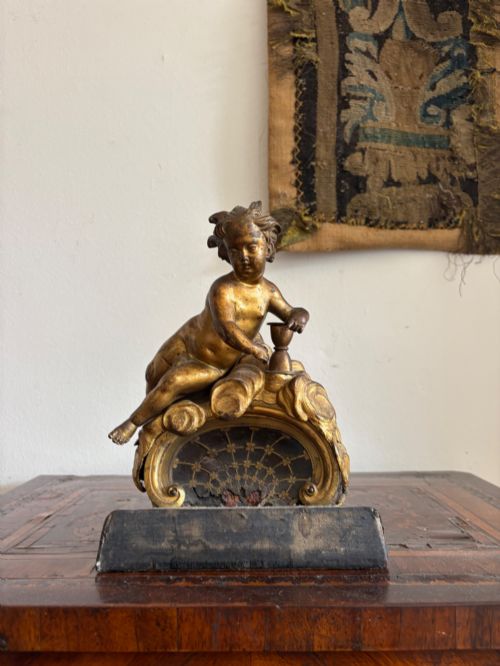
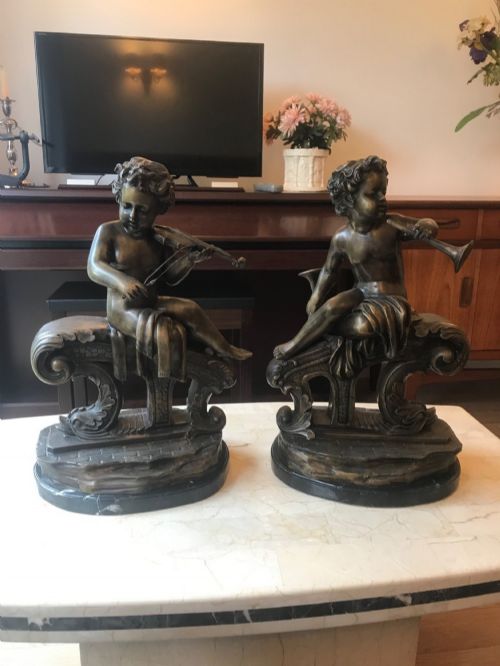
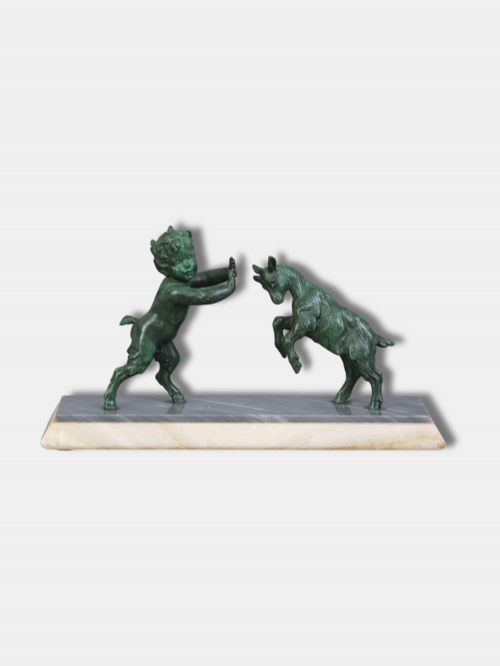
Cheering bronze children and musical fauns populate these mantel ornaments, bringing goats, cats and grapes directly into the formal parlour.
Judging quality in cast metalwork
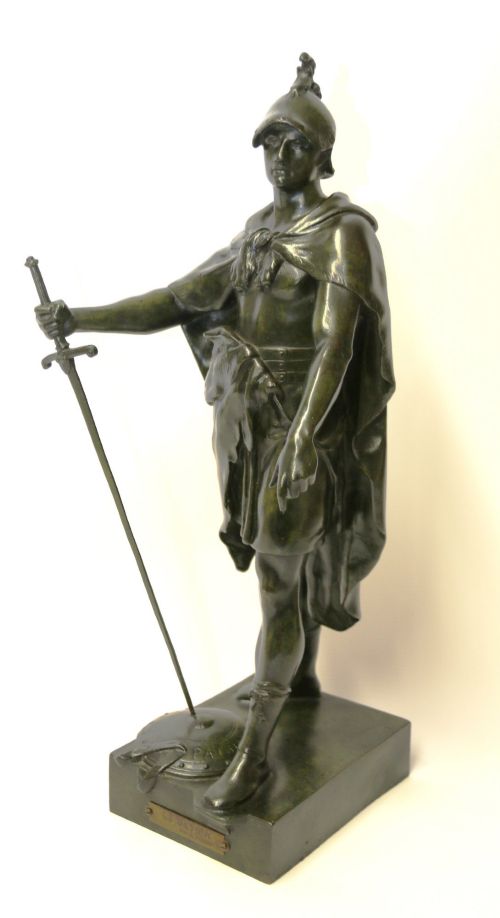
Quality rests upon the crispness of the chasing and the nuance of the patination across the bronze surface. Superior casts retain fine facial expressions, drapery folds and feather details without soft edges or visible casting flaws.
The integration of the materials dictates overall refinement, particularly how cleanly the bronze meets its marble or ormolu base. Signed works by recorded sculptors demonstrate an elevated level of artistic execution within the casting process.
Pierre-Augustin Caron de Beaumarchais·Émile Louis Picault·Emile Carlier·Clodion·Claire Colinet·Emmanuel Villanis
The Classical Bronze Mantel Ornament Glossary
- Ormolu
- Gilded bronze achieved through the application of a mercury and gold amalgam to the metal surface. This technique produces a rich, durable golden sheen characteristic of French decorative objects.
- Cassolette
- A decorative vessel that doubles as a perfume burner or transforms into a candleholder by reversing the lid. These are frequently cast in bronze and mounted on classical pedestals.
- Campana urn
- A bell-shaped vessel modelled after ancient Roman pottery forms. They appear widely in nineteenth-century mantel ornaments cast in bronze or spelter.
- Patination
- The surface coloration and treatment applied to bronze, ranging from deep brown tones to greenish verdigris. It develops naturally over time or is induced chemically by the foundry.
- Tazza
- A shallow cup or vase set upon a stem and foot, often fashioned from bronze and coloured marble. They function as classical display pieces on mantelpieces and side tables.
Classical Bronze Mantel Ornament: Frequently Asked Questions
How do I clean a bronze mantel ornament?
Dust the surface gently with a soft, dry brush to prevent dirt accumulation in recessed details. Avoid harsh chemical cleaners and metal polishes that strip away the original patination.
Apply a light microcrystalline wax sparingly if the metal requires protection against atmospheric moisture. Buff the surface softly with a clean cloth to maintain a subtle, stable sheen.
Are these pieces made of solid bronze?
Many listings feature solid cast bronze components, often combined with stone bases or gilt highlights. Some items incorporate alternative metal alloys such as spelter alongside traditional bronze.
Examine the weight, magnetism and underside of the piece to understand its construction materials. Spelter is lighter and softer than true bronze, while marble bases provide structural heft.
How do I identify a Regency period piece?
Regency items reflect early nineteenth-century English and French taste, drawing heavily on Greek and Roman archetypes. Look for clean architectural lines, Sienna marble, and restrained use of gilt bronze.
Proportions tend to reference classical architecture closely, prioritising symmetry in matched pairs of ewers, tazzas and cassolettes. Finer details mirror archaeological discoveries of the period.
Where should I place these ornaments?
Mantelpieces provide the traditional display surface, anchoring the fireplace surround with symmetrical pairs of urns or figural groups. Sideboards, console tables and pedestals also offer stable platforms for heavier marble-based sculptures.
Ensure the furniture surface can support the combined weight of metal and stone. Keep pieces away from direct heat sources and excessive moisture to preserve the finish.