


Classical Bronze Inkstand
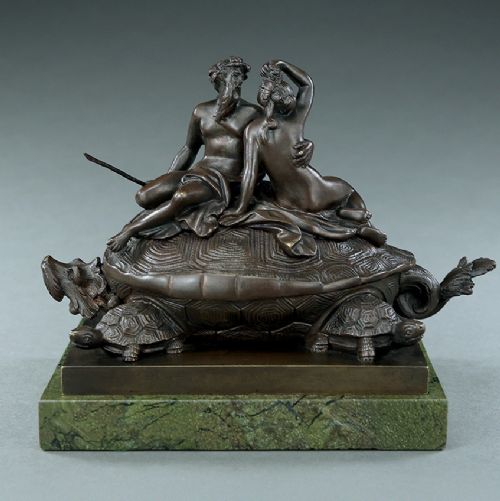
A classical bronze inkstand brings heavy sculptural weight and formal architectural design to the desk, combining cast metal figures with stone bases.
Classical Bronze Inkstand
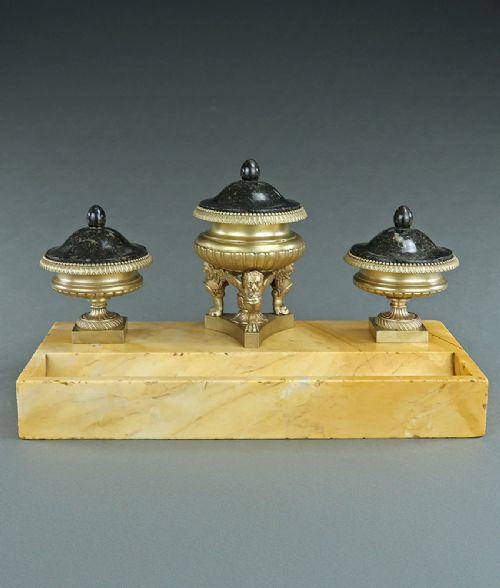
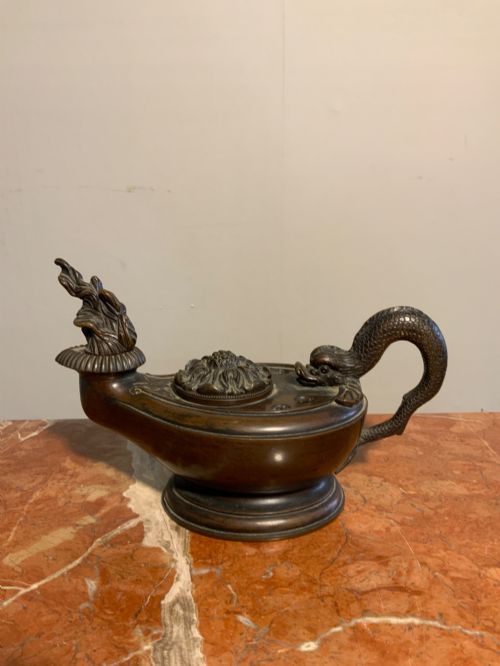
A classical bronze inkstand is a desk accessory designed for writing, typically combining cast bronze or ormolu mounts with heavy marble bases in styles such as Neoclassical, French Empire, and Grand Tour. These pieces range from simple patinated bronze vessels to elaborate French desk sets featuring busts, mythological figures, and lidded encriers.
The versions most commonly met on this page date from the nineteenth century, including specific pieces from around eighteen-seventy and eighteen-ninety alongside earlier Empire period examples. They appear primarily as desk accessories, inkstands, and inkwells that utilise green vert marble, Sienna marble, black marble, and onyx marble.
How they were made
Makers constructed these classical bronze inkstands by casting metal into sculptural figures, decorative mounts, and encriers using patinated bronze, gilt bronze, and ormolu. These metal elements required detailed chasing and finishing to achieve sharp surface definition on subjects ranging from classical figures to portrait busts.
The cast metal components were then mounted onto heavy turned or slab marble bases, including Sienna, black, onyx, and green vert marble. This combination provided structural stability for daily desk use while framing the metalwork within classical architectural materials.
Listings feature nineteenth-century pieces spanning the Empire period, eighteen-seventy, and eighteen-ninety, executed in bronze, gilt bronze, ormolu, and patinated bronze.
What varies in quality
The selection and preparation of the stone base also determine the standard of the piece, with richly figured Sienna, onyx, or green marble elevating the composition beyond plain black marble. Integrated ormolu mounts that fit precisely to the stone indicate superior workshop execution.
Lefebvre of Belgium
The Classical Bronze Inkstand Glossary
- Encrier
- A French term for an inkstand or inkwell designed to hold writing materials on a desk. These portable vessels often include fitted glass or ceramic inserts beneath lidded metal covers.
- Ormolu
- Gilt bronze produced by applying a finely ground high-carat gold mercury amalgam to a bronze object, which is then heated to drive off the mercury. This technique creates a rich, durable golden surface.
- Grand Tour
- A cultural journey of Europe undertaken by wealthy young men in the eighteenth and nineteenth centuries to study classical antiquities. Souvenirs from these travels included small bronzes and marble desk ornaments.
- Patinated bronze
- Bronze that has been treated with chemical solutions to produce a controlled surface colour or dark aged finish. This highlights the sculptural contours of figures and architectural mounts.
- Neoclassical
- A Western cultural movement drawing inspiration from the art and culture of classical antiquity. It appears in these inkstands through symmetrical proportions, friezes, and mythological motifs.
Classical Bronze Inkstand: Frequently Asked Questions
What is a classical bronze inkstand?
A classical bronze inkstand is a nineteenth-century desk accessory that combines cast bronze or ormolu figures and vessels with heavy marble bases.
These pieces were produced in styles such as Neoclassical and French Empire, functioning as both practical writing tools and decorative desk ornaments.
How were marble and bronze combined?
Foundry workers cast bronze or ormolu elements like encriers, busts, and mounts, then attached them securely to turned or slab marble bases.
The weight of the marble provided a stable platform for holding ink inserts and pens during daily writing tasks.
What styles do these pieces follow?
The listings show Neoclassical, French Empire, Classical Revival, Grand Tour, and French Second Empire styles.
These designs draw directly on ancient Greco-Roman motifs, architectural forms, and mythological subjects popular throughout the nineteenth century.
How do I care for marble and bronze?
Keep marble and bronze away from direct heat sources and moisture to protect the stone surfaces and the metal patination.
Dust gently with a dry, soft cloth and avoid abrasive cleaning products that can strip the original gilt or patinated finishes.