



Classical Bronze Clock
A classical bronze clock brings sculptural weight and precise engineering together, offering a striking centrepiece for any mantelpiece.
Classical Bronze Clock
When searching for a classical bronze clock, a buyer encounters domestic timepieces that combine heavy cast metalwork with decorative stone bases, originating predominantly from nineteenth-century French workshops.
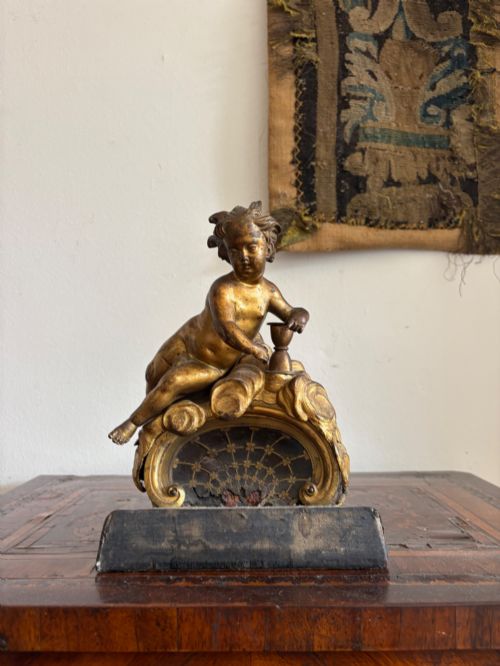
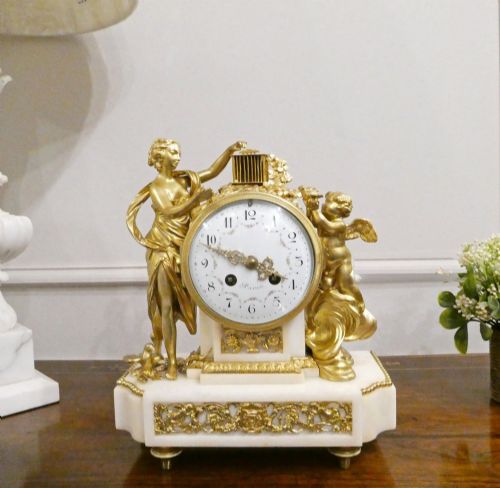
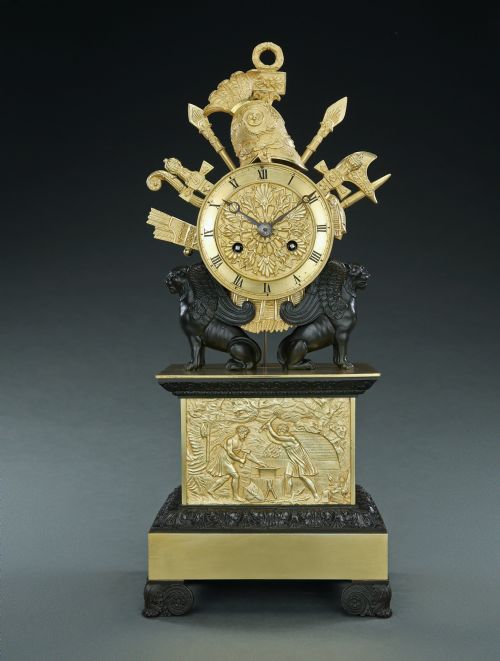
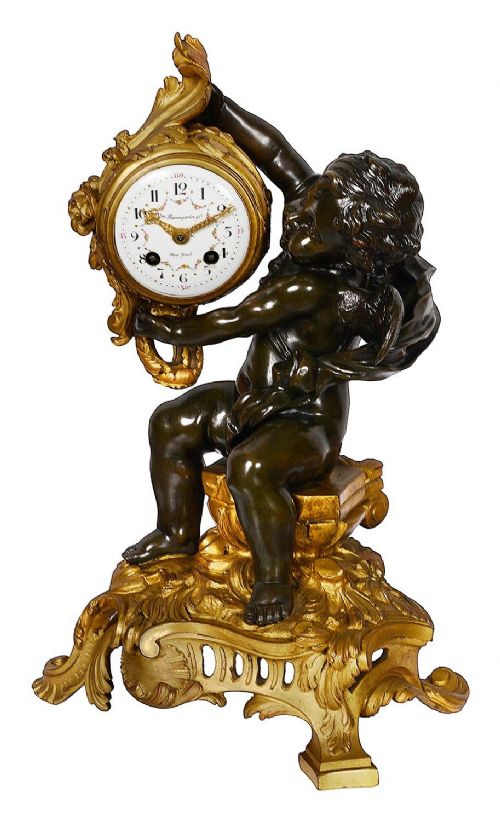
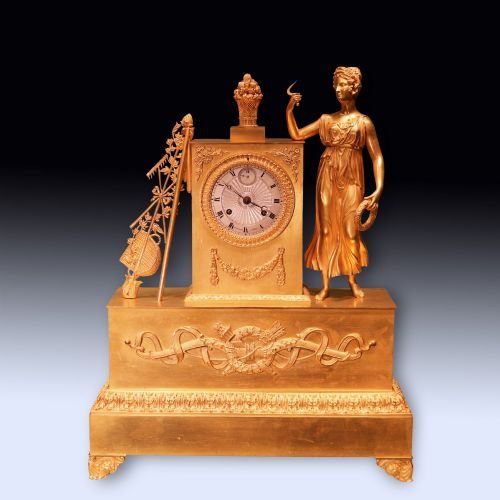
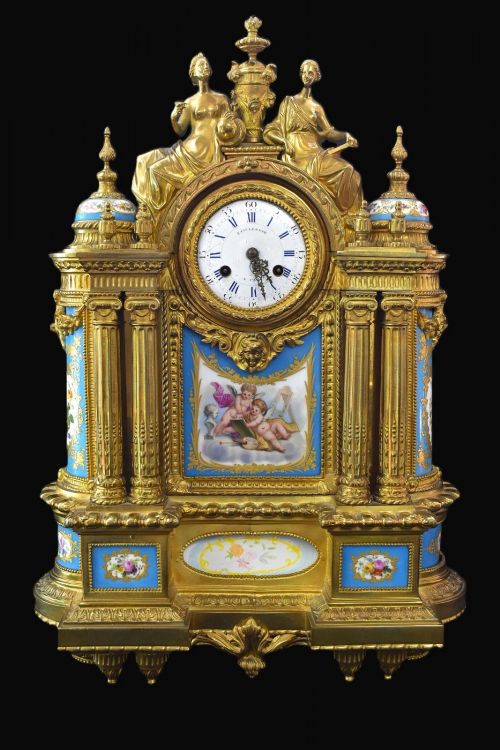
The most frequently seen versions on this page are mantel clocks and garniture sets rendered in the Louis XVI style or the French Empire manner, often incorporating figures of putti, classical deities or military trophies.
Beyond standard mantel pieces, the selection includes portico clocks with suspended pendulums, architectural wall clocks, and multi-piece sets flanked by matching candelabra or urns.
How They Were Made
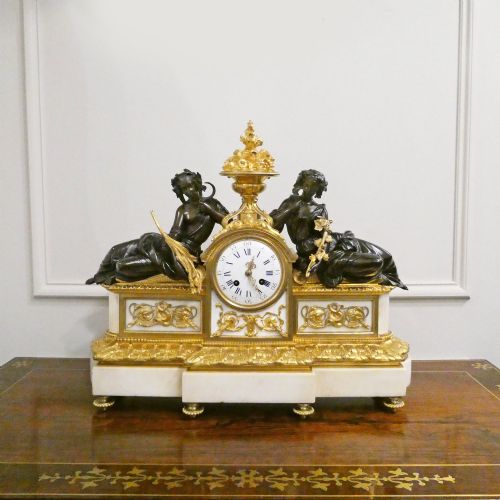
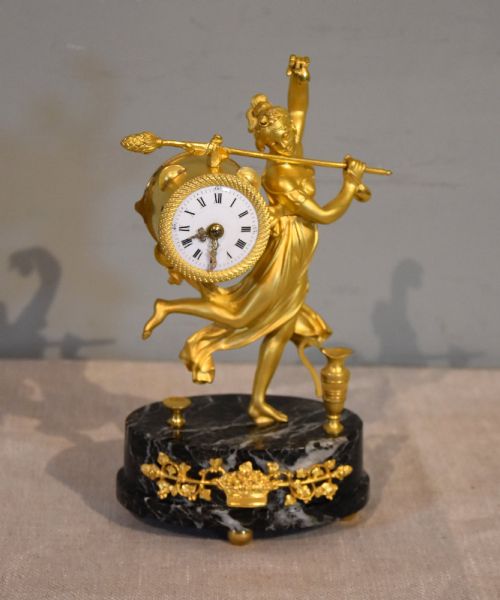
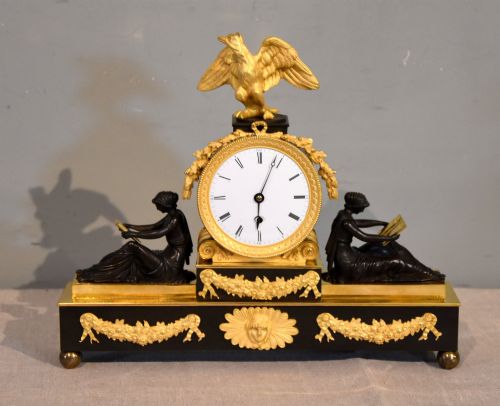
The construction of these pieces relies on the combination of cast bronze, which was frequently gilded with ormolu or finished with a dark patination, paired with natural stones such as white, green, sienna, or rouge marble.
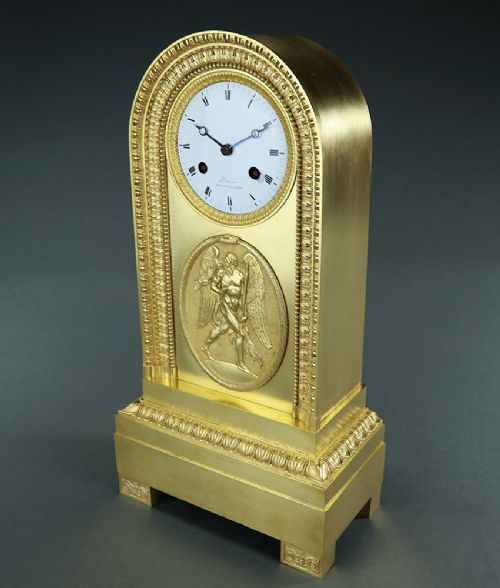
Clockmakers housed mechanical eight-day movements inside bronze drums or marble plinths, frequently incorporating enamel dials with Roman numerals and adding delicate glass covers to protect the hands.
Decorative mounts, finials, and figural ornaments were cast separately using traditional foundry methods before being chased and fire-gilded to achieve varied surface textures.
Listings feature pieces spanning the nineteenth century, including Regency, Victorian, and Napoleon III periods, constructed from marble, ormolu, and patinated bronze.
What Varies in Quality
The distinction between standard production and top-tier pieces lies in the crispness of the bronze chasing and the depth of the original gilding, where hand-tooled details remain sharp rather than smoothed over.
Substantial weight in the marble or slate bases and the presence of signed mechanical movements by known Parisian makers elevate a clock beyond routine domestic timepieces.
The architectural harmony of the design and the preservation of matching garniture sets define the upper tier of surviving examples.
Vincenti·Etienne Lenoir·Japy Freres·Philippes Paris·Compagnie Des Bronzes
The Classical Bronze Clock Glossary
- Ormolu
- A technique of applying finely ground high-carat gold amalgam to a bronze object, followed by heating to drive off the mercury. This leaves a rich, durable golden finish characteristic of French decorative arts.
- Garniture
- A set of matching decorative objects designed to be displayed together on a mantelpiece or sideboard, typically comprising a central clock flanked by twin urns or candelabra.
- Portico clock
- A distinct architectural clock style featuring a tall, slender frame supported by four columns, within which the pendulum swings visibly. They often date from the French Empire and Charles X periods.
- Chasing
- The manual post-casting process of refining a bronze surface using small punches and hammers. Skilled chasing adds texture, depth, and sharp contours to hair, drapery, and foliage.
- Dial
- The circular face of the clock bearing the numerals, which on these pieces is frequently constructed from white enamel sections or painted metal.
Classical Bronze Clock: Frequently Asked Questions
What is a clock garniture?
A clock garniture is a matched set of ornaments designed for display together, typically consisting of a central mantel clock accompanied by two side pieces such as urns, vases, or candelabra. These sets were created to provide a balanced, symmetrical arrangement on a grand fireplace or console.
In nineteenth-century interiors, such arrangements served as the primary visual focus of a formal room, combining functional timekeeping with sculptural display.
How do I wind a classical bronze clock?
Most of these timepieces feature eight-day mechanical movements that require winding using a specific metal key inserted into small winding holes on the enamel dial. Turning the key clockwise tensions the internal spring until it meets resistance.
Care must be taken not to overwind the mechanism, and the clock should be placed on a level surface so the pendulum beats evenly without stopping.
Are these clocks accurate timekeepers?
While nineteenth-century mechanical movements were engineered for reliable daily use, antique clocks rarely match the precision of modern quartz timepieces. They rely on pendulum regulation and spring tension, which can be influenced by temperature changes and minor shifts in placement.
Minor adjustments to the pendulum bob up or down allow an owner to regulate the speed, though many collectors treat them as decorative works of art alongside their timekeeping function.
What is the difference between Empire and Louis XVI styles?
Louis XVI style clocks draw inspiration from classical antiquity with symmetrical designs, delicate floral garlands, urns, and architectural columns reflecting eighteenth-century restraint. They frequently combine warm ormolu mounts with white marble bases.
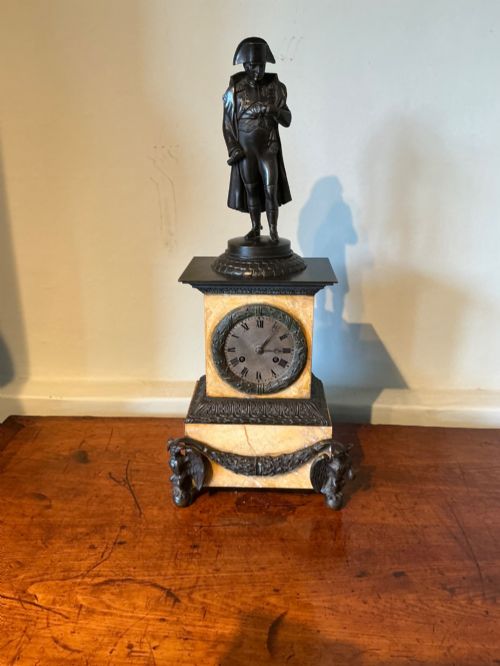
Empire style pieces, emerging under Napoleon, are heavier and more monumental in character, often featuring military trophies, imperial symbols, dark patinated bronze figures, and motifs derived from ancient Rome and Egypt.