






Classical Art Souvenir
These classical art souvenir pieces bring home the scholarly pursuits of past travellers, offering framed intaglios, watercolours, and bronzes from the eighteenth and nineteenth centuries.
Classical Art Souvenir
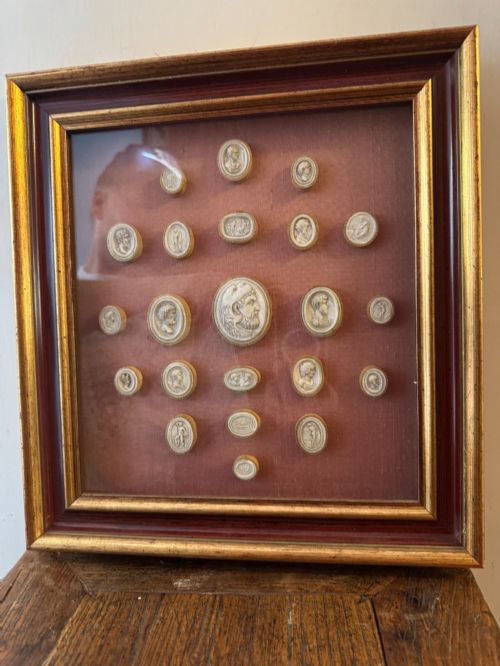
A classical art souvenir represents the material record of the Grand Tour, capturing the sculpture, architecture, and painting of antiquity for travellers abroad. Buyers searching for a classical art souvenir encounter framed collections of plaster intaglios, detailed watercolours, gouaches, and bronze reductions modelled after celebrated antiquities. These works reflect the educational journeys undertaken across Italy, focusing on sites such as Pompeii and Rome.
The majority of pieces seen here originate in the nineteenth century, alongside occasional eighteenth-century engravings. Common formats include framed wall art, oil paintings, and curated sets of cameo intaglios mounted behind glass. Such objects served as both personal records of travel and markers of cultivated taste upon returning home.
Materials and methods
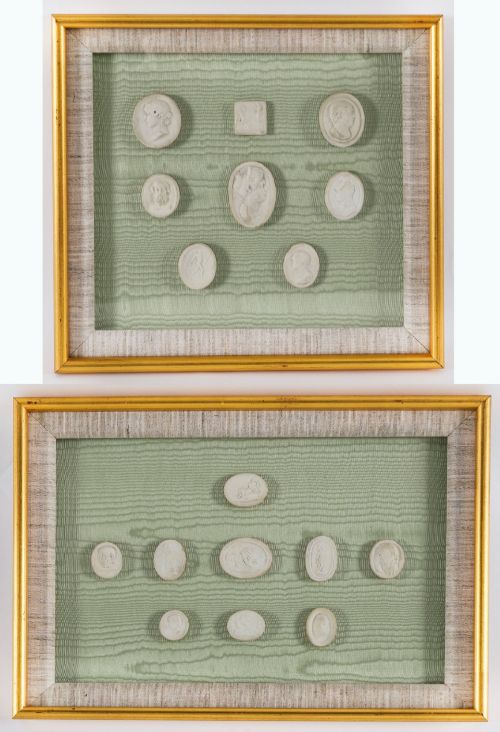
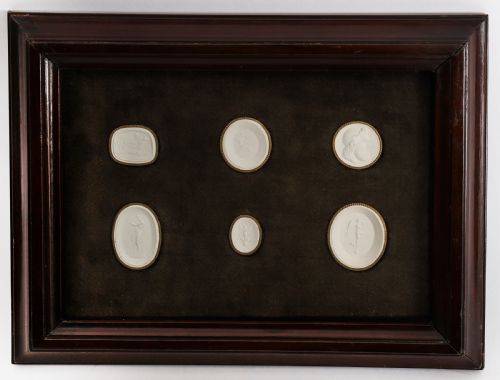
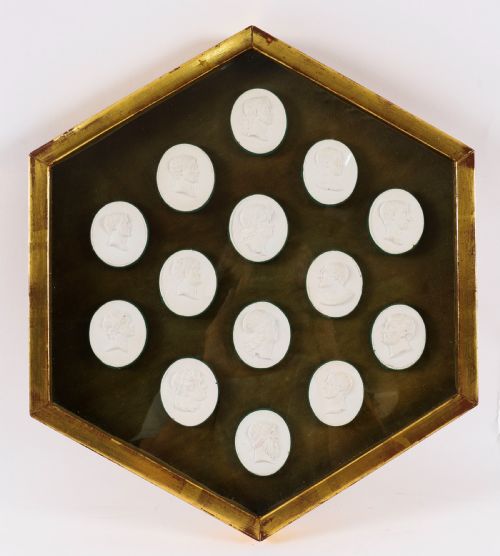
Plaster, gypsum, and glass frequently combine in framed intaglio panels, where miniature casts of antique gems are arranged on velvet or fabric backgrounds. These delicate reliefs are often housed in wooden frames enhanced with gold leaf and gilt wood accents.
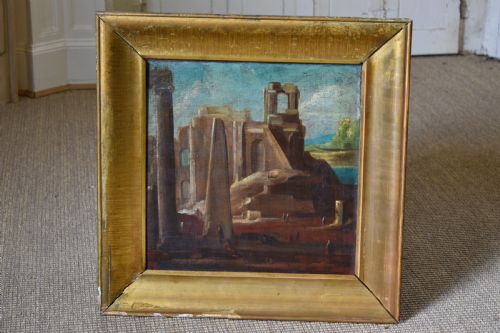
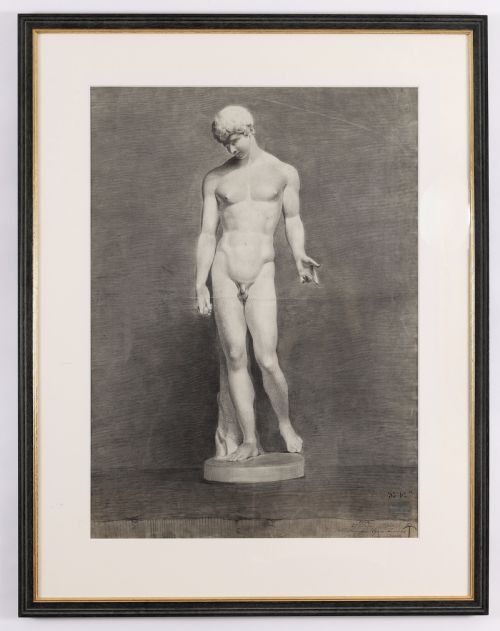
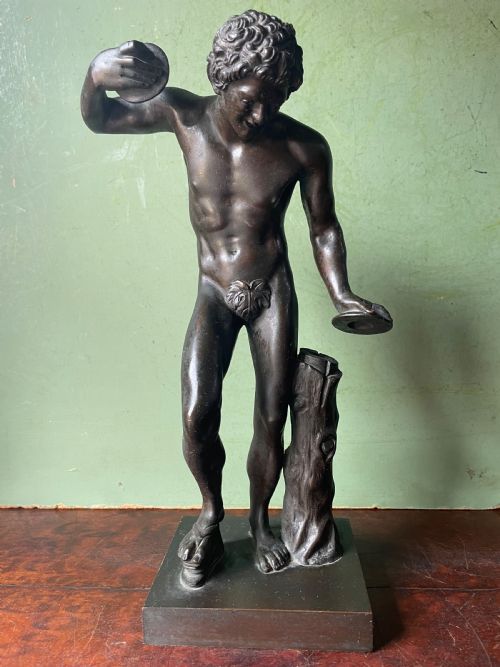
Paintings and drawings utilise paper, canvas, and watercolours or gouaches to record classical ruins and interiors. Bronze reductions employ metal casting techniques to scale down monumental sculptures like the Dancing Faun for domestic display.
Classical Art Souvenir Retail Price Guide 2026
Typical asking prices for classical art souvenir among the pieces listed under this phrase on Sellingantiques today, from the lower quarter to the upper quarter. They describe what is for sale here now, not the wider market.
Travellers brought home microscopic plaster gems so convincing that guests reportedly tried to wear them as actual rings.
Distinctions in quality
The finesse of the modelling in plaster intaglios and bronze reductions dictates the refinement of the piece, distinguishing sharp, detailed casts from softer, worn examples. The precision of hand-painted watercolours and gouaches similarly elevates works depicting archaeological sites.
The presentation matters significantly, involving well-preserved original framing, quality mounts of velvet or fabric, and maker labels such as those by Giovanni Liberotti. Cohesive groupings of numerous intaglios or paintings demonstrate greater ambition than isolated single items.
Giovanni Liberotti
The Classical Art Souvenir Glossary
- Intaglio
- A design engraved or incised into a material so that the impression rises above the surface, or cast in relief as miniature gems. These plaster and gypsum casts emulate ancient carved stones collected on travels.
- Grand Tour
- An extended trip through Europe, particularly Italy, undertaken by wealthy young men and scholars to study classical art and architecture. Souvenirs from these journeys formed the basis of many historic collections.
- Gouache
- An opaque watercolour paint consisting of pigment mixed with a water-soluble binder and white filler. It appears frequently in nineteenth-century Italian landscape and architectural paintings.
- Reduction
- A scaled-down reproduction of a large-scale sculpture or monument. These bronze or plaster versions allowed collectors to house famous antiquities within domestic interiors.
- Neoclassical
- A style reviving the decorative and structural merits of ancient Greece and Rome. This aesthetic dominates the design of frames, subjects, and decorative arts from the period.
Classical Art Souvenir: Frequently Asked Questions
What is a classical art souvenir?
A classical art souvenir is a piece of art or a collection of miniature casts acquired by travellers undertaking the Grand Tour in Europe during the eighteenth and nineteenth centuries. These items recorded famous antiquities, architecture, and archaeological excavations.
They allowed collectors to display their classical education and refined tastes within their homes through framed artworks, paintings, and intaglio panels.
How were intaglio sets used?
Intaglio sets functioned as portable cabinets of curiosity, showcasing miniature plaster or gypsum replicas of classical carved gems and ancient sculptures. They were systematically arranged and framed for wall display.
Collectors used them to study classical iconography and mythology without needing access to the original excavated artefacts scattered across European museums.
How do I date these pieces?
Dating relies on examining the materials, framing techniques, paper types, and handwritten inscriptions or labels on the reverse. Nineteenth-century pieces often feature specific framing styles and maker signatures like those of Giovanni Liberotti.
Stylistic cues, such as the Neoclassical aesthetic and subjects depicting newly excavated sites like Pompeii during the 1880s and 1890s, also help narrow the chronology.
Where should I hang framed intaglios?
Framed intaglios require placement away from direct sunlight and high humidity to protect the delicate plaster casts, paper backgrounds, and velvet or fabric mounts. Their intricate detail rewards close viewing at eye level.
They suit studies, libraries, or drawing rooms where their historical character complements traditional interiors and antique furniture.