


Classical Architectural Drawing
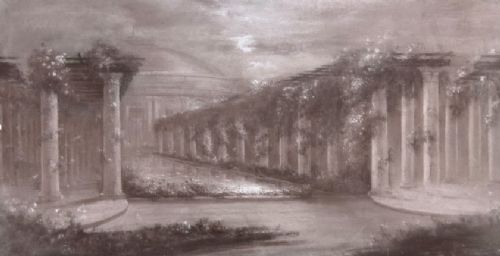
A classical architectural drawing brings ancient monuments and grand facades into a room, offering timeless geometry executed in ink, charcoal, and watercolour.
Classical Architectural Drawing
A classical architectural drawing captures structural designs, historic ruins, and grand facades through careful hand work on paper or canvas stretcher. When searching for a classical architectural drawing, a buyer encounters everything from delicate 18th Century engravings to 19th Century academic watercolours.
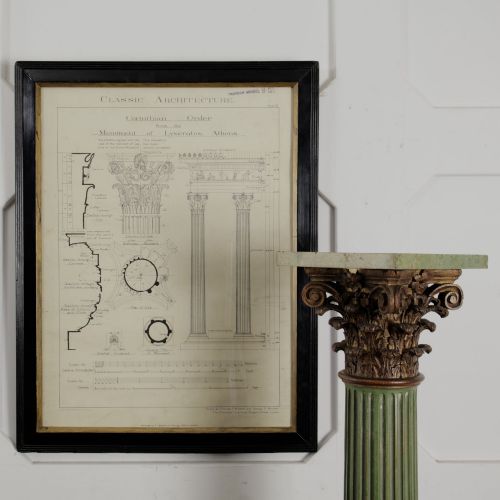
The selections span distinct periods including the 18th Century, 19th Century, and early 20th Century up to 1930. Pieces range from Grand Tour watercolours of Pompeii and Rome to detailed plates of the Corinthian order and academic sketch studies.
Forms vary from individual framed artwork and prints to sets of large coloured architectural scenes and antique engravings. Originating from precise studies and classical revivals, these works reflect Neoclassical, French Second Empire, and Victorian Classical Revival styles.
Materials and technique
Artists and draughtsmen utilised paper, canvas stretcher, and occasionally gold leaf as a base for their compositions. Ink, charcoal, and watercolour provided the primary media for rendering fine lines, shadows, and washes.
Engravings relied on metal plates to transfer crisp architectural lines, while watercolours and charcoal allowed for softer tonal depth and atmospheric rendering. Framing often incorporated glass and wood to protect delicate paper works over the centuries.
A meticulous 19th Century royal palace drawing preserves the precise hand of seventeen-year-old student H. H. Wyatt.
Assessing quality
Quality rests upon the precision of the draughtsmanship and the clarity of the medium, whether dealing with sharp 18th Century engraving lines or fluid 19th Century watercolour washes. Academic examples show rigorous attention to structural proportions, such as accurate representations of the Corinthian order.
The sophistication of the composition, the depth of historical context from sites like the Forum of Nerva or the Vatican Loggie, and the preservation of the paper or canvas stretcher elevate certain works above standard prints.
Pio Panfili·Giovanni Ottaviani·H. H Wyatt
The Classical Architectural Drawing Glossary
- Grand Tour
- A traditional trip through Europe undertaken by upper-class young European men of sufficient status to flourish their education. Watercolours from this journey record classical ruins and ancient sites.
- Neoclassical
- A Western cultural movement in the decorative and visual arts that drew inspiration from the art and culture of classical antiquity. This style dominates many 18th Century and 19th Century architectural prints.
- Corinthian Order
- The last developed of the three principal classical orders of ancient Greek and Roman architecture, characterised by slender fluted columns and ornate capitals decorated with acanthus leaves.
- Engraving
- A printmaking technique where an artist carves lines into a metal plate to hold ink. 18th Century architectural engravings used this method to reproduce precise technical drawings and temple elevations.
Classical Architectural Drawing: Frequently Asked Questions
What is a classical architectural drawing?
It is a hand-drawn study, watercolour, or print depicting historic buildings, ancient ruins, or structural designs. These works date from the 18th Century through to the early 20th Century.
They reflect periods like the Neoclassical revival and record subjects ranging from Roman forums to academic studies.
How were these drawings originally used?
Many served as academic exercises for students in institutions like the South Kensington School or as souvenirs for travellers on the Grand Tour. Engravings were also published to document classical antiquities from Athens and Rome.
Architects and scholars utilised them to study proportions, columns, and historic facades.
How do I date an architectural print?
Dating relies on the paper type, framing, stylistic markers, and inscriptions left by the artist or publisher. Pieces from the 18th Century often feature distinct plate marks and hand-laid paper.
Later 19th Century works frequently display academic signatures, dates, or specific revival influences.
How should I display them at home?
Framed under glass with wooden frames, these works suit studies, libraries, and hallways where their fine ink lines or watercolours can be viewed closely. Grouping sets of prints creates a strong visual statement on a wall.
Keep them away from direct sunlight to protect the fragile paper, ink, and watercolour pigments.