

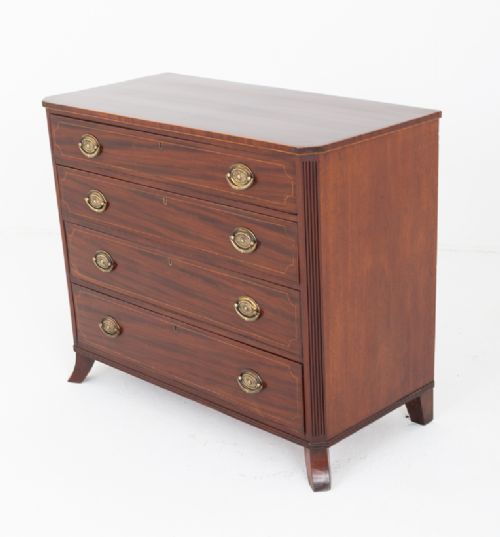


Classical Commode
A classical antique commode brings architectural proportion and figured timber to a formal interior.
Classical Commode
When you search for classical antique commode, you encounter a range of formal storage furniture designed as low cabinets, chests of drawers, and side cabinets. These pieces serve as focal points in reception rooms, combining display surfaces with enclosed storage space.
The versions most frequently met on this page span the 18th century, the Georgian and Regency eras, and later revival periods. They appear in forms ranging from rectilinear chests to curved demi-lune cabinets.
Origins represented in the current selection include English workshops, French ateliers, and Italian makers working in neoclassical and revival styles. Timber choices across these forms lean heavily towards figured mahogany, satinwood, and walnut.
Assessing quality and execution
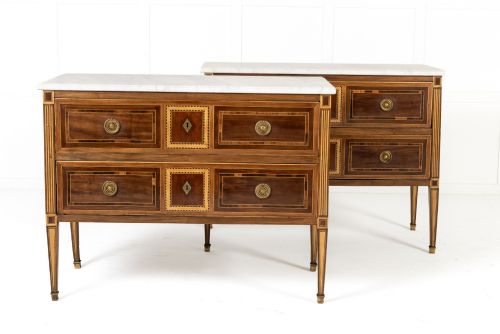
The standard of a classical antique commode rests on the precision of its timber selection and the integration of its decorative elements. Grain matching across drawer fronts and cabinet doors indicates the care taken by the original cabinetmaker.
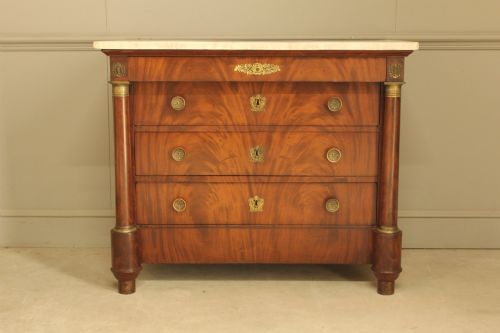
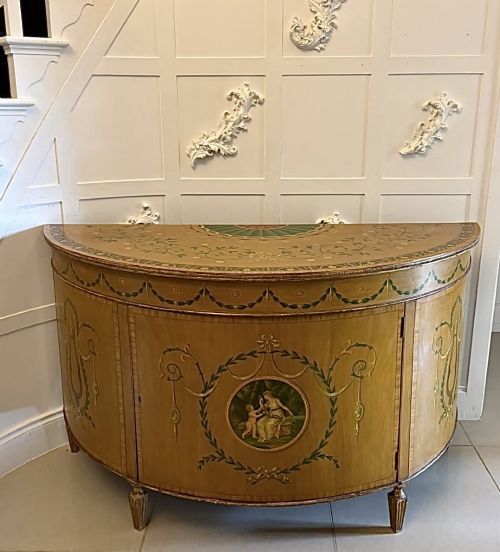
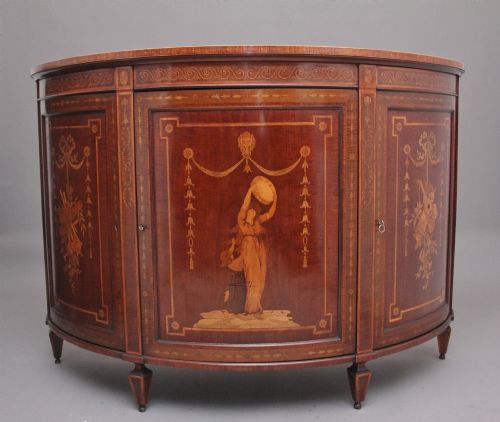
The refinement of surface embellishment distinguishes finer examples, visible in the sharpness of cast ormolu mounts, the delicacy of painted classical panels, and the complexity of marquetry work. Structural continuity between the timber carcass and applied decorative hardware determines the overall harmony of the piece.
Classical Commode Retail Price Guide 2026
Typical asking prices for classical commode among the pieces listed under this phrase on Sellingantiques today, from the lower quarter to the upper quarter. They describe what is for sale here now, not the wider market.
Listings feature commodes across the Georgian, Regency, and Edwardian periods, constructed in mahogany, satinwood, and walnut with marble and ormolu details.
Pietro Ferrario·Jean-Henri Riesener·Kaufman
The Classical Commode Glossary
- Commode
- A low standing cabinet or chest of drawers designed for formal rooms, originating in France during the seventeenth century. In English furniture history, the term frequently overlaps with serpentine or shaped chests.
- Demi-lune
- A half-moon shape in plan, commonly applied to side cabinets and commodes with curved fronts and flat backs. This profile allows the piece to sit flush against a wall while offering a sweeping visual presence.
- Marquetry
- The art of forming decorative patterns on a wooden carcass using thin veneers of different timbers, metals, or shells. Craftsmen cut these elements precisely to fit together before gluing them to the substrate.
- Ormolu
- Gilt bronze mounts applied to furniture for decorative emphasis and edge protection. The technique involves applying a gold amalgam to a bronze base and firing it to drive off the mercury.
- Sheraton Revival
- A late nineteenth and early twentieth century design movement that reinterpreted the light, neoclassical furniture forms of the eighteenth century. Pieces from this period frequently utilise satinwood, painted details, and classical motifs.
Classical Commode: Frequently Asked Questions
Where should I place a commode?
These cabinets suit reception rooms, halls, and bedrooms where their finished backs or shaped profiles can be appreciated. They function well against a primary wall beneath a mirror or artwork.
Ensure the floor is level so that doors and drawers operate smoothly within their frames without binding against the structure.
How do I care for antique timber?
Keep wooden surfaces away from direct heat sources and strong sunlight to prevent the timber from drying out and the veneer from lifting. Dust regularly with a soft, dry cloth.
Apply a microcrystalline wax periodically to nourish the polish and protect the wood from ambient moisture without building up a sticky residue.
Are marble tops original?
Many continental commodes feature fitted marble slabs designed to provide a durable and cool surface. Inspect the edges and underside to check for matching profiles and period fixings.
Replacement marble tops do occur on pieces that saw heavy domestic use in past centuries, though stones with matching thickness and veining remain standard on continental forms.
How do I distinguish revival periods?
Revival pieces from the late nineteenth and early twentieth centuries often display machine-cut elements or secondary timbers typical of later industrial cabinetmaking. Compare construction details with documented eighteenth-century examples.
Stylistic cues such as crisply painted neoclassical panels or precise satinwood marquetry frequently point to specific revival movements rather than original eighteenth-century production.